Original: $132.90
-65%$132.90
$46.52The Story
Bellus Angelfish (Genicanthus bellus)
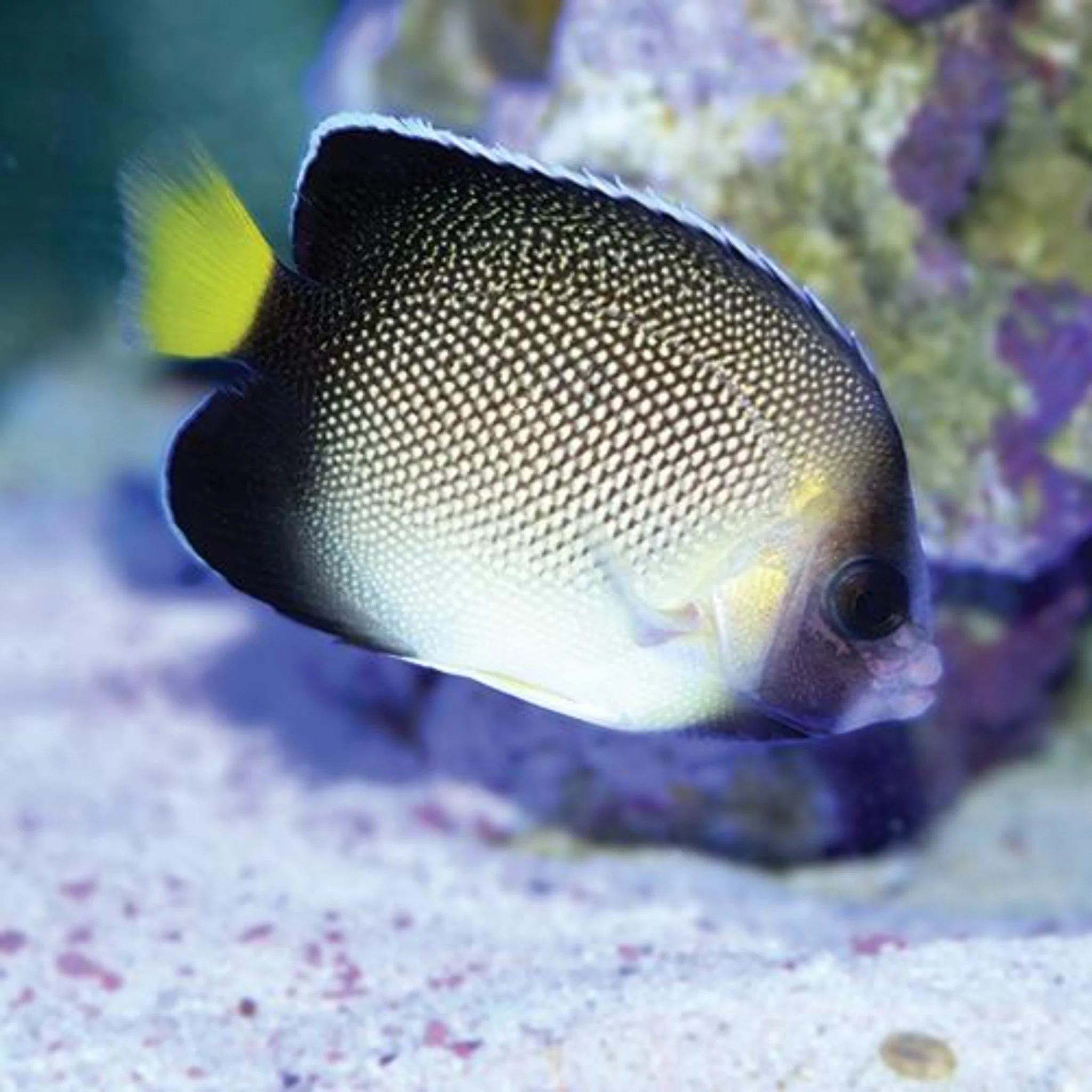
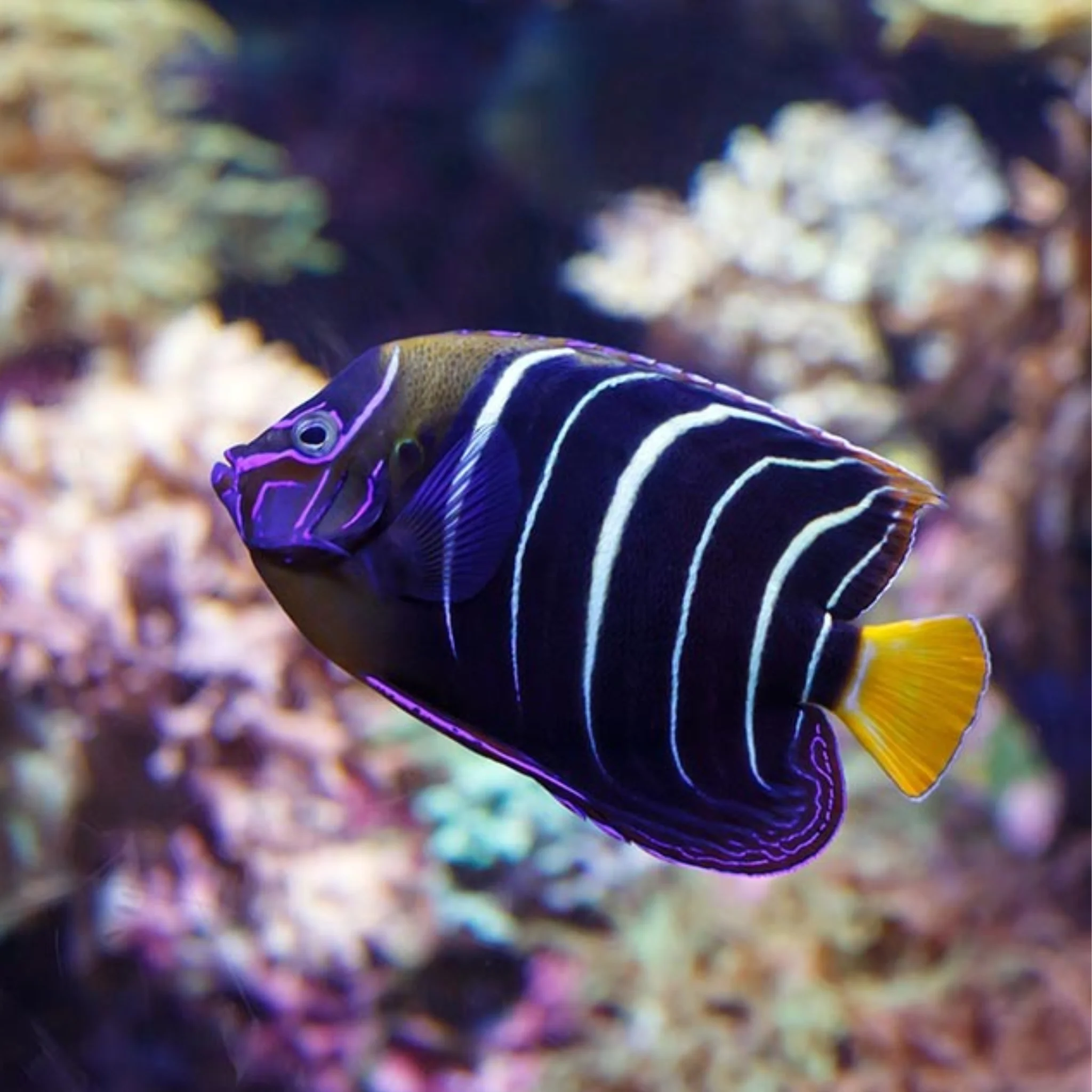
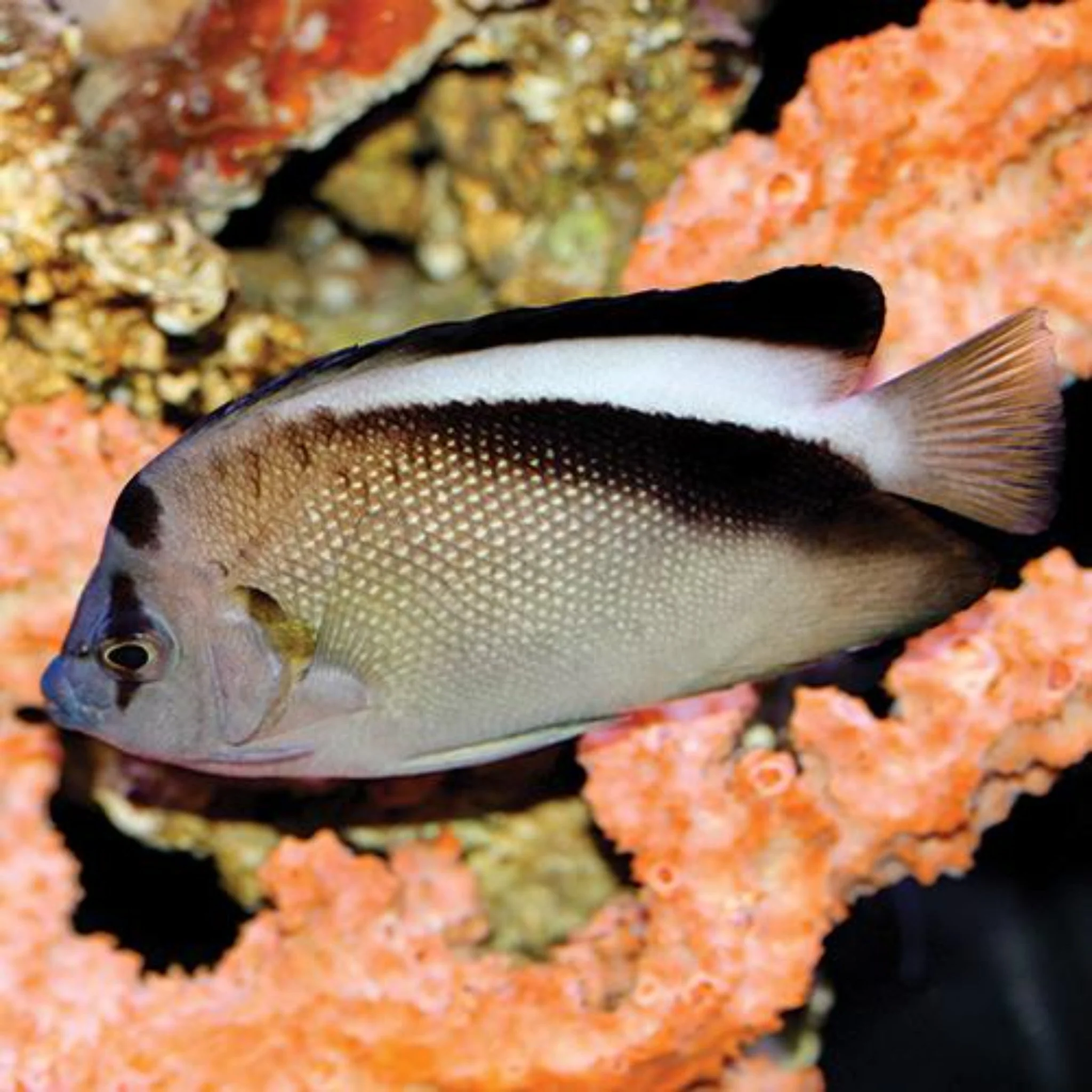
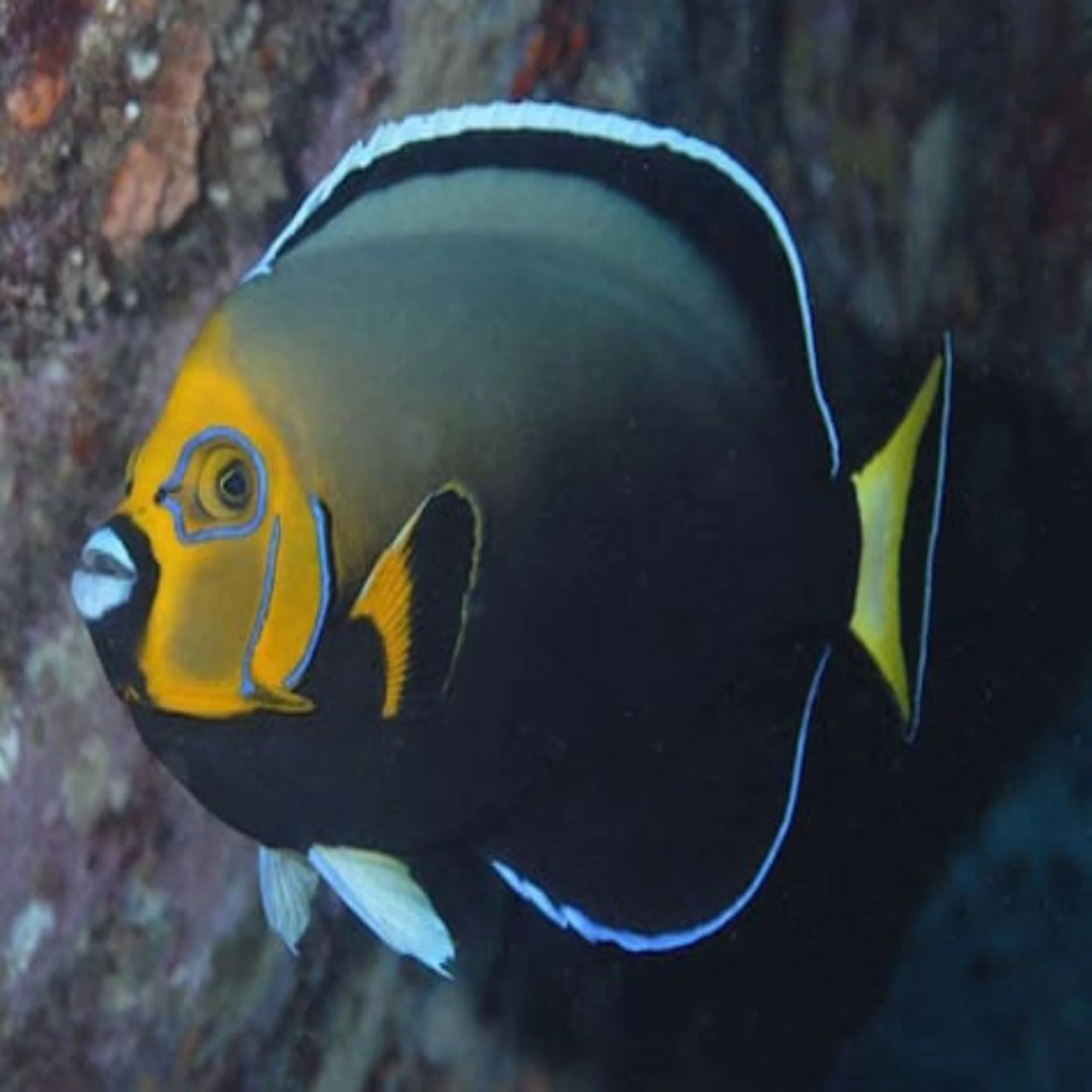
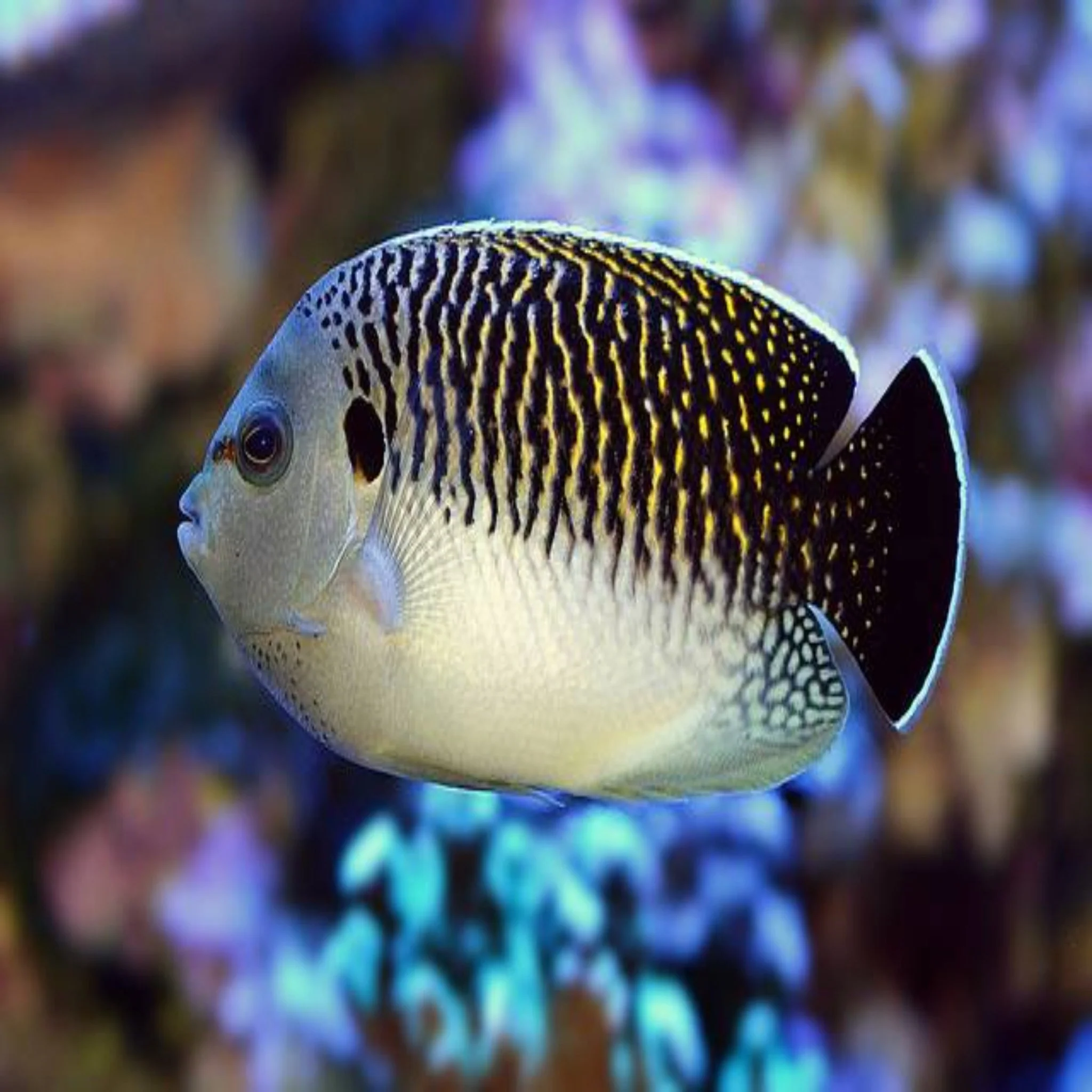
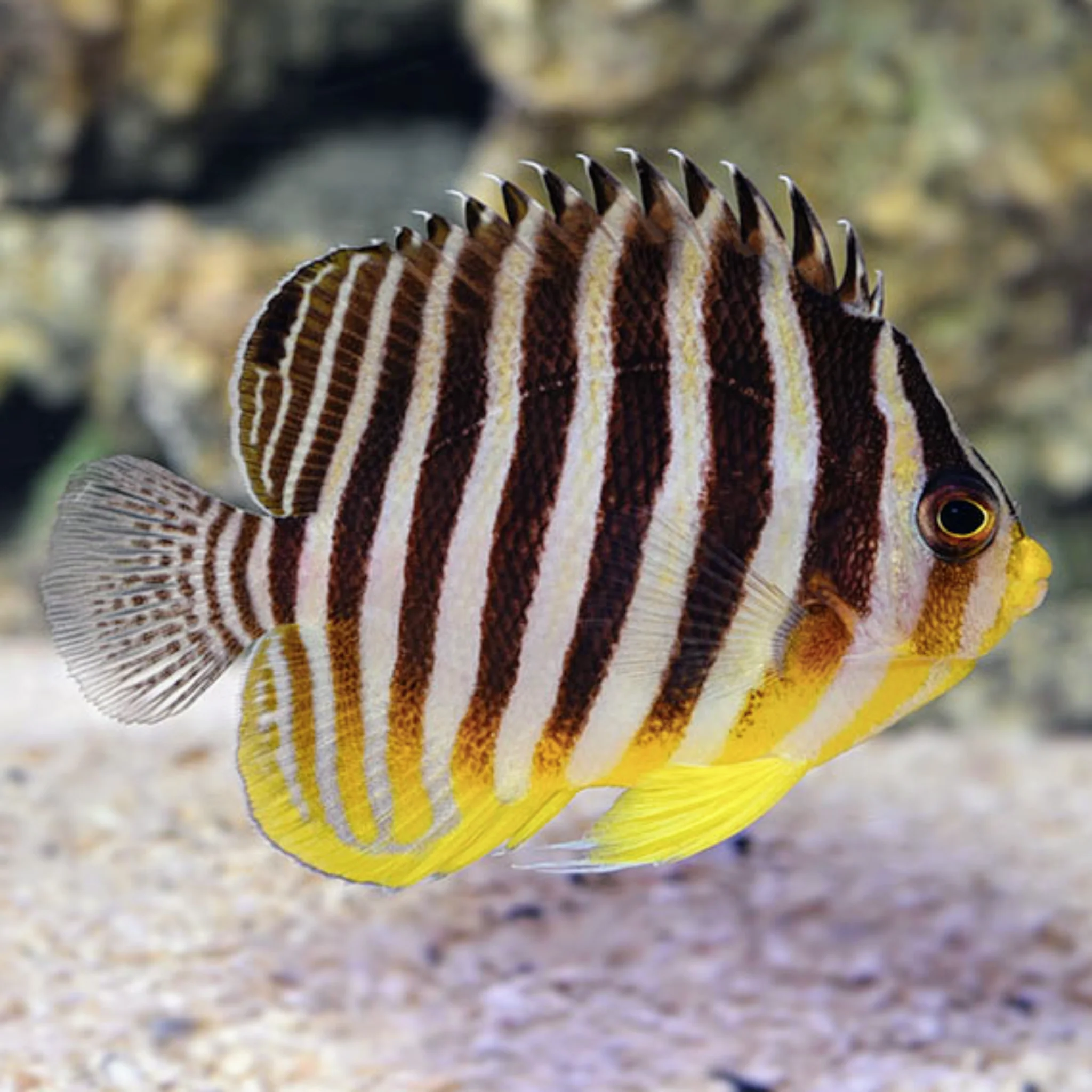
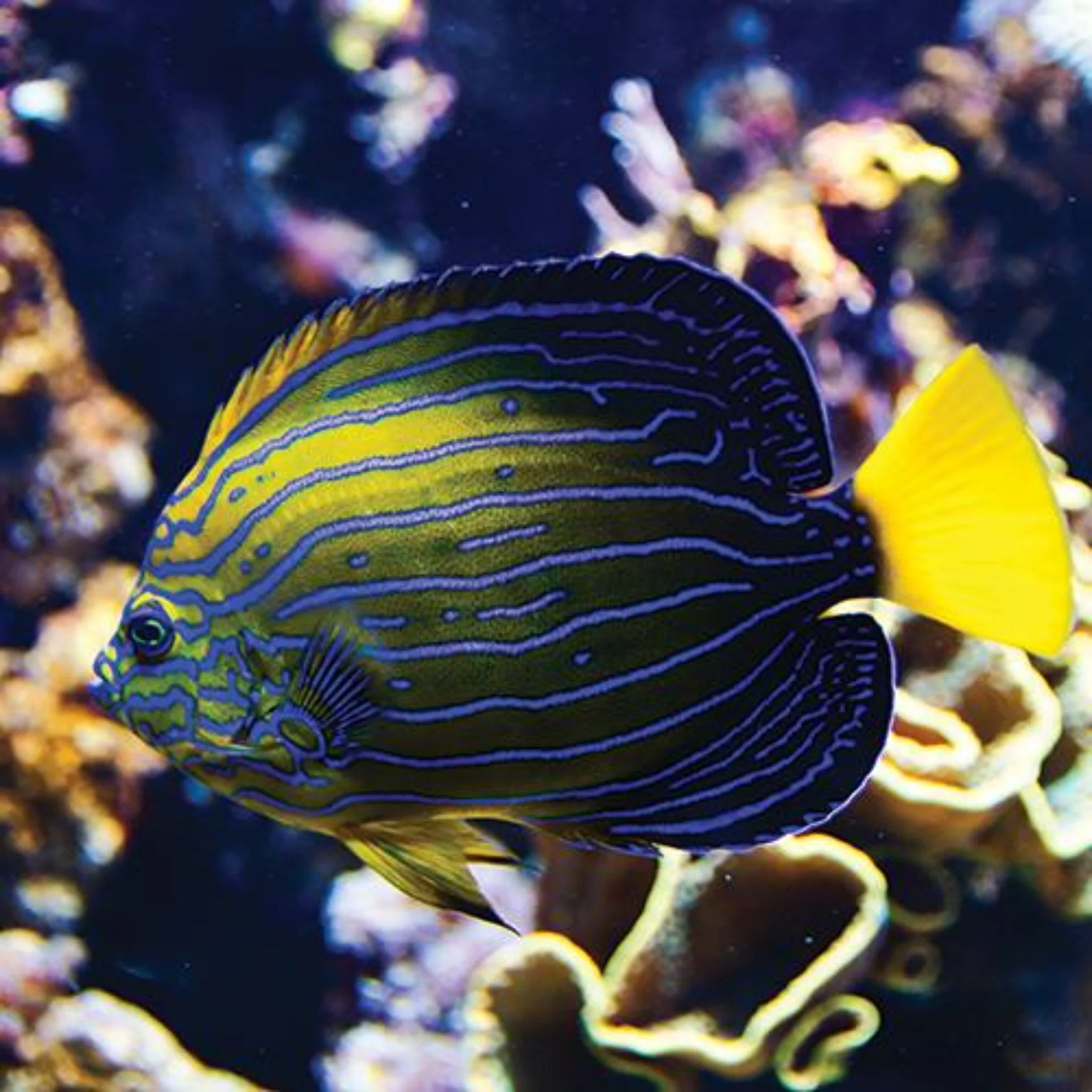
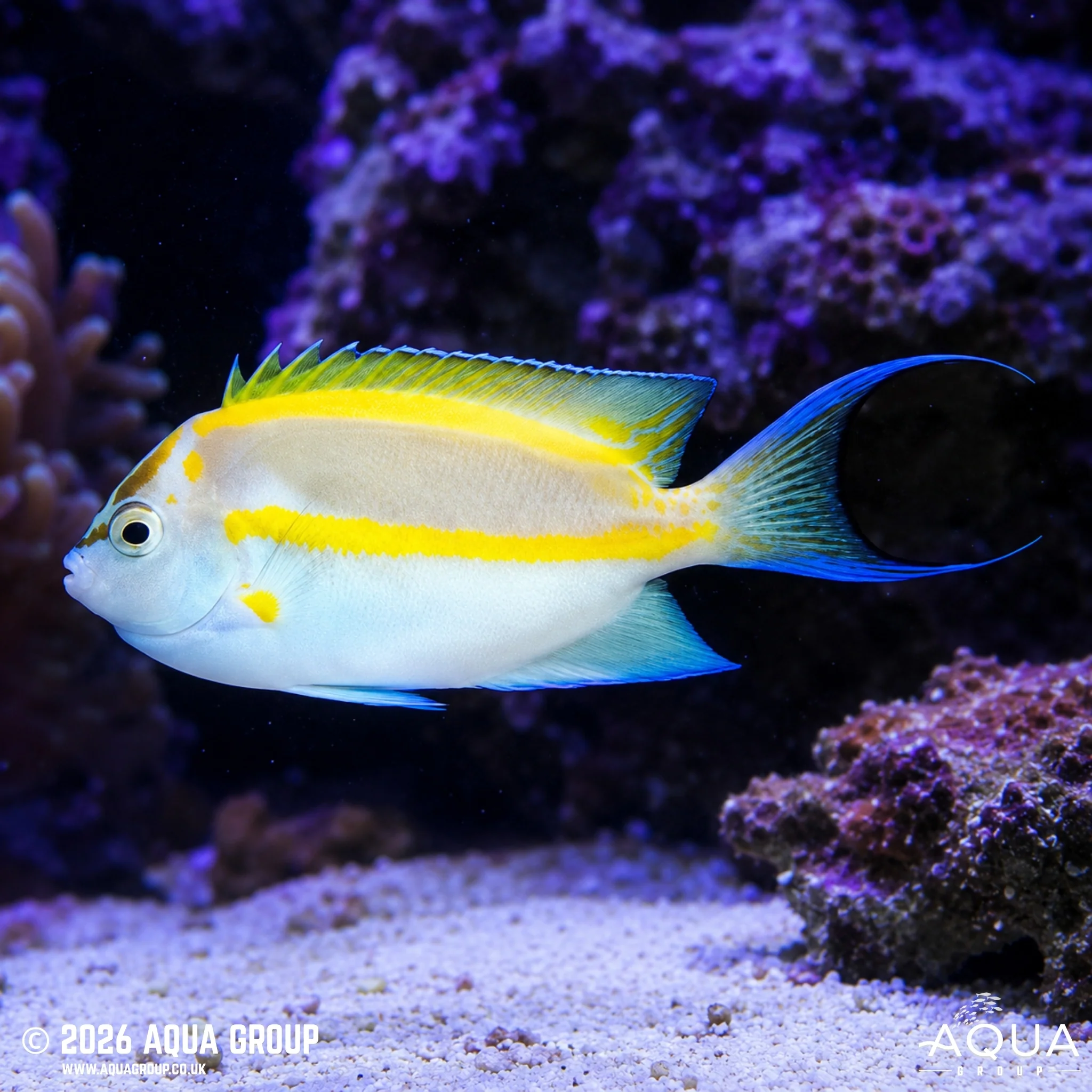
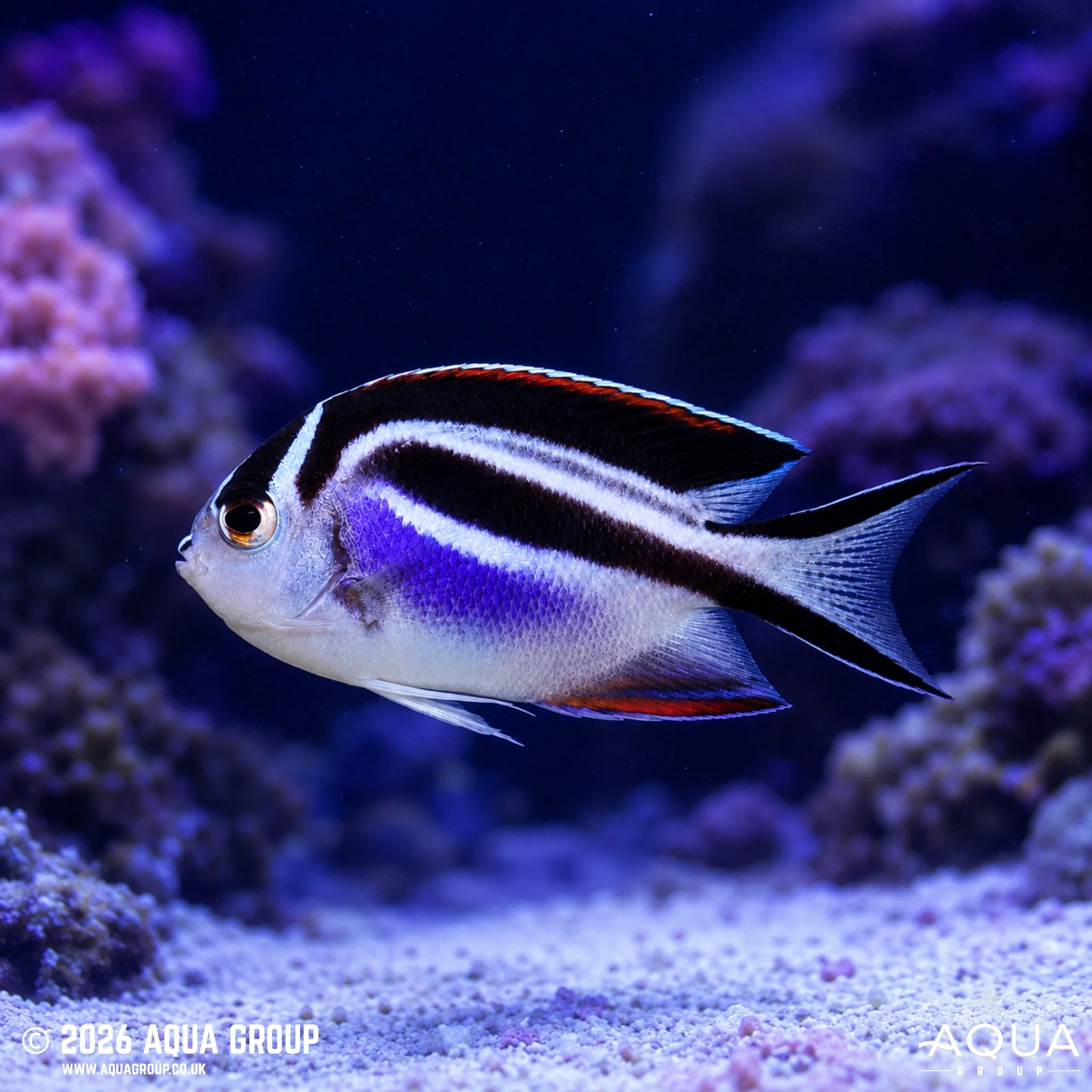
The Bellus Angelfish, Genicanthus bellus, is a beautiful and highly desirable marine angelfish with elegant swallowtail-style finnage and strong sexual dimorphism. Females typically show a pearly silver to bluish body with black striping and yellow to orange dorsal colour, while males develop stronger blue, orange and darker patterning. Also known as the Ornate Angelfish or Bellus Swallowtail Angelfish, this deep-reef Genicanthus species is one of the better angelfish choices for reef aquariums because it naturally feeds in the water column rather than grazing heavily on corals.
Common Name:
Bellus Angelfish, Bellus Angel, Ornate Angelfish, Bellus Swallowtail Angelfish.
Scientific Name (Latin):
Genicanthus bellus
Maximum Size:
Up to around 18 cm.
Water Type:
Marine
Origin / Natural Habitat:
Western Pacific and Micronesian reef regions, including areas such as Palau, the Marshall Islands, the Caroline Islands and surrounding deep outer reef systems. Naturally found schooling along steep, current-swept outer reef drop-offs, usually in deeper water from around 45 m to at least 97 m, where it forms small harems and feeds on plankton in the water column.
Water Parameters:
Temperature: 24–27°C
pH Range: 8.1–8.4
Hardness or Salinity: SG 1.020–1.025
Temperament:
Generally peaceful to semi-assertive. Bellus Angelfish are usually calmer than many large angelfish, but they are active swimmers and may become dominant over very shy tank mates. Males may show aggression towards other Genicanthus males or similar angelfish, especially in smaller aquariums.
Diet:
Planktivorous omnivore. In the wild, it feeds on plankton along reef drop-offs. In the aquarium, offer a varied diet of frozen mysis, enriched brineshrimp, copepods, finely chopped krill, quality marine pellets, marine flakes and occasional algae or spirulina-based foods. Small regular feeds are best, especially in active reef systems.
Minimum Tank Size:
A minimum of 400 litres is recommended for a single specimen, with larger aquariums preferred for pairs, harems or mixed reef communities. Provide open swimming space, mature rockwork, strong oxygenation and stable water quality.
Behaviour & Activity:
An active midwater angelfish that spends much of its time swimming above and around reef structure rather than constantly picking at rock and coral surfaces. In nature it forms harems of one male with several females, and like other Genicanthus angelfish it can change sex within social groups. It appreciates open swimming room, caves, ledges and moderate to strong water movement.
Reef Safe:
Reef Safe with Caution
One of the safer angelfish choices for reef aquariums because Genicanthus species are primarily planktivores. It is generally compatible with corals and most ornamental invertebrates, but no angelfish can be guaranteed completely reef safe. Occasional investigation of fleshy corals, clam mantles or sessile invertebrates is possible, especially if underfed or stressed.
Special Requirements or Care Notes:
Requires a mature, spacious aquarium with excellent water quality and a secure lid. Deep-reef specimens may be sensitive after collection and shipping, so choose alert, feeding fish with good body condition. Feed a varied diet several times daily if possible. Avoid mixing multiple males unless the aquarium is very large, and introduce with care if housing with other angelfish. Females can transition to males socially, so group dynamics may change over time.
Suitable for:
Intermediate fishkeepers
Availability:
Rare or occasional in trade
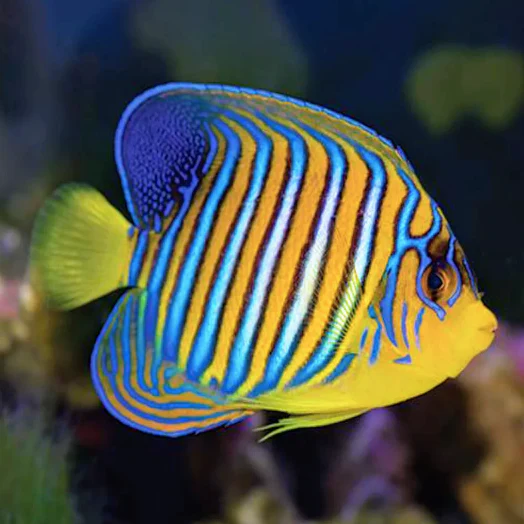
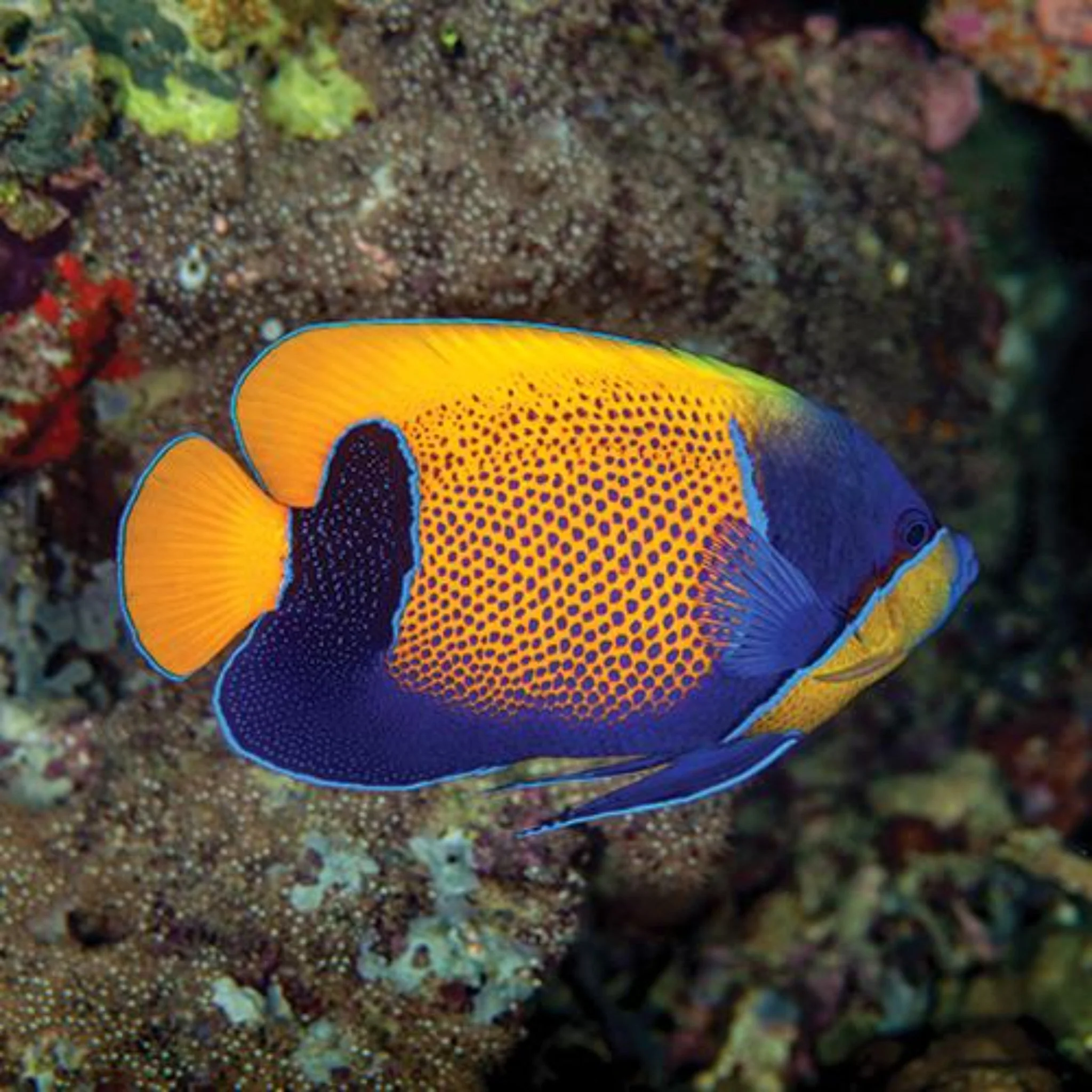
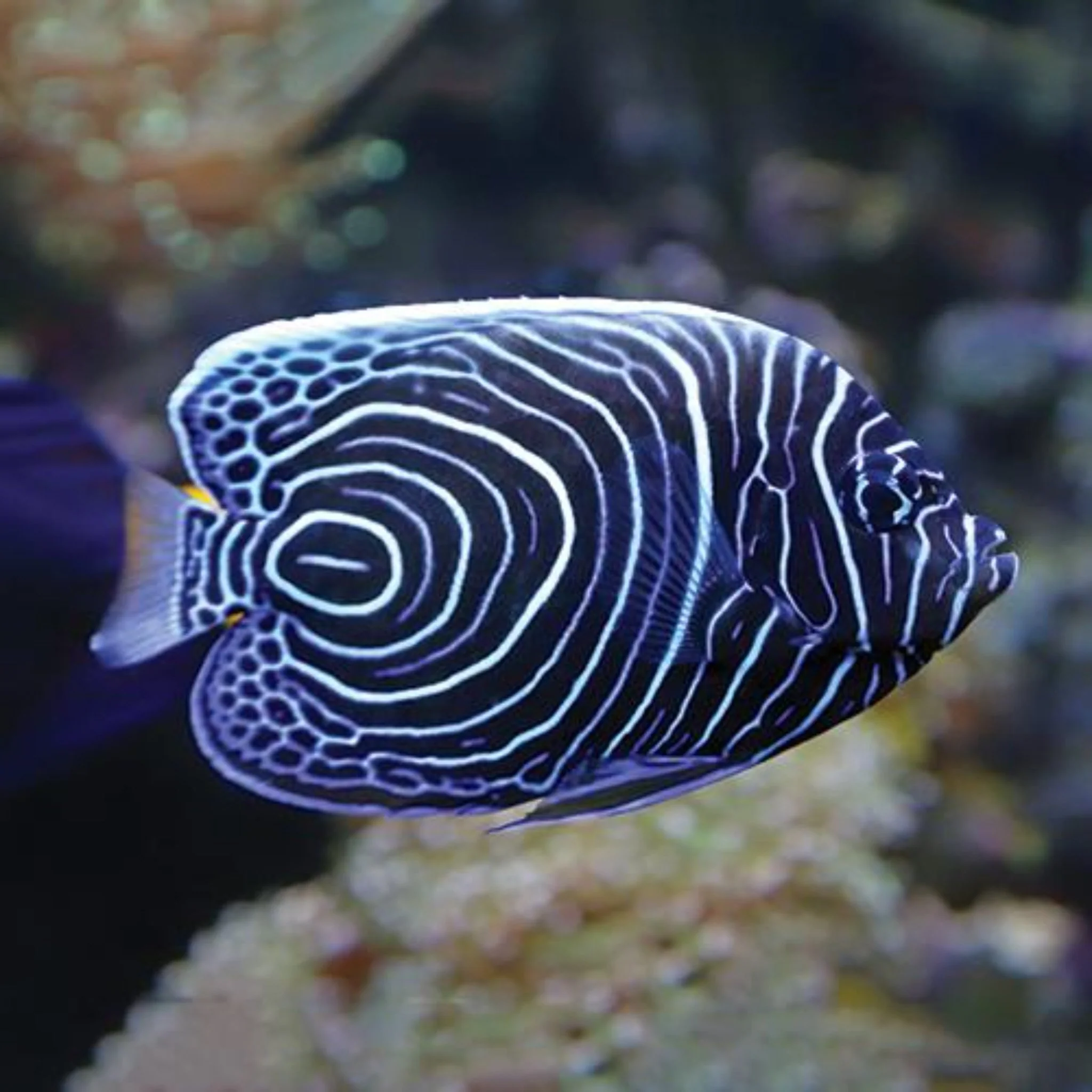
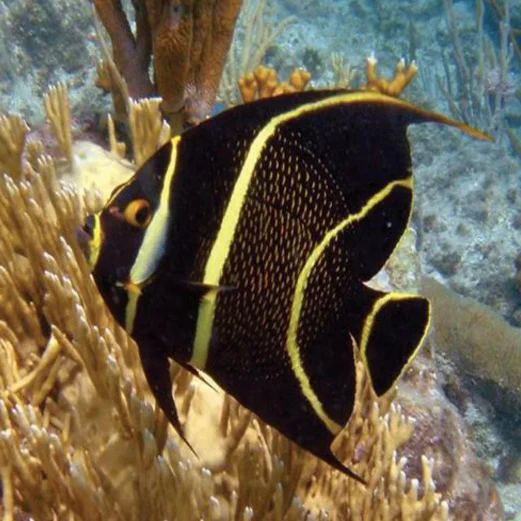
All images are a visual representation of the fish you will receive, made to be as accurate as possible. Please note that Mother Nature is a wonderful thing, and variation in patterns and colours will occur — that is part of the unique beauty of these animals.
Details & Craftsmanship
Every detail has been carefully considered to bring you the perfect product.
Description
Bellus Angelfish (Genicanthus bellus)
The Bellus Angelfish, Genicanthus bellus, is a beautiful and highly desirable marine angelfish with elegant swallowtail-style finnage and strong sexual dimorphism. Females typically show a pearly silver to bluish body with black striping and yellow to orange dorsal colour, while males develop stronger blue, orange and darker patterning. Also known as the Ornate Angelfish or Bellus Swallowtail Angelfish, this deep-reef Genicanthus species is one of the better angelfish choices for reef aquariums because it naturally feeds in the water column rather than grazing heavily on corals.
Common Name:
Bellus Angelfish, Bellus Angel, Ornate Angelfish, Bellus Swallowtail Angelfish.
Scientific Name (Latin):
Genicanthus bellus
Maximum Size:
Up to around 18 cm.
Water Type:
Marine
Origin / Natural Habitat:
Western Pacific and Micronesian reef regions, including areas such as Palau, the Marshall Islands, the Caroline Islands and surrounding deep outer reef systems. Naturally found schooling along steep, current-swept outer reef drop-offs, usually in deeper water from around 45 m to at least 97 m, where it forms small harems and feeds on plankton in the water column.
Water Parameters:
Temperature: 24–27°C
pH Range: 8.1–8.4
Hardness or Salinity: SG 1.020–1.025
Temperament:
Generally peaceful to semi-assertive. Bellus Angelfish are usually calmer than many large angelfish, but they are active swimmers and may become dominant over very shy tank mates. Males may show aggression towards other Genicanthus males or similar angelfish, especially in smaller aquariums.
Diet:
Planktivorous omnivore. In the wild, it feeds on plankton along reef drop-offs. In the aquarium, offer a varied diet of frozen mysis, enriched brineshrimp, copepods, finely chopped krill, quality marine pellets, marine flakes and occasional algae or spirulina-based foods. Small regular feeds are best, especially in active reef systems.
Minimum Tank Size:
A minimum of 400 litres is recommended for a single specimen, with larger aquariums preferred for pairs, harems or mixed reef communities. Provide open swimming space, mature rockwork, strong oxygenation and stable water quality.
Behaviour & Activity:
An active midwater angelfish that spends much of its time swimming above and around reef structure rather than constantly picking at rock and coral surfaces. In nature it forms harems of one male with several females, and like other Genicanthus angelfish it can change sex within social groups. It appreciates open swimming room, caves, ledges and moderate to strong water movement.
Reef Safe:
Reef Safe with Caution
One of the safer angelfish choices for reef aquariums because Genicanthus species are primarily planktivores. It is generally compatible with corals and most ornamental invertebrates, but no angelfish can be guaranteed completely reef safe. Occasional investigation of fleshy corals, clam mantles or sessile invertebrates is possible, especially if underfed or stressed.
Special Requirements or Care Notes:
Requires a mature, spacious aquarium with excellent water quality and a secure lid. Deep-reef specimens may be sensitive after collection and shipping, so choose alert, feeding fish with good body condition. Feed a varied diet several times daily if possible. Avoid mixing multiple males unless the aquarium is very large, and introduce with care if housing with other angelfish. Females can transition to males socially, so group dynamics may change over time.
Suitable for:
Intermediate fishkeepers
Availability:
Rare or occasional in trade
All images are a visual representation of the fish you will receive, made to be as accurate as possible. Please note that Mother Nature is a wonderful thing, and variation in patterns and colours will occur — that is part of the unique beauty of these animals.