The Story
Chalk Goby (Valenciennea sexguttata)
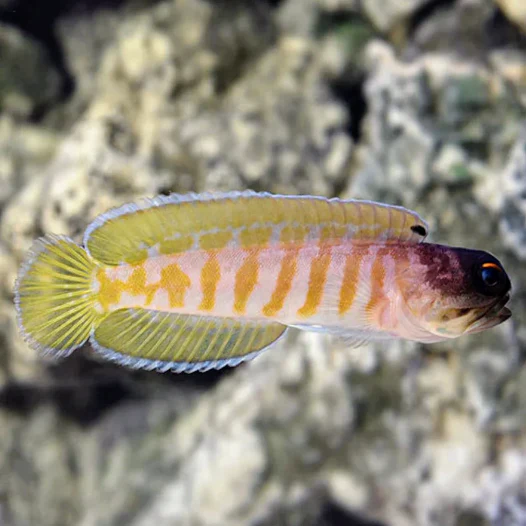
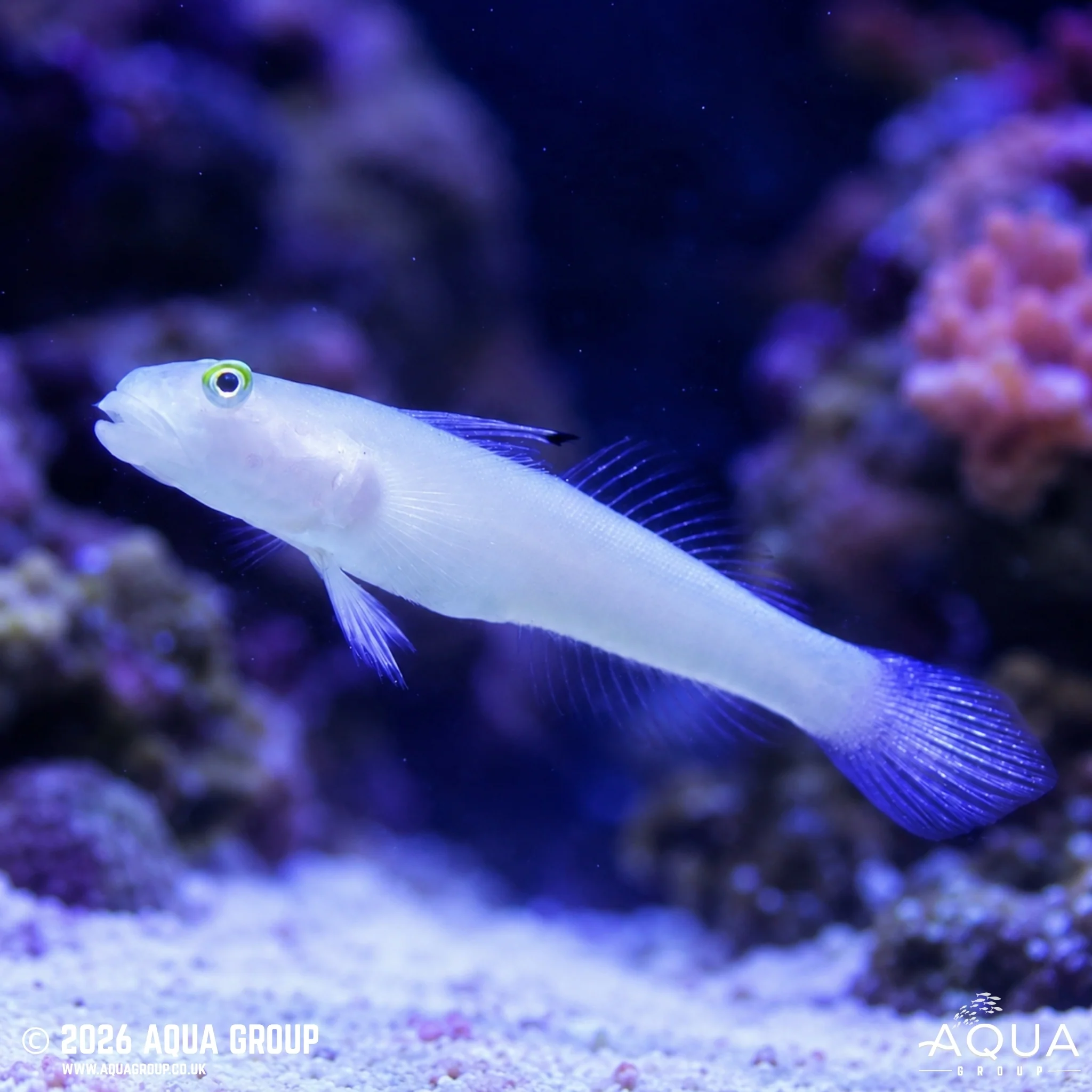
The Chalk Goby, Valenciennea sexguttata, is a peaceful marine sand-sifting goby with a pale cream to white body, subtle blue facial markings and distinctive blue to violet spots along the cheeks and gill area. Also known as the Sixspot Goby, Sleeper Blue Dot Goby or Six-spot Sleeper Goby, this Indo-Pacific species is valued for its natural substrate-sifting behaviour and calm temperament. It is reef safe and useful in mature aquariums with established sand beds, but it needs careful feeding and should not be added to new, bare-bottom or coarse-substrate systems.
Common Name:
Chalk Goby, Sixspot Goby, Six-spot Sleeper Goby, Sleeper Blue Dot Goby, Sixspot Sleeper Goby, Blue Dot Sleeper Goby.
Scientific Name (Latin):
Valenciennea sexguttata
Maximum Size:
Up to around 14 cm.
Water Type:
Marine
Origin / Natural Habitat:
Indo-Pacific, from the Red Sea, Persian Gulf and East Africa across to Samoa, north to the Ryukyu Islands and south to Queensland, Australia. Naturally found in silty or sandy areas of lagoons, bays and atoll lagoons, usually living in pairs and using burrows under rocks.
Water Parameters:
Temperature: 24–27°C
pH Range: 8.1–8.4
Hardness or Salinity: SG 1.020–1.025
Temperament:
Peaceful, but territorial around its burrow and chosen sand-sifting area. Best kept with calm reef-safe fish that will not bully it or steal all food before it reaches the substrate. It may quarrel with similar sand-sifting gobies or other burrow-dwelling gobies in smaller aquariums.
Diet:
Carnivorous micro-predator and sand-sifter. In nature, it filters fine sand and silt for tiny invertebrates and organic food. In the aquarium, offer enriched brineshrimp, frozen mysis, copepods, cyclops, finely chopped clam, finely chopped prawn and sinking marine carnivore pellets. A mature sand bed with natural microfauna is important, and prepared foods should be offered regularly so the fish does not lose condition.
Minimum Tank Size:
A minimum of 250 litres is recommended for a single specimen, with larger aquariums preferred for pairs or mixed reef communities. The aquarium should have a mature sand bed, stable rockwork and enough open substrate for natural sifting.
Behaviour & Activity:
An active bottom-dwelling goby that spends much of the day taking mouthfuls of sand, filtering out food and passing clean sand through the gills. It may build or maintain burrows under rockwork and is often seen in pairs in nature. Its sand-sifting can help keep the substrate turned over, but it may also drop sand onto low-placed corals. Secure rockwork before adding sand, as digging can undermine loose structures.
Reef Safe:
Reef Safe
Safe with corals and most ornamental invertebrates. It does not nip coral tissue, but its digging and sand-sifting behaviour can bury small frags, irritate low-placed corals or move sand around the aquarium. It is best suited to reef aquariums with open sandy areas rather than densely packed coral on the substrate.
Special Requirements or Care Notes:
Requires a soft, mature sand bed; avoid sharp coral gravel, bare-bottom systems and newly set-up aquariums with little natural microfauna. Make sure prepared foods reach the substrate, especially when housed with active feeders. A secure lid is strongly recommended, as Valenciennea gobies are known jumpers. Rockwork should be stable and ideally placed on the tank base before sand is added. Some individuals can lose weight if they rely only on sand-sifting, so regular observation and supplemental feeding are essential.
Suitable for:
Intermediate fishkeepers
Availability:
Common in trade / Captive-bred or ranched where relevant
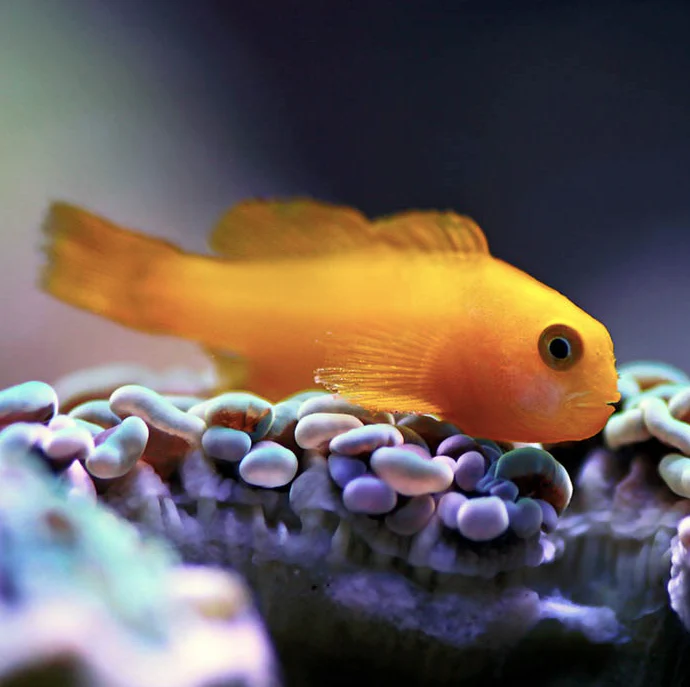
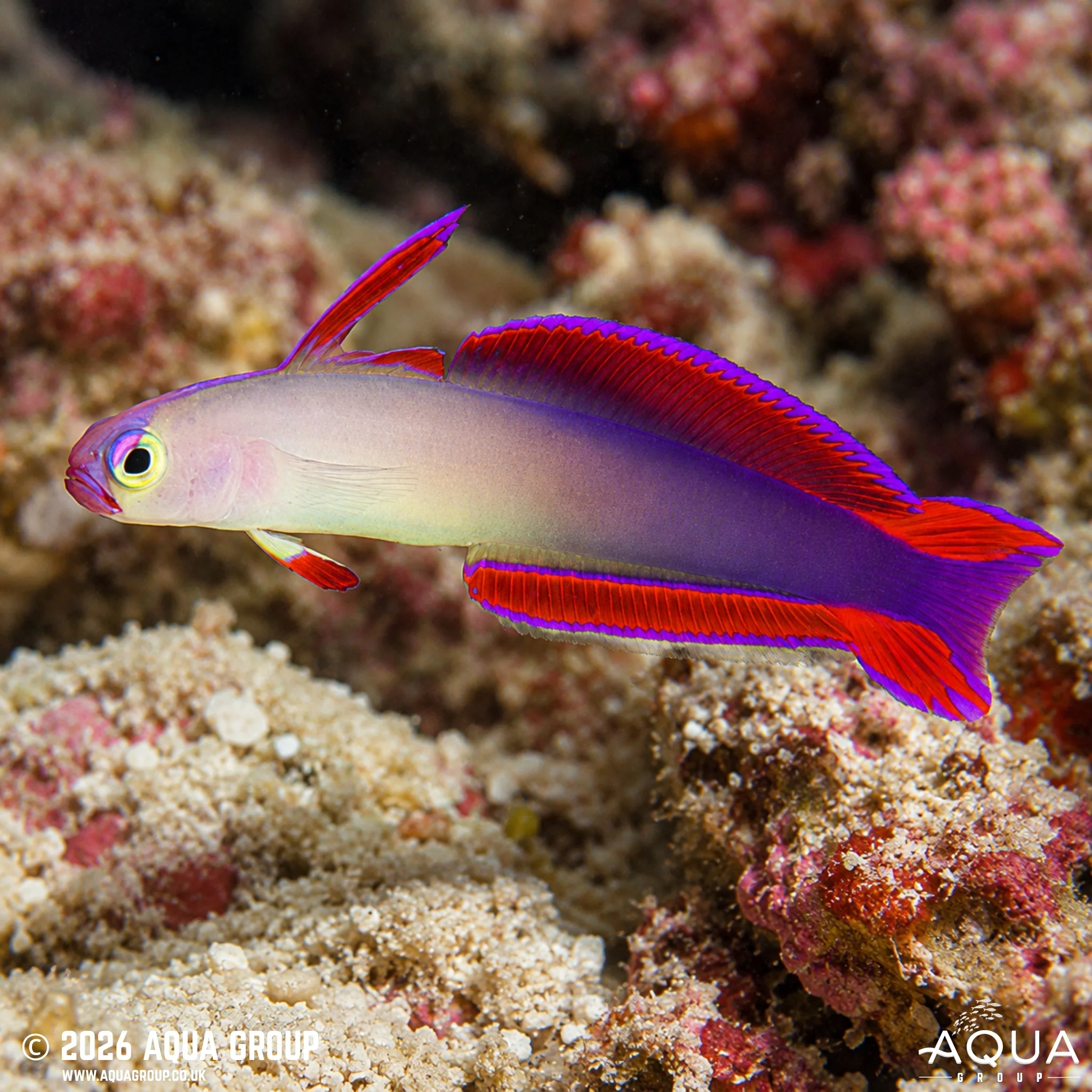
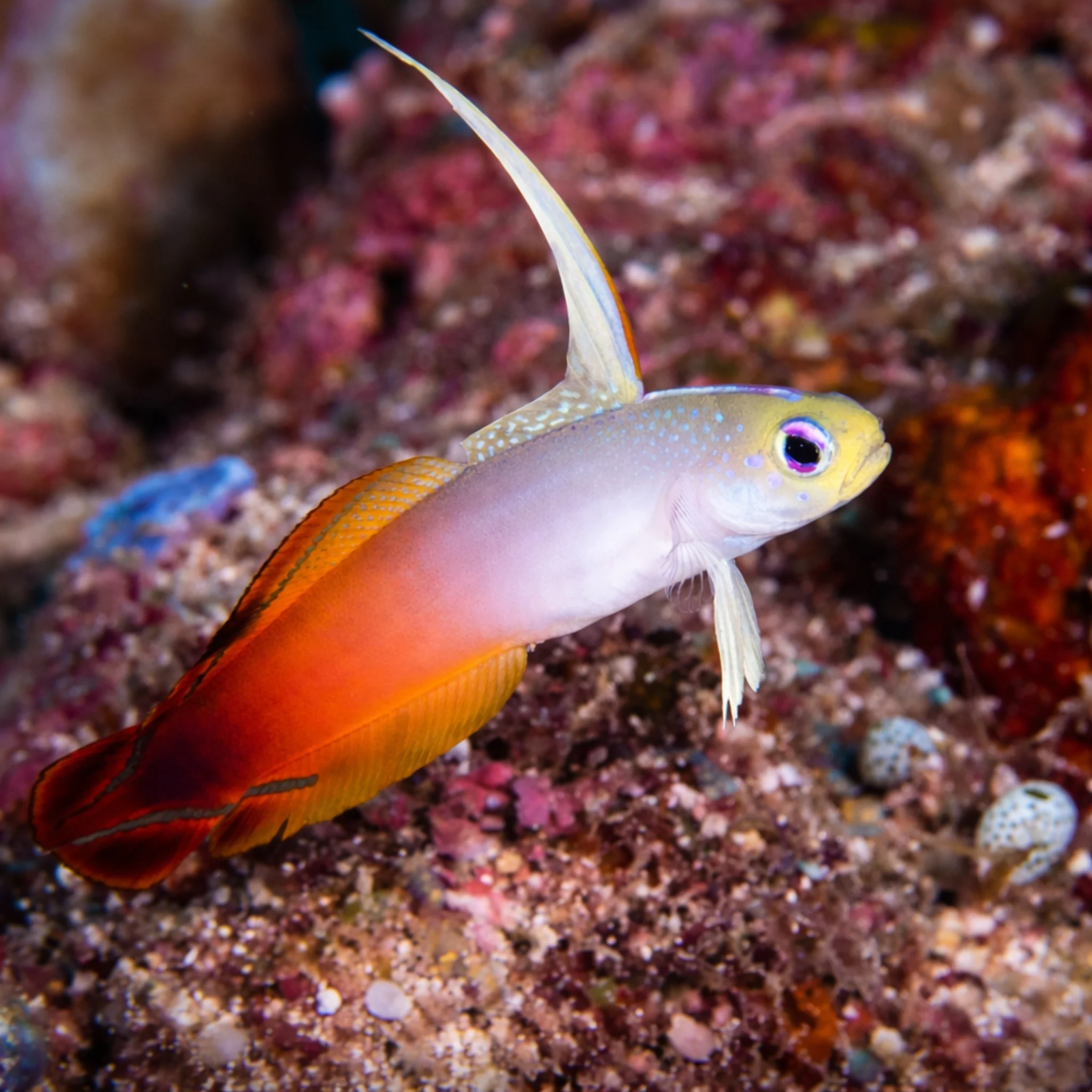
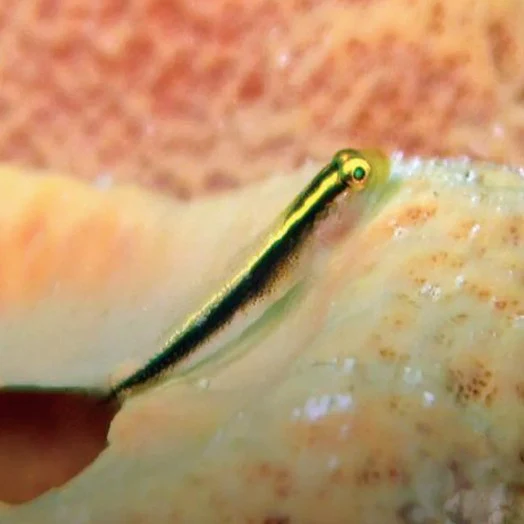
All images are a visual representation of the fish you will receive, made to be as accurate as possible. Please note that Mother Nature is a wonderful thing, and variation in patterns and colours will occur — that is part of the unique beauty of these animals.
Description
Chalk Goby (Valenciennea sexguttata)
The Chalk Goby, Valenciennea sexguttata, is a peaceful marine sand-sifting goby with a pale cream to white body, subtle blue facial markings and distinctive blue to violet spots along the cheeks and gill area. Also known as the Sixspot Goby, Sleeper Blue Dot Goby or Six-spot Sleeper Goby, this Indo-Pacific species is valued for its natural substrate-sifting behaviour and calm temperament. It is reef safe and useful in mature aquariums with established sand beds, but it needs careful feeding and should not be added to new, bare-bottom or coarse-substrate systems.
Common Name:
Chalk Goby, Sixspot Goby, Six-spot Sleeper Goby, Sleeper Blue Dot Goby, Sixspot Sleeper Goby, Blue Dot Sleeper Goby.
Scientific Name (Latin):
Valenciennea sexguttata
Maximum Size:
Up to around 14 cm.
Water Type:
Marine
Origin / Natural Habitat:
Indo-Pacific, from the Red Sea, Persian Gulf and East Africa across to Samoa, north to the Ryukyu Islands and south to Queensland, Australia. Naturally found in silty or sandy areas of lagoons, bays and atoll lagoons, usually living in pairs and using burrows under rocks.
Water Parameters:
Temperature: 24–27°C
pH Range: 8.1–8.4
Hardness or Salinity: SG 1.020–1.025
Temperament:
Peaceful, but territorial around its burrow and chosen sand-sifting area. Best kept with calm reef-safe fish that will not bully it or steal all food before it reaches the substrate. It may quarrel with similar sand-sifting gobies or other burrow-dwelling gobies in smaller aquariums.
Diet:
Carnivorous micro-predator and sand-sifter. In nature, it filters fine sand and silt for tiny invertebrates and organic food. In the aquarium, offer enriched brineshrimp, frozen mysis, copepods, cyclops, finely chopped clam, finely chopped prawn and sinking marine carnivore pellets. A mature sand bed with natural microfauna is important, and prepared foods should be offered regularly so the fish does not lose condition.
Minimum Tank Size:
A minimum of 250 litres is recommended for a single specimen, with larger aquariums preferred for pairs or mixed reef communities. The aquarium should have a mature sand bed, stable rockwork and enough open substrate for natural sifting.
Behaviour & Activity:
An active bottom-dwelling goby that spends much of the day taking mouthfuls of sand, filtering out food and passing clean sand through the gills. It may build or maintain burrows under rockwork and is often seen in pairs in nature. Its sand-sifting can help keep the substrate turned over, but it may also drop sand onto low-placed corals. Secure rockwork before adding sand, as digging can undermine loose structures.
Reef Safe:
Reef Safe
Safe with corals and most ornamental invertebrates. It does not nip coral tissue, but its digging and sand-sifting behaviour can bury small frags, irritate low-placed corals or move sand around the aquarium. It is best suited to reef aquariums with open sandy areas rather than densely packed coral on the substrate.
Special Requirements or Care Notes:
Requires a soft, mature sand bed; avoid sharp coral gravel, bare-bottom systems and newly set-up aquariums with little natural microfauna. Make sure prepared foods reach the substrate, especially when housed with active feeders. A secure lid is strongly recommended, as Valenciennea gobies are known jumpers. Rockwork should be stable and ideally placed on the tank base before sand is added. Some individuals can lose weight if they rely only on sand-sifting, so regular observation and supplemental feeding are essential.
Suitable for:
Intermediate fishkeepers
Availability:
Common in trade / Captive-bred or ranched where relevant
All images are a visual representation of the fish you will receive, made to be as accurate as possible. Please note that Mother Nature is a wonderful thing, and variation in patterns and colours will occur — that is part of the unique beauty of these animals.