The Story
Eight-banded Butterflyfish (Chaetodon octofasciatus)
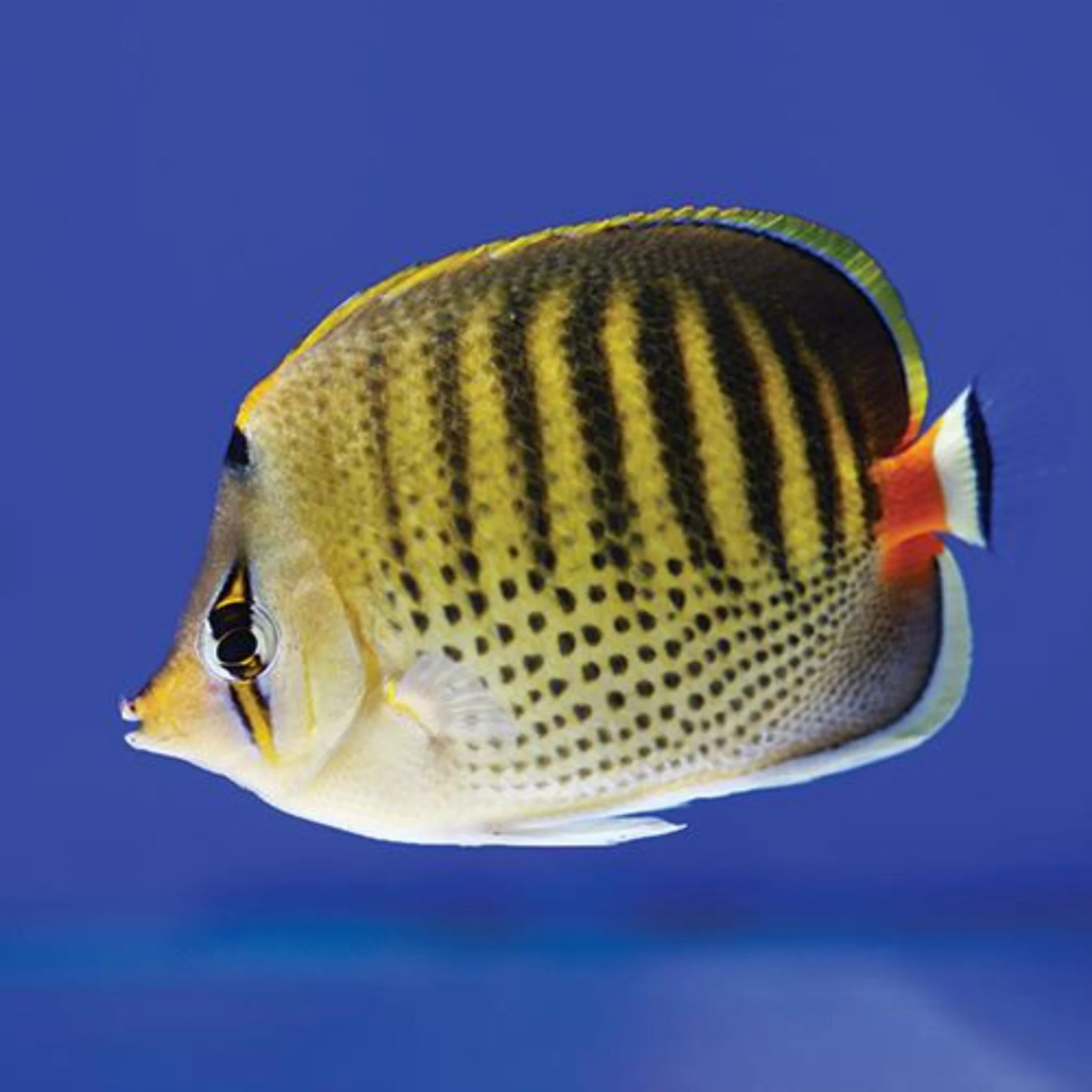
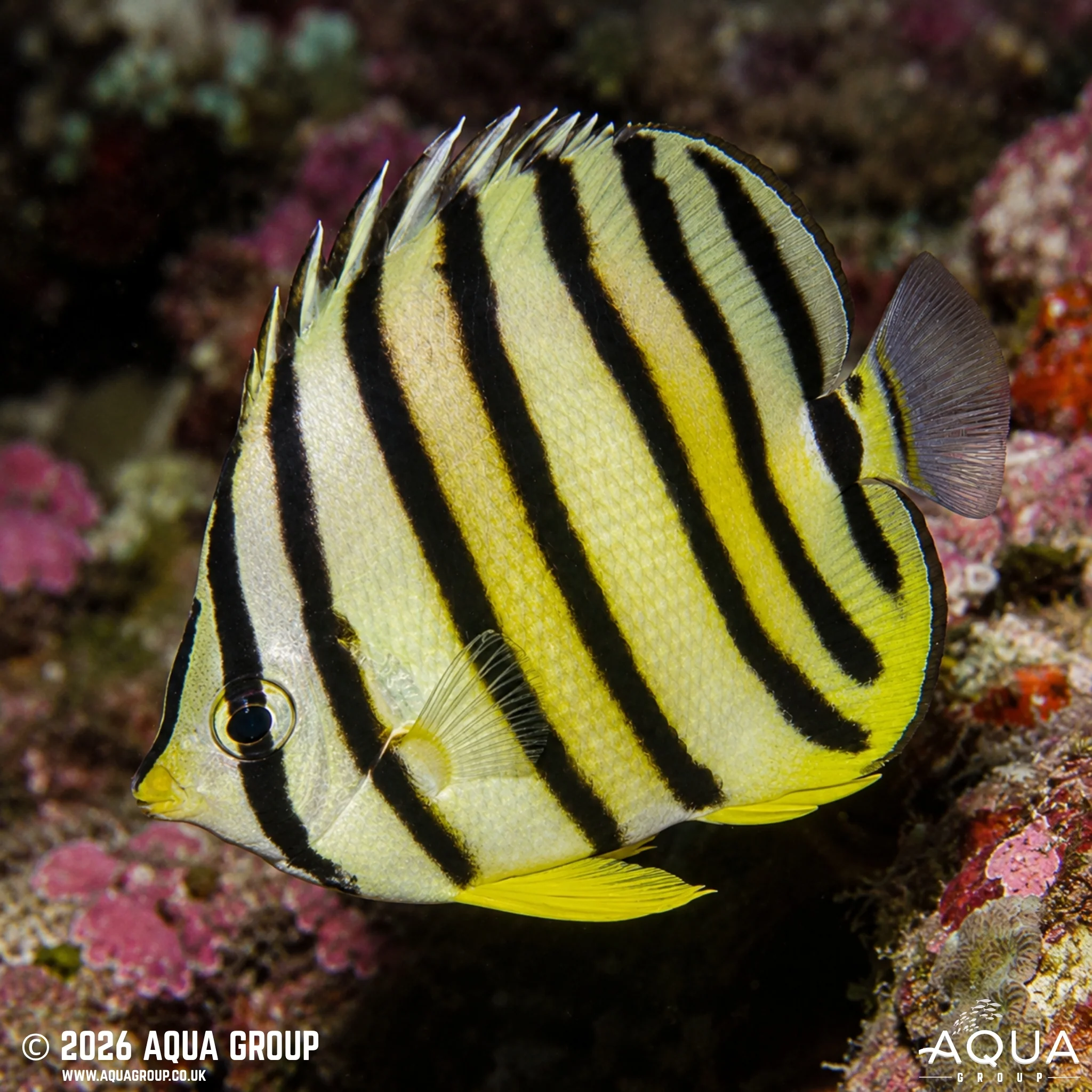
The Eight-banded Butterflyfish, Chaetodon octofasciatus, is a distinctive Indo-West Pacific butterflyfish with a compressed, oval body, pale yellow to cream base colour and bold dark vertical bands across the head and flanks. Also known as the Eightband Butterflyfish or Eight-striped Butterflyfish, this coral-reef species is attractive and instantly recognisable, but it is a specialist marine fish with demanding feeding requirements. In the wild it is closely tied to coral-rich lagoon and inshore reefs, where it feeds heavily on live coral polyps, making it suitable only for expert keepers with a carefully planned system.
Common Name:
Eight-banded Butterflyfish, Eightband Butterflyfish, Eight-striped Butterflyfish, Eight-band Butterfly.
Scientific Name (Latin):
Chaetodon octofasciatus
Maximum Size:
Up to around 12 cm.
Water Type:
Marine
Origin / Natural Habitat:
Indo-West Pacific, including the eastern Indian Ocean and western Pacific, with records from areas such as India, Sri Lanka, Southeast Asia, southern Japan, northern Australia and the Solomon Islands. Naturally found on sheltered lagoon reefs and inshore coral reefs, particularly in coral-rich areas. Adults are often seen in pairs, while juveniles may occur in groups among branching Acropora corals.
Water Parameters:
Temperature: 24–27°C
pH Range: 8.1–8.4
Hardness or Salinity: SG 1.020–1.025
Temperament:
Generally not aggressive towards unrelated fish, but it is not a simple community species. It may be territorial towards similar butterflyfish and can be easily stressed by boisterous or dominant tank mates. Its main challenge is not aggression, but its specialised diet and poor reliability on substitute foods.
Diet:
Obligate coral polyp feeder in the wild. This species naturally feeds on live coral polyps, especially in coral-rich reef habitats, and may be extremely difficult to convert onto prepared aquarium foods. Some individuals may investigate live brineshrimp, blackworms, mysis, finely chopped clam, mussel, squid or specialist frozen marine preparations, but prepared-food acceptance should not be assumed. Long-term success requires expert feeding management and frequent observation.
Minimum Tank Size:
A minimum of 400 litres is recommended for a single specimen, with larger aquariums preferred. The aquarium should be mature, stable and spacious, with extensive rockwork, calm areas and excellent water quality. Specialist systems may require more space and dedicated feeding strategies.
Behaviour & Activity:
A reef-roaming butterflyfish that spends much of its day moving across coral structure and picking at surfaces. In nature, adults are commonly observed in pairs, while juveniles shelter around branching corals. In aquariums it may be shy at first and can decline quickly if it does not feed. It needs open swimming space, secure retreats and peaceful tank mates that will not outcompete it.
Reef Safe:
Not Reef Safe
This species naturally feeds on live coral polyps and should be expected to nip or consume stony corals. It may also pick at fan worms, tube worms, clam mantles and other sessile invertebrates. It is not suitable for standard reef aquariums.
Special Requirements or Care Notes:
Expert-only species due to its obligate corallivore diet and poor long-term reliability in conventional aquariums. It should not be purchased as a general ornamental butterflyfish unless the keeper fully understands its specialist feeding requirements. Avoid thin, damaged or non-feeding specimens. It is best reserved for expert aquarists, specialist systems or public-aquarium-style setups where coral-based feeding and long-term nutritional needs can be managed. Do not rely on this species to adapt to prepared foods.
Suitable for:
Expert only
Availability:
Rare or occasional in trade
All images are a visual representation of the fish you will receive, made to be as accurate as possible. Please note that Mother Nature is a wonderful thing, and variation in patterns and colours will occur — that is part of the unique beauty of these animals.
Description
Eight-banded Butterflyfish (Chaetodon octofasciatus)
The Eight-banded Butterflyfish, Chaetodon octofasciatus, is a distinctive Indo-West Pacific butterflyfish with a compressed, oval body, pale yellow to cream base colour and bold dark vertical bands across the head and flanks. Also known as the Eightband Butterflyfish or Eight-striped Butterflyfish, this coral-reef species is attractive and instantly recognisable, but it is a specialist marine fish with demanding feeding requirements. In the wild it is closely tied to coral-rich lagoon and inshore reefs, where it feeds heavily on live coral polyps, making it suitable only for expert keepers with a carefully planned system.
Common Name:
Eight-banded Butterflyfish, Eightband Butterflyfish, Eight-striped Butterflyfish, Eight-band Butterfly.
Scientific Name (Latin):
Chaetodon octofasciatus
Maximum Size:
Up to around 12 cm.
Water Type:
Marine
Origin / Natural Habitat:
Indo-West Pacific, including the eastern Indian Ocean and western Pacific, with records from areas such as India, Sri Lanka, Southeast Asia, southern Japan, northern Australia and the Solomon Islands. Naturally found on sheltered lagoon reefs and inshore coral reefs, particularly in coral-rich areas. Adults are often seen in pairs, while juveniles may occur in groups among branching Acropora corals.
Water Parameters:
Temperature: 24–27°C
pH Range: 8.1–8.4
Hardness or Salinity: SG 1.020–1.025
Temperament:
Generally not aggressive towards unrelated fish, but it is not a simple community species. It may be territorial towards similar butterflyfish and can be easily stressed by boisterous or dominant tank mates. Its main challenge is not aggression, but its specialised diet and poor reliability on substitute foods.
Diet:
Obligate coral polyp feeder in the wild. This species naturally feeds on live coral polyps, especially in coral-rich reef habitats, and may be extremely difficult to convert onto prepared aquarium foods. Some individuals may investigate live brineshrimp, blackworms, mysis, finely chopped clam, mussel, squid or specialist frozen marine preparations, but prepared-food acceptance should not be assumed. Long-term success requires expert feeding management and frequent observation.
Minimum Tank Size:
A minimum of 400 litres is recommended for a single specimen, with larger aquariums preferred. The aquarium should be mature, stable and spacious, with extensive rockwork, calm areas and excellent water quality. Specialist systems may require more space and dedicated feeding strategies.
Behaviour & Activity:
A reef-roaming butterflyfish that spends much of its day moving across coral structure and picking at surfaces. In nature, adults are commonly observed in pairs, while juveniles shelter around branching corals. In aquariums it may be shy at first and can decline quickly if it does not feed. It needs open swimming space, secure retreats and peaceful tank mates that will not outcompete it.
Reef Safe:
Not Reef Safe
This species naturally feeds on live coral polyps and should be expected to nip or consume stony corals. It may also pick at fan worms, tube worms, clam mantles and other sessile invertebrates. It is not suitable for standard reef aquariums.
Special Requirements or Care Notes:
Expert-only species due to its obligate corallivore diet and poor long-term reliability in conventional aquariums. It should not be purchased as a general ornamental butterflyfish unless the keeper fully understands its specialist feeding requirements. Avoid thin, damaged or non-feeding specimens. It is best reserved for expert aquarists, specialist systems or public-aquarium-style setups where coral-based feeding and long-term nutritional needs can be managed. Do not rely on this species to adapt to prepared foods.
Suitable for:
Expert only
Availability:
Rare or occasional in trade
All images are a visual representation of the fish you will receive, made to be as accurate as possible. Please note that Mother Nature is a wonderful thing, and variation in patterns and colours will occur — that is part of the unique beauty of these animals.