Original: $5.97
-65%$5.97
$2.09The Story
Hi Fin Rosy Barb (Pethia conchonius)
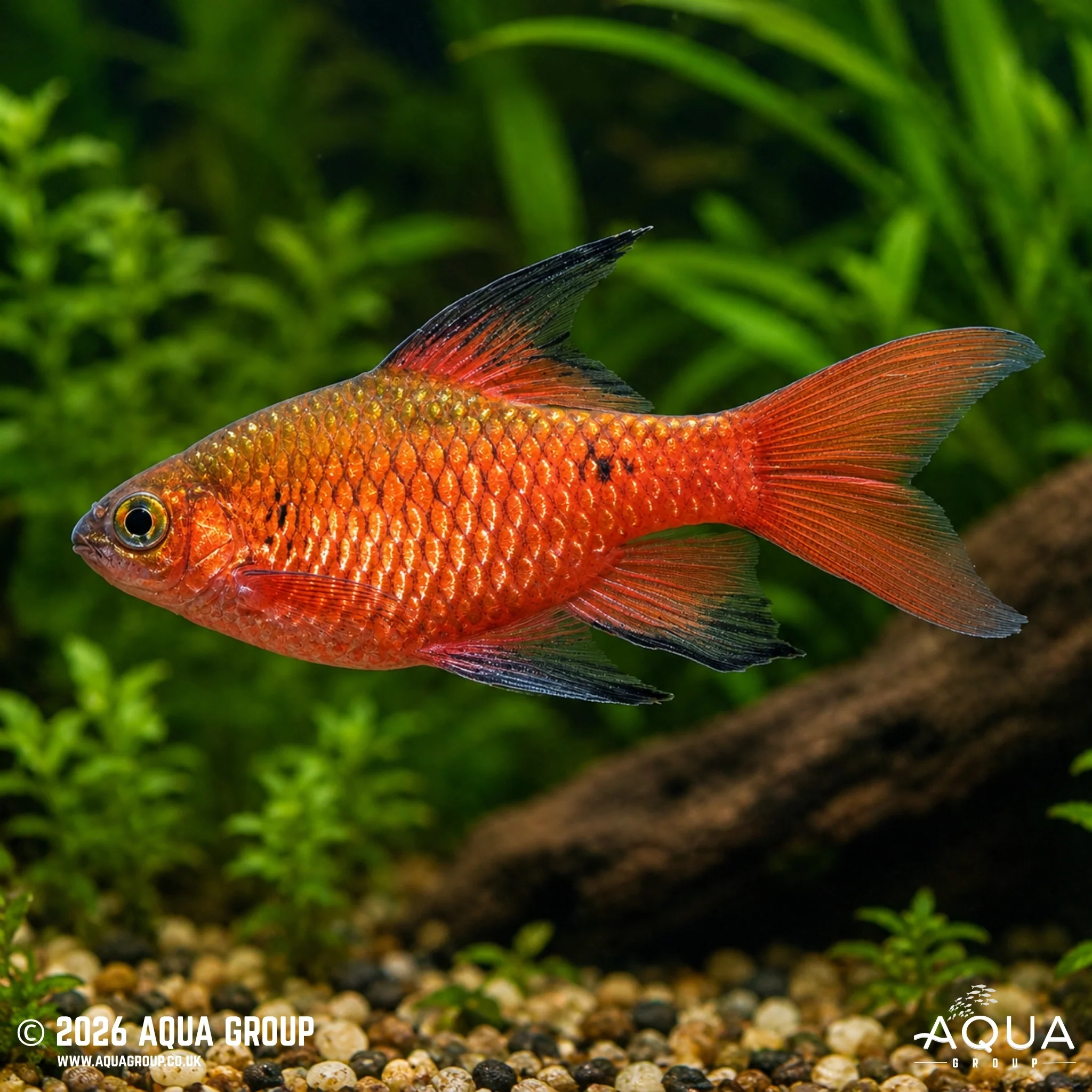
The Hi Fin Rosy Barb is a colourful and active freshwater barb, prized for its warm rose, copper and orange tones, lively shoaling behaviour and taller decorative dorsal fin. Males usually develop the strongest rosy-red colour, especially when mature and displaying, while females are generally fuller-bodied and more softly coloured. This captive-bred fin form of the classic Rosy Barb is hardy, adaptable and well suited to spacious community aquariums with clean, well-oxygenated water.
Common Name:
Hi Fin Rosy Barb. Also commonly referred to as the High Fin Rosy Barb, Longfin Rosy Barb, Rosy Barb, Red Barb or Rose Barb.
Scientific Name (Latin):
Pethia conchonius
Also widely referenced in the aquarium trade as Puntius conchonius.
Maximum Size:
Around 7–10 cm in most aquariums, although scientific records list larger wild specimens up to around 14 cm total length.
Water Type:
Freshwater
Origin / Natural Habitat:
The Hi Fin Rosy Barb is a captive-bred aquarium strain. The wild Rosy Barb is native to South Asia, with records across parts of India, Bangladesh, Nepal, Pakistan and surrounding regions. In nature, it is found in lakes, streams and flowing hill waters, including cooler, well-oxygenated habitats.
Water Parameters:
Temperature: 18–25°C
pH Range: 6.0–8.0
Hardness: soft to moderately hard water, with good adaptability if conditions remain stable
Temperament:
Generally peaceful, but active and boisterous. It is best kept in a proper group to spread social behaviour and reduce the chance of fin-nipping. Avoid keeping it with very slow, delicate or long-finned fish.
Diet:
Omnivorous. In nature, Rosy Barbs feed on worms, crustaceans, insects and plant matter. In the aquarium they should be offered a varied diet including quality flake, small pellets, granules, spirulina-based foods, daphnia, brineshrimp, bloodworm and occasional vegetable-based foods.
Minimum Tank Size:
A practical recommendation is at least 120 litres for a proper group, with a 90 cm aquarium or larger preferred due to their active swimming behaviour.
Behaviour & Activity:
This is an active mid-water shoaling fish that should be kept in a group of at least 6, ideally 8 or more. Males may display to one another and show stronger rosy colour when kept with females and rival males. It benefits from open swimming space, planted edges, good oxygenation and a secure lid, as active barbs may jump when startled.
Aquarium Category:
Community Fish
This species is suitable for a robust peaceful community aquarium. Good tank mates include other active barbs, danios, rainbowfish, larger tetras, livebearers, Corydoras, bristlenose plecos and other confident community fish that enjoy similar temperatures. Avoid timid nano fish, aggressive cichlids, large predators and very long-finned species such as fancy guppies or slow bettas, especially with the active Hi Fin form.
Special Requirements or Care Notes:
Best kept in a mature, well-filtered aquarium with clean, oxygen-rich water and regular maintenance. Rosy Barbs tolerate cooler water better than many tropical fish and can be suitable for some unheated indoor aquariums where temperatures remain stable. The Hi Fin variety should not be mixed with persistent fin nippers, as the taller fins may be more vulnerable to damage.
Suitable for:
Beginner to intermediate fishkeepers
Availability:
Common / occasional in trade, usually as captive-bred stock
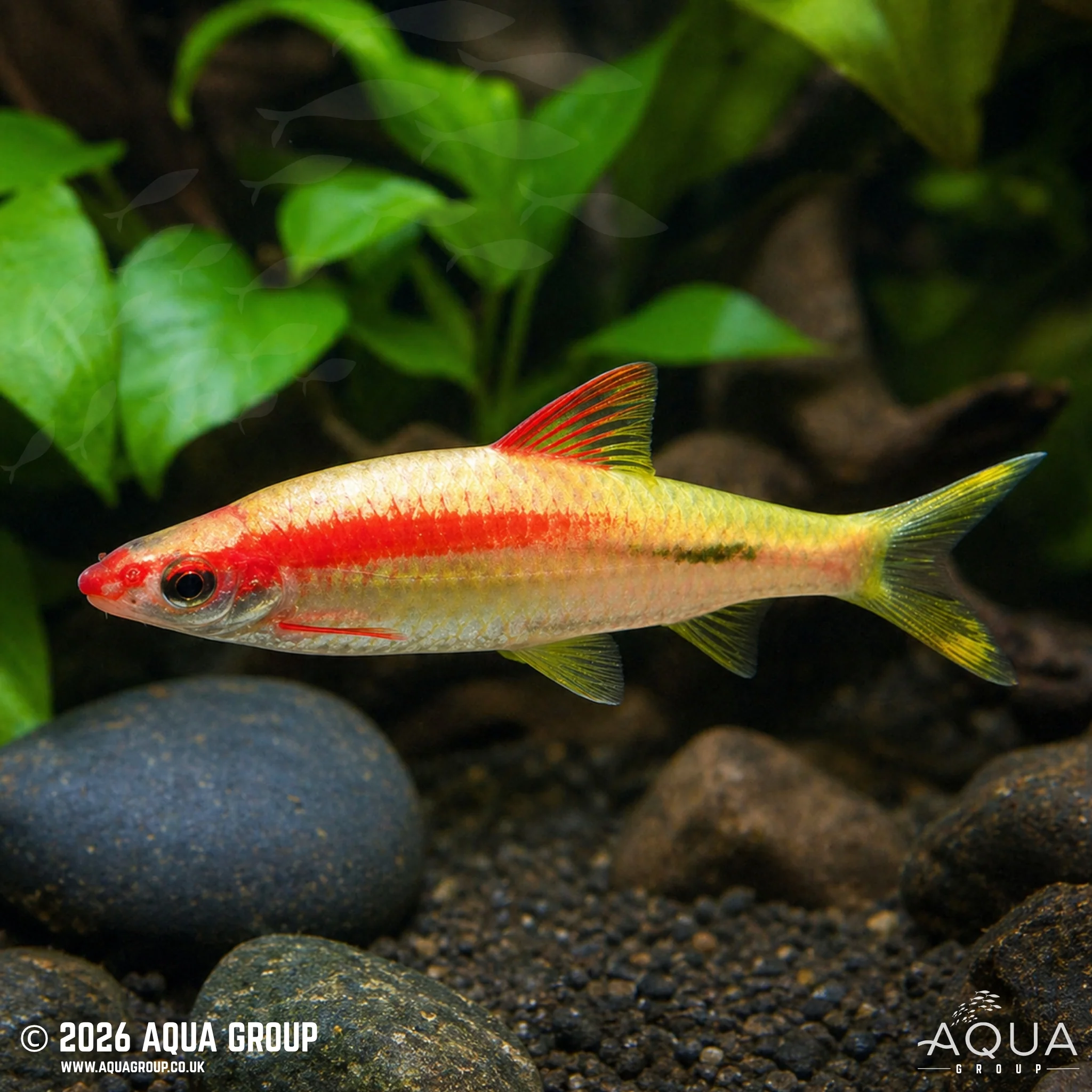
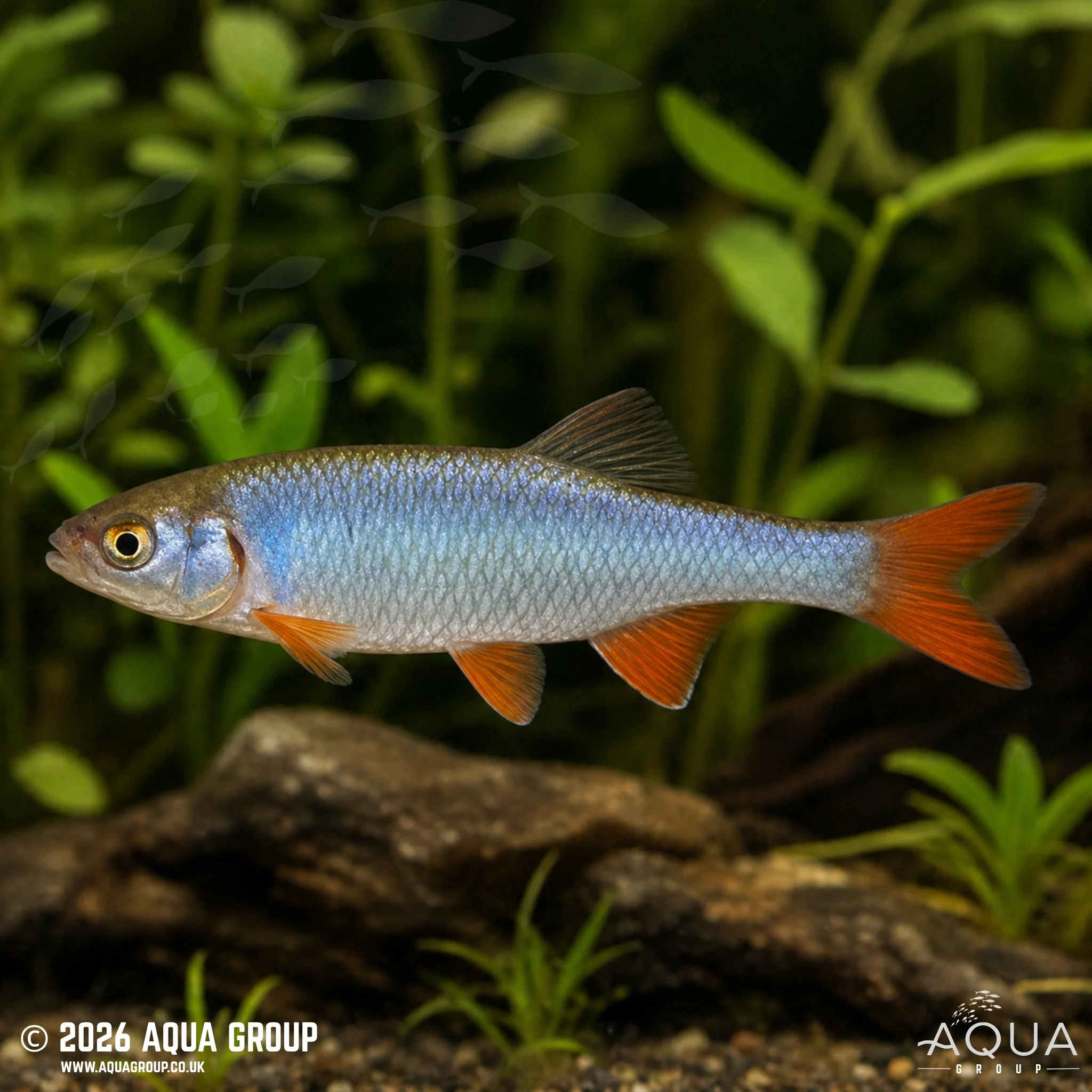
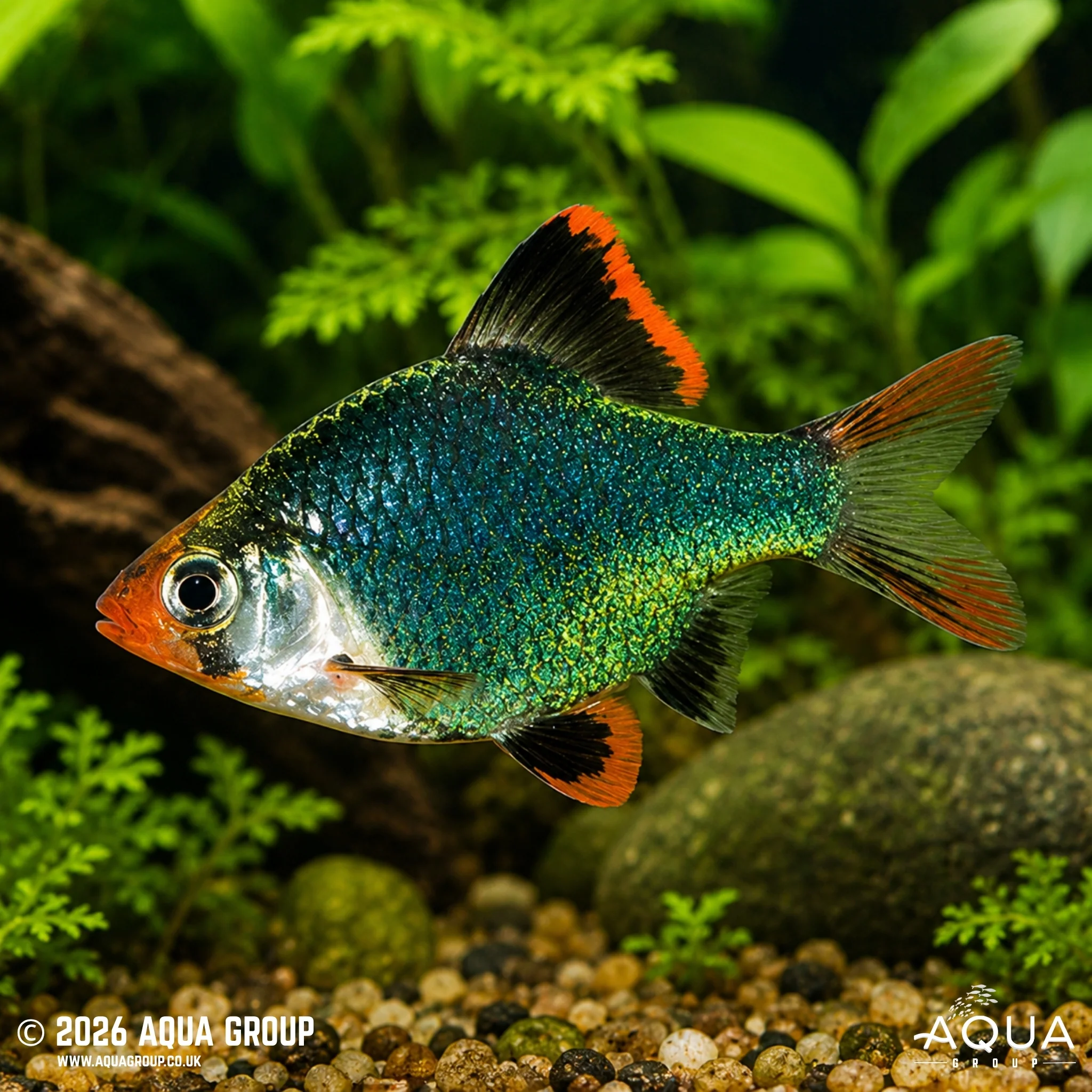
All images are a visual representation of the fish you will receive, made to be as accurate as possible. Please note that Mother Nature is a wonderful thing, and variation in patterns and colours will occur — that is part of the unique beauty of these animals.
Description
Hi Fin Rosy Barb (Pethia conchonius)
The Hi Fin Rosy Barb is a colourful and active freshwater barb, prized for its warm rose, copper and orange tones, lively shoaling behaviour and taller decorative dorsal fin. Males usually develop the strongest rosy-red colour, especially when mature and displaying, while females are generally fuller-bodied and more softly coloured. This captive-bred fin form of the classic Rosy Barb is hardy, adaptable and well suited to spacious community aquariums with clean, well-oxygenated water.
Common Name:
Hi Fin Rosy Barb. Also commonly referred to as the High Fin Rosy Barb, Longfin Rosy Barb, Rosy Barb, Red Barb or Rose Barb.
Scientific Name (Latin):
Pethia conchonius
Also widely referenced in the aquarium trade as Puntius conchonius.
Maximum Size:
Around 7–10 cm in most aquariums, although scientific records list larger wild specimens up to around 14 cm total length.
Water Type:
Freshwater
Origin / Natural Habitat:
The Hi Fin Rosy Barb is a captive-bred aquarium strain. The wild Rosy Barb is native to South Asia, with records across parts of India, Bangladesh, Nepal, Pakistan and surrounding regions. In nature, it is found in lakes, streams and flowing hill waters, including cooler, well-oxygenated habitats.
Water Parameters:
Temperature: 18–25°C
pH Range: 6.0–8.0
Hardness: soft to moderately hard water, with good adaptability if conditions remain stable
Temperament:
Generally peaceful, but active and boisterous. It is best kept in a proper group to spread social behaviour and reduce the chance of fin-nipping. Avoid keeping it with very slow, delicate or long-finned fish.
Diet:
Omnivorous. In nature, Rosy Barbs feed on worms, crustaceans, insects and plant matter. In the aquarium they should be offered a varied diet including quality flake, small pellets, granules, spirulina-based foods, daphnia, brineshrimp, bloodworm and occasional vegetable-based foods.
Minimum Tank Size:
A practical recommendation is at least 120 litres for a proper group, with a 90 cm aquarium or larger preferred due to their active swimming behaviour.
Behaviour & Activity:
This is an active mid-water shoaling fish that should be kept in a group of at least 6, ideally 8 or more. Males may display to one another and show stronger rosy colour when kept with females and rival males. It benefits from open swimming space, planted edges, good oxygenation and a secure lid, as active barbs may jump when startled.
Aquarium Category:
Community Fish
This species is suitable for a robust peaceful community aquarium. Good tank mates include other active barbs, danios, rainbowfish, larger tetras, livebearers, Corydoras, bristlenose plecos and other confident community fish that enjoy similar temperatures. Avoid timid nano fish, aggressive cichlids, large predators and very long-finned species such as fancy guppies or slow bettas, especially with the active Hi Fin form.
Special Requirements or Care Notes:
Best kept in a mature, well-filtered aquarium with clean, oxygen-rich water and regular maintenance. Rosy Barbs tolerate cooler water better than many tropical fish and can be suitable for some unheated indoor aquariums where temperatures remain stable. The Hi Fin variety should not be mixed with persistent fin nippers, as the taller fins may be more vulnerable to damage.
Suitable for:
Beginner to intermediate fishkeepers
Availability:
Common / occasional in trade, usually as captive-bred stock
All images are a visual representation of the fish you will receive, made to be as accurate as possible. Please note that Mother Nature is a wonderful thing, and variation in patterns and colours will occur — that is part of the unique beauty of these animals.