Original: $5.97
-65%$5.97
$2.09The Story
Lyretail Red Wag Swordtail (Xiphophorus helleri)
The Lyretail Red Wag Swordtail is a striking captive-bred livebearer, prized for its vivid red body, contrasting black wagtail fins and elegant lyretail fin extensions. Mature males also develop the classic sword-like extension on the lower tail, giving this variety an especially decorative appearance. Active, colourful and full of movement, it is a great choice for suitable freshwater community aquariums with clean, stable, moderately hard to hard water.
Common Name:
Lyretail Red Wag Swordtail. Also commonly referred to as the Red Wag Lyretail Swordtail, Red Wagtail Lyretail Swordtail, Lyretail Swordtail, Red Wag Swordtail or Swordtail Livebearer.
Scientific Name (Latin):
Xiphophorus helleri
Also widely referenced as Xiphophorus hellerii.
Maximum Size:
Around 10–12 cm in most aquariums, with mature males appearing longer due to the swordtail and lyretail fin extensions. Scientific records list larger specimens, so this should still be planned as an active, medium-sized livebearer.
Water Type:
Freshwater
Origin / Natural Habitat:
The Lyretail Red Wag Swordtail is a captive-bred aquarium strain. The wild form of Xiphophorus helleri / hellerii is native to North and Central America, from Veracruz in Mexico through to north-western Honduras. Wild Swordtails are found in streams, rivers, warm springs, weedy canals, ponds and heavily vegetated freshwater habitats.
Water Parameters:
Temperature: 22–28°C
pH Range: 7.0–8.2
Hardness: moderately hard to hard water preferred
Temperament:
Generally peaceful and suitable for community aquariums, although males can be competitive with each other and may chase females. Mixed-sex groups are best kept with more females than males to reduce pressure on individual females.
Diet:
Omnivorous. It should be offered a varied diet including quality flake, small pellets, algae-based foods, spirulina, blanched vegetables and frozen or live foods such as daphnia, brineshrimp and bloodworm. Vegetable matter is useful for long-term health, colour and digestion.
Minimum Tank Size:
A practical recommendation is at least 100–120 litres, with a 3ft aquarium or larger preferred due to their active swimming behaviour, adult size and extended finnage. Trade care guidance also recommends a minimum 3ft aquarium because Swordtails are streamlined, agile and active swimmers.
Behaviour & Activity:
This is an active mid-to-upper level livebearer that spends much of the day swimming, grazing and exploring the aquarium. Males may display to females and rival males, especially when mature. Females give birth to free-swimming fry, so numbers can increase quickly in a mixed-sex group. Planted areas, floating plants and fine-leaved cover can provide shelter for fry, while open swimming space should still be maintained for adults.
Aquarium Category:
Community Fish
This species is peaceful and works well with other freshwater community fish that enjoy similar harder, alkaline water conditions. Suitable tank mates include platies, mollies, peaceful rainbowfish, danios, larger tetras, compatible Corydoras and bristlenose plecos. Avoid aggressive fish, persistent fin nippers, large predators and very soft-water species that prefer acidic conditions. Extra care should be taken with fin-nipping species because the lyretail fins are more delicate than standard swordtail finnage.
Special Requirements or Care Notes:
Best kept in clean, well-filtered water with good oxygenation, stable water chemistry and regular maintenance. Swordtails prefer harder, more alkaline water and may not thrive long-term in very soft acidic aquariums. A secure lid is recommended, as active livebearers can jump when startled. For mixed-sex groups, keeping one male with two or more females can help reduce constant harassment. Because this is a lyretail strain, avoid sharp décor and fin-nipping tank mates.
Suitable for:
Beginner to intermediate fishkeepers
Availability:
Common / occasional in trade, usually as captive-bred stock
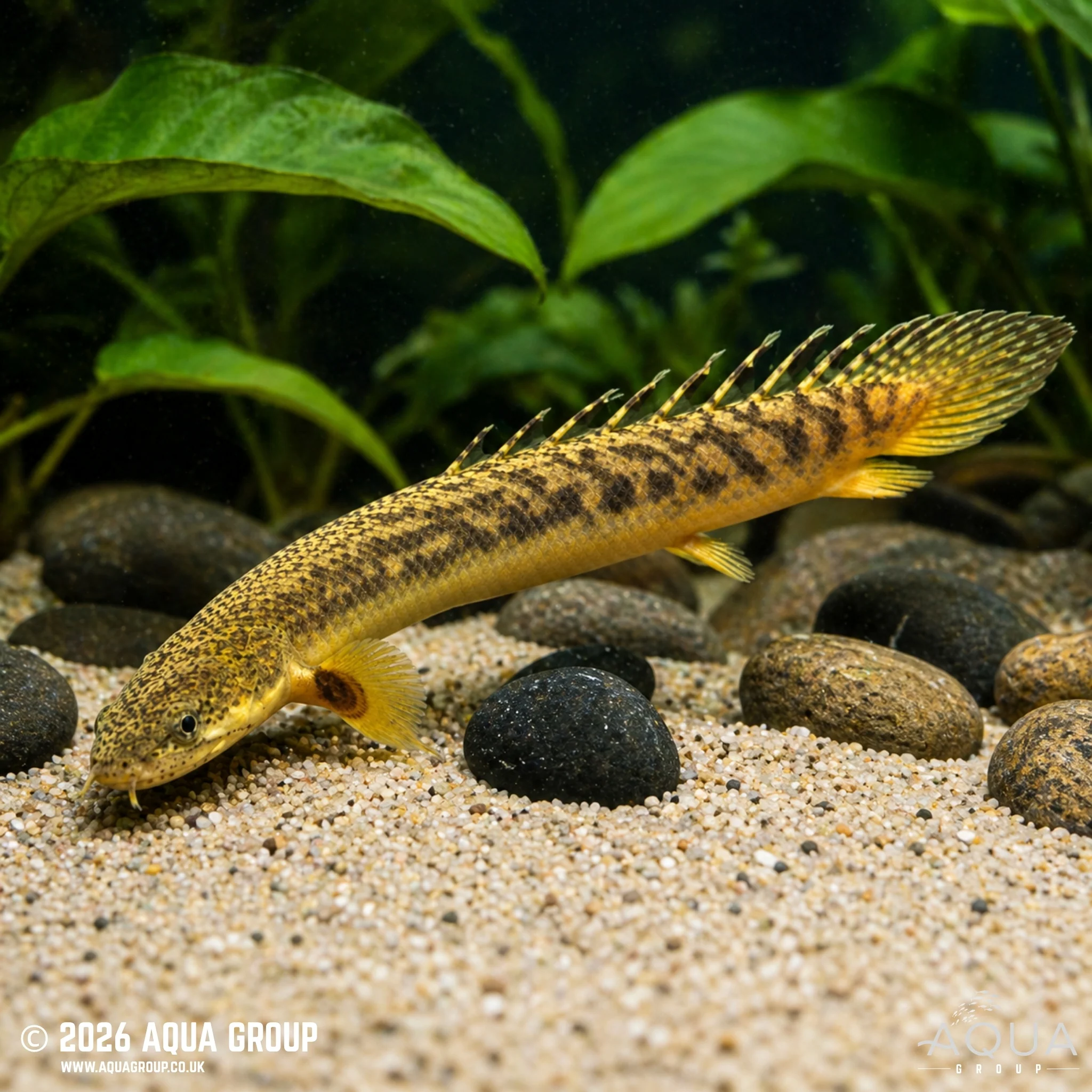
All images are a visual representation of the fish you will receive, made to be as accurate as possible. Please note that Mother Nature is a wonderful thing, and variation in patterns and colours will occur — that is part of the unique beauty of these animals.
Description
Lyretail Red Wag Swordtail (Xiphophorus helleri)
The Lyretail Red Wag Swordtail is a striking captive-bred livebearer, prized for its vivid red body, contrasting black wagtail fins and elegant lyretail fin extensions. Mature males also develop the classic sword-like extension on the lower tail, giving this variety an especially decorative appearance. Active, colourful and full of movement, it is a great choice for suitable freshwater community aquariums with clean, stable, moderately hard to hard water.
Common Name:
Lyretail Red Wag Swordtail. Also commonly referred to as the Red Wag Lyretail Swordtail, Red Wagtail Lyretail Swordtail, Lyretail Swordtail, Red Wag Swordtail or Swordtail Livebearer.
Scientific Name (Latin):
Xiphophorus helleri
Also widely referenced as Xiphophorus hellerii.
Maximum Size:
Around 10–12 cm in most aquariums, with mature males appearing longer due to the swordtail and lyretail fin extensions. Scientific records list larger specimens, so this should still be planned as an active, medium-sized livebearer.
Water Type:
Freshwater
Origin / Natural Habitat:
The Lyretail Red Wag Swordtail is a captive-bred aquarium strain. The wild form of Xiphophorus helleri / hellerii is native to North and Central America, from Veracruz in Mexico through to north-western Honduras. Wild Swordtails are found in streams, rivers, warm springs, weedy canals, ponds and heavily vegetated freshwater habitats.
Water Parameters:
Temperature: 22–28°C
pH Range: 7.0–8.2
Hardness: moderately hard to hard water preferred
Temperament:
Generally peaceful and suitable for community aquariums, although males can be competitive with each other and may chase females. Mixed-sex groups are best kept with more females than males to reduce pressure on individual females.
Diet:
Omnivorous. It should be offered a varied diet including quality flake, small pellets, algae-based foods, spirulina, blanched vegetables and frozen or live foods such as daphnia, brineshrimp and bloodworm. Vegetable matter is useful for long-term health, colour and digestion.
Minimum Tank Size:
A practical recommendation is at least 100–120 litres, with a 3ft aquarium or larger preferred due to their active swimming behaviour, adult size and extended finnage. Trade care guidance also recommends a minimum 3ft aquarium because Swordtails are streamlined, agile and active swimmers.
Behaviour & Activity:
This is an active mid-to-upper level livebearer that spends much of the day swimming, grazing and exploring the aquarium. Males may display to females and rival males, especially when mature. Females give birth to free-swimming fry, so numbers can increase quickly in a mixed-sex group. Planted areas, floating plants and fine-leaved cover can provide shelter for fry, while open swimming space should still be maintained for adults.
Aquarium Category:
Community Fish
This species is peaceful and works well with other freshwater community fish that enjoy similar harder, alkaline water conditions. Suitable tank mates include platies, mollies, peaceful rainbowfish, danios, larger tetras, compatible Corydoras and bristlenose plecos. Avoid aggressive fish, persistent fin nippers, large predators and very soft-water species that prefer acidic conditions. Extra care should be taken with fin-nipping species because the lyretail fins are more delicate than standard swordtail finnage.
Special Requirements or Care Notes:
Best kept in clean, well-filtered water with good oxygenation, stable water chemistry and regular maintenance. Swordtails prefer harder, more alkaline water and may not thrive long-term in very soft acidic aquariums. A secure lid is recommended, as active livebearers can jump when startled. For mixed-sex groups, keeping one male with two or more females can help reduce constant harassment. Because this is a lyretail strain, avoid sharp décor and fin-nipping tank mates.
Suitable for:
Beginner to intermediate fishkeepers
Availability:
Common / occasional in trade, usually as captive-bred stock
All images are a visual representation of the fish you will receive, made to be as accurate as possible. Please note that Mother Nature is a wonderful thing, and variation in patterns and colours will occur — that is part of the unique beauty of these animals.