Original: $7.32
-65%$7.32
$2.56The Story
Orange Sailfin Molly (Poecilia latipinna)
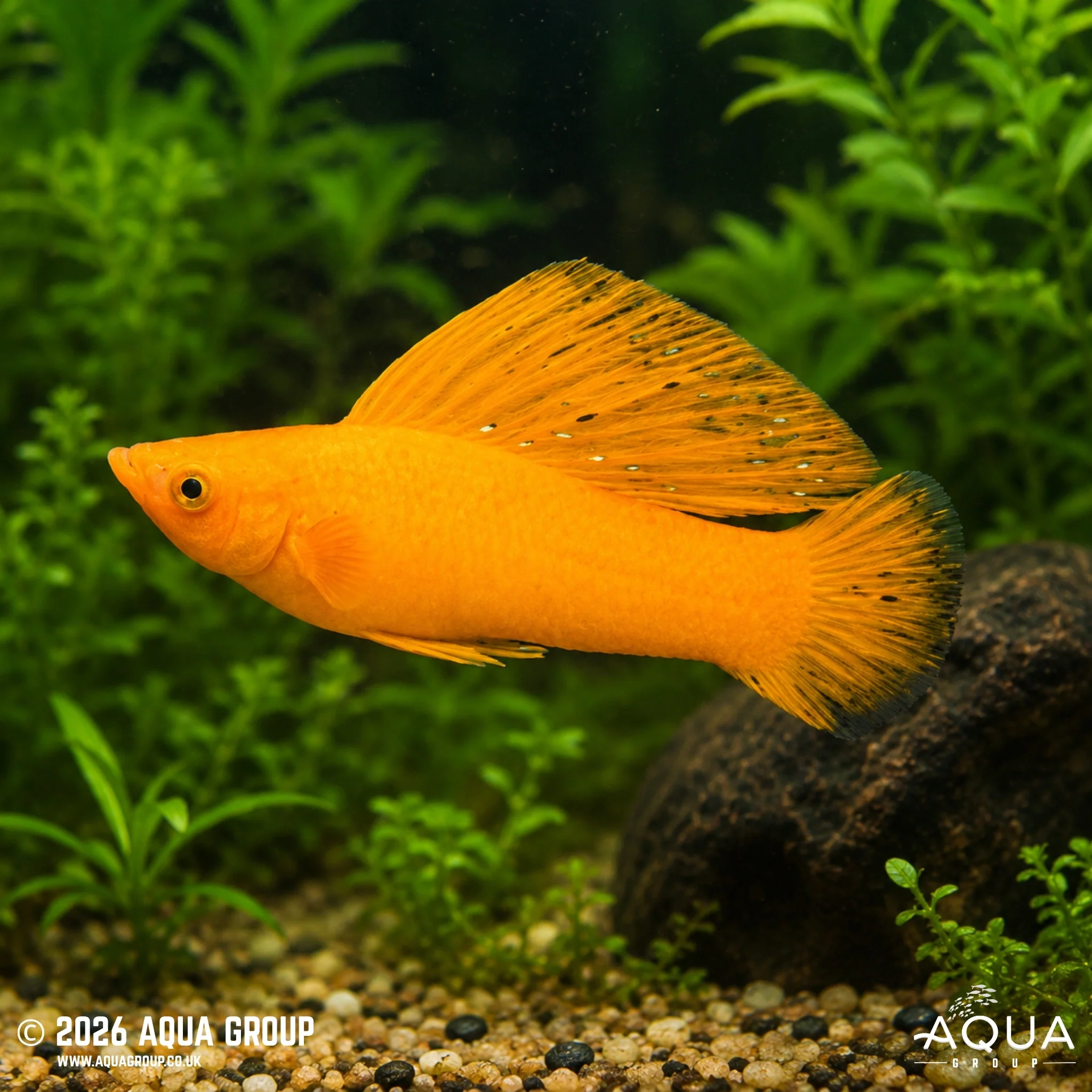
The Orange Sailfin Molly is a bright and active livebearer, prized for its warm orange colouration, lively behaviour and impressive sail-like dorsal fin in mature males. This captive-bred form of the Sailfin Molly is a hardy and attractive choice for suitable community aquariums, but it does best in clean, stable, mineral-rich water. Like other mollies, it prefers moderately hard to hard, alkaline conditions and should not be kept long-term in very soft acidic aquariums.
Common Name:
Orange Sailfin Molly. Also commonly referred to as the Orange Molly, Orange Sailfin Molly Fish, Sailfin Molly or Fancy Molly.
Scientific Name (Latin):
Poecilia latipinna
Maximum Size:
Around 8–12 cm in most aquariums, with males developing the larger sail-like dorsal fin. Scientific records list Sailfin Mollies up to around 15 cm total length, so a spacious aquarium is recommended for long-term care.
Water Type:
Freshwater
Can also tolerate lightly brackish conditions when acclimated correctly.
Origin / Natural Habitat:
The Orange Sailfin Molly is a captive-bred aquarium strain. The wild form of Poecilia latipinna is native to North America, from the Cape Fear drainage in North Carolina, USA, down to Veracruz, Mexico. In the wild, Sailfin Mollies occur in still or gently flowing warm waters, including small creeks, drains, ponds, lakes, sloughs, quiet vegetated backwaters, coastal waters, tidal ditches and brackish canals.
Water Parameters:
Temperature: 22–28°C
pH Range: 7.2–8.5
Hardness: moderately hard to hard water strongly preferred
Temperament:
Peaceful and active. Suitable for community aquariums with other calm fish that enjoy similar harder, alkaline water conditions. Males may chase females, so mixed-sex groups are best kept with more females than males.
Diet:
Omnivorous with a strong herbivorous grazing tendency. It should be offered a varied diet including quality flake, small pellets, spirulina, algae-based foods, blanched vegetables, daphnia, brineshrimp and occasional bloodworm. Algae and vegetable-based foods are especially useful for long-term molly health, as Sailfin Mollies naturally feed heavily on algae alongside small animal foods.
Minimum Tank Size:
A practical recommendation is at least 120 litres for a small group, with a larger aquarium preferred for mature males to fully develop and display their sailfin dorsal.
Behaviour & Activity:
This is an active mid-to-upper level livebearer that spends much of the day swimming, grazing and displaying. Males may raise and flare their large dorsal fin when showing to females or rival males. Females give birth to free-swimming fry, so numbers may increase quickly in a planted aquarium. Open swimming space, planted areas and gentle water movement are all beneficial.
Aquarium Category:
Community Fish
This species is peaceful and works well with other freshwater community fish that prefer harder, alkaline water. Suitable tank mates include platies, swordtails, other mollies, peaceful rainbowfish, danios, robust tetras suited to harder water, bristlenose plecos and compatible Corydoras species. Avoid very soft-water fish, aggressive species, persistent fin nippers and large predators.
Special Requirements or Care Notes:
Best kept in clean, stable, mineral-rich water with strong filtration and regular maintenance. Sailfin Mollies are much less forgiving in soft, acidic or poorly maintained aquariums and can weaken quickly if kept in unsuitable conditions. Aquarium salt is not essential if the water is naturally hard and alkaline, but some keepers use lightly brackish conditions for molly-focused setups. Do not add salt if the aquarium contains salt-sensitive tank mates or plants.
Suitable for:
Beginner to intermediate fishkeepers
Availability:
Common / occasional in trade, usually as captive-bred stock
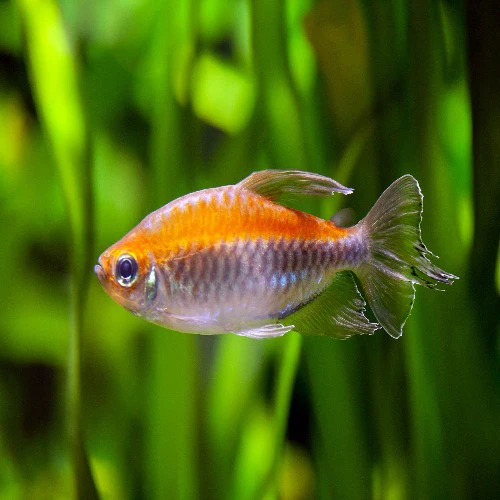
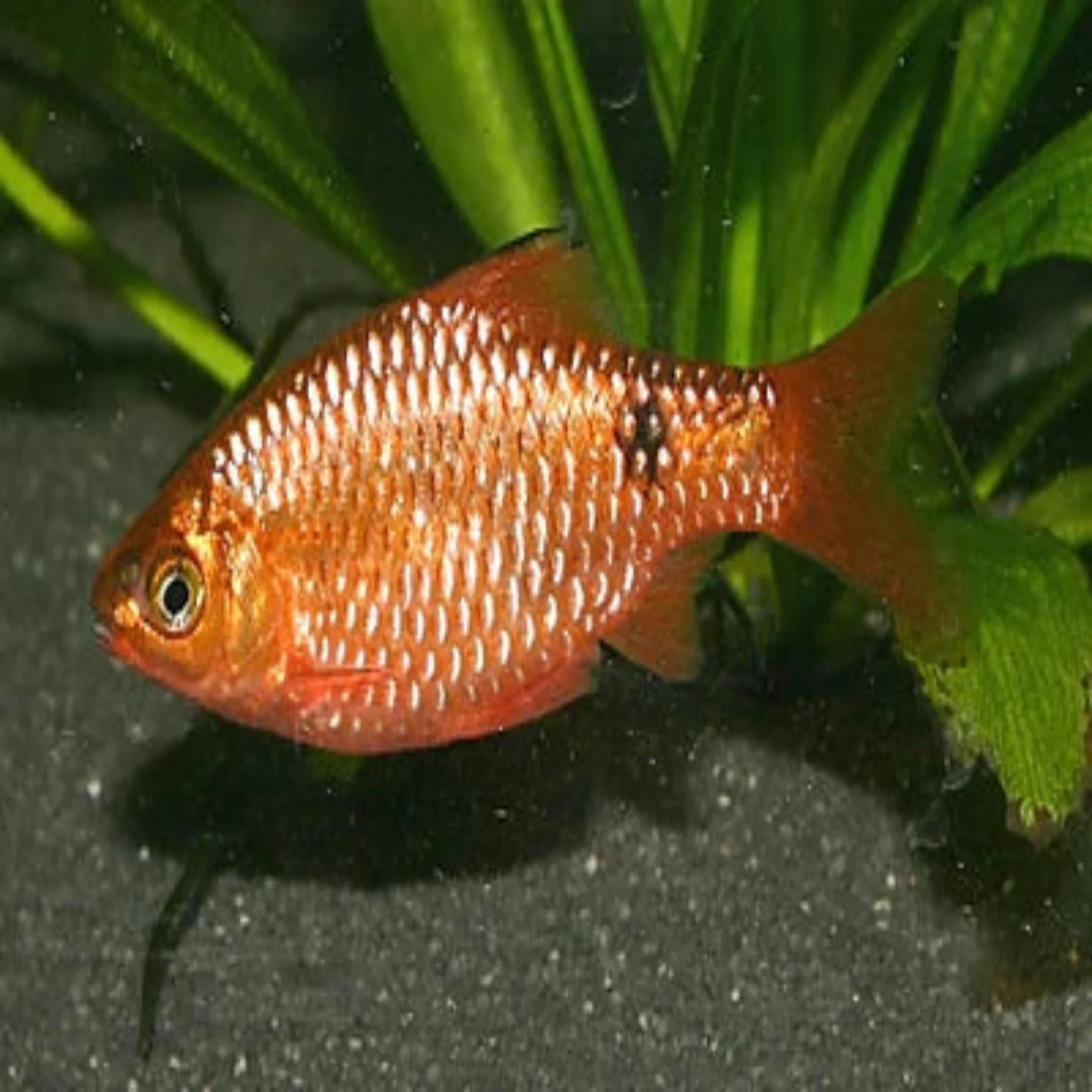
All images are a visual representation of the fish you will receive, made to be as accurate as possible. Please note that Mother Nature is a wonderful thing, and variation in patterns and colours will occur — that is part of the unique beauty of these animals.
Description
Orange Sailfin Molly (Poecilia latipinna)
The Orange Sailfin Molly is a bright and active livebearer, prized for its warm orange colouration, lively behaviour and impressive sail-like dorsal fin in mature males. This captive-bred form of the Sailfin Molly is a hardy and attractive choice for suitable community aquariums, but it does best in clean, stable, mineral-rich water. Like other mollies, it prefers moderately hard to hard, alkaline conditions and should not be kept long-term in very soft acidic aquariums.
Common Name:
Orange Sailfin Molly. Also commonly referred to as the Orange Molly, Orange Sailfin Molly Fish, Sailfin Molly or Fancy Molly.
Scientific Name (Latin):
Poecilia latipinna
Maximum Size:
Around 8–12 cm in most aquariums, with males developing the larger sail-like dorsal fin. Scientific records list Sailfin Mollies up to around 15 cm total length, so a spacious aquarium is recommended for long-term care.
Water Type:
Freshwater
Can also tolerate lightly brackish conditions when acclimated correctly.
Origin / Natural Habitat:
The Orange Sailfin Molly is a captive-bred aquarium strain. The wild form of Poecilia latipinna is native to North America, from the Cape Fear drainage in North Carolina, USA, down to Veracruz, Mexico. In the wild, Sailfin Mollies occur in still or gently flowing warm waters, including small creeks, drains, ponds, lakes, sloughs, quiet vegetated backwaters, coastal waters, tidal ditches and brackish canals.
Water Parameters:
Temperature: 22–28°C
pH Range: 7.2–8.5
Hardness: moderately hard to hard water strongly preferred
Temperament:
Peaceful and active. Suitable for community aquariums with other calm fish that enjoy similar harder, alkaline water conditions. Males may chase females, so mixed-sex groups are best kept with more females than males.
Diet:
Omnivorous with a strong herbivorous grazing tendency. It should be offered a varied diet including quality flake, small pellets, spirulina, algae-based foods, blanched vegetables, daphnia, brineshrimp and occasional bloodworm. Algae and vegetable-based foods are especially useful for long-term molly health, as Sailfin Mollies naturally feed heavily on algae alongside small animal foods.
Minimum Tank Size:
A practical recommendation is at least 120 litres for a small group, with a larger aquarium preferred for mature males to fully develop and display their sailfin dorsal.
Behaviour & Activity:
This is an active mid-to-upper level livebearer that spends much of the day swimming, grazing and displaying. Males may raise and flare their large dorsal fin when showing to females or rival males. Females give birth to free-swimming fry, so numbers may increase quickly in a planted aquarium. Open swimming space, planted areas and gentle water movement are all beneficial.
Aquarium Category:
Community Fish
This species is peaceful and works well with other freshwater community fish that prefer harder, alkaline water. Suitable tank mates include platies, swordtails, other mollies, peaceful rainbowfish, danios, robust tetras suited to harder water, bristlenose plecos and compatible Corydoras species. Avoid very soft-water fish, aggressive species, persistent fin nippers and large predators.
Special Requirements or Care Notes:
Best kept in clean, stable, mineral-rich water with strong filtration and regular maintenance. Sailfin Mollies are much less forgiving in soft, acidic or poorly maintained aquariums and can weaken quickly if kept in unsuitable conditions. Aquarium salt is not essential if the water is naturally hard and alkaline, but some keepers use lightly brackish conditions for molly-focused setups. Do not add salt if the aquarium contains salt-sensitive tank mates or plants.
Suitable for:
Beginner to intermediate fishkeepers
Availability:
Common / occasional in trade, usually as captive-bred stock
All images are a visual representation of the fish you will receive, made to be as accurate as possible. Please note that Mother Nature is a wonderful thing, and variation in patterns and colours will occur — that is part of the unique beauty of these animals.