Original: $33.56
-65%$33.56
$11.75The Story
Valentini Puffer (Canthigaster valentini)
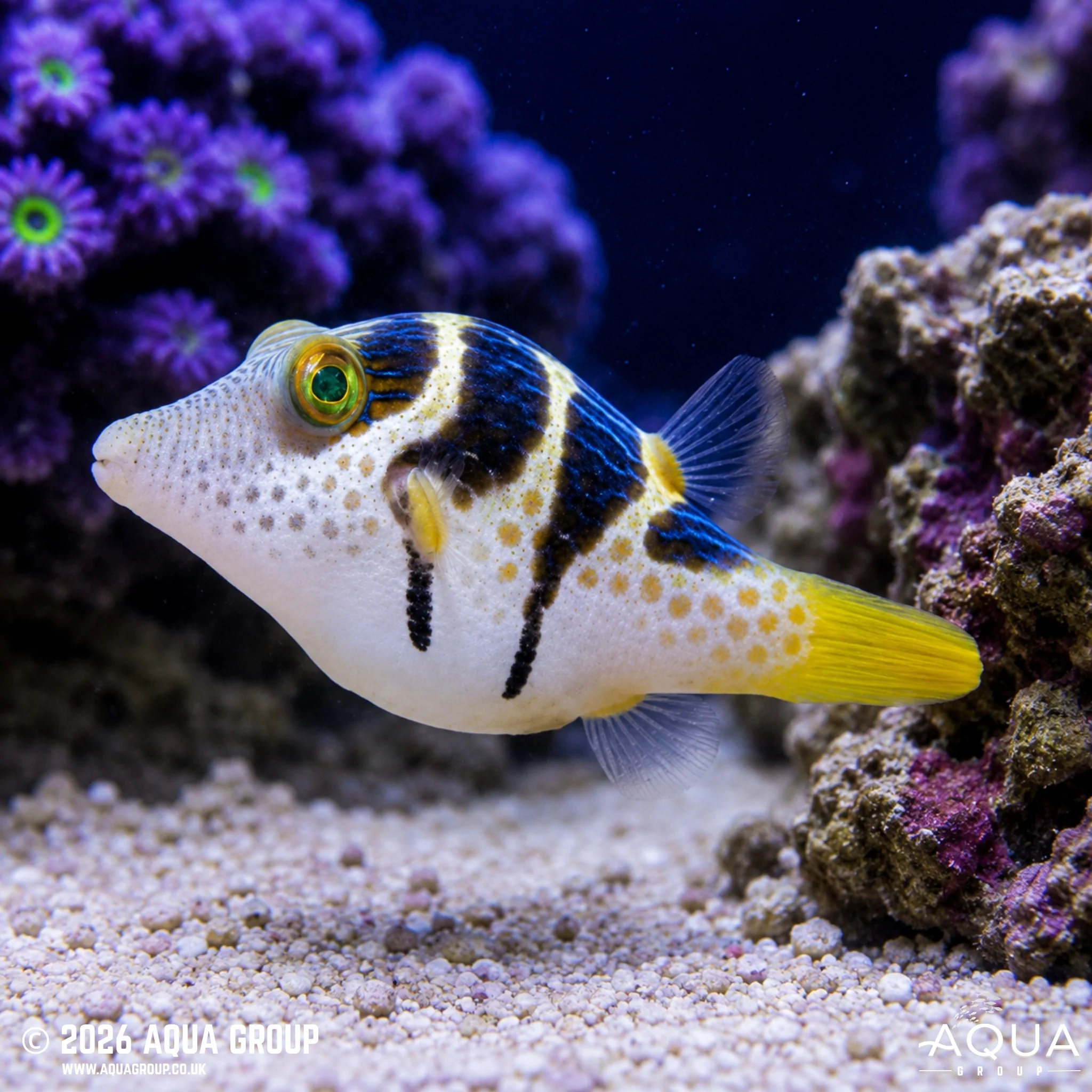
The Valentini Puffer, Canthigaster valentini, is a small but characterful marine pufferfish with a cream to white body, dark saddle-like markings, blue striping around the eyes and yellow tail highlights. Also known as the Black-saddled Toby, Saddled Valentini Puffer or Valentini Sharpnose Puffer, this Indo-Pacific species is popular for its personality, manageable size and curious behaviour. It is hardier than many specialist marine fish, but it is not fully reef safe and should be chosen carefully for aquariums with corals or ornamental invertebrates.
Common Name:
Valentini Puffer, Saddled Valentini Puffer, Valentini Sharpnose Puffer, Black-saddled Toby, Saddle Toby, Black-saddled Sharpnose Puffer.
Scientific Name (Latin):
Canthigaster valentini
Maximum Size:
Up to around 11 cm.
Water Type:
Marine
Origin / Natural Habitat:
Indo-Pacific, including the Red Sea and East Africa across the Indian Ocean and western Pacific to island reef regions of the central Pacific. Naturally found among coral heads, rocks, subtidal lagoon reefs and seaward reefs, usually on coastal reef habitats where it grazes and picks at algae, tunicates and small benthic invertebrates.
Water Parameters:
Temperature: 24–27°C
pH Range: 8.1–8.4
Hardness or Salinity: SG 1.020–1.025
Temperament:
Generally peaceful to semi-aggressive. Valentini Puffers are usually manageable with robust community marine fish, but they can be curious, nippy and territorial, especially towards slow-moving, long-finned or very timid tank mates. Males may be territorial, and only one should usually be kept unless the aquarium is large and carefully planned.
Diet:
Omnivorous grazer and micro-predator. In the wild, it feeds mainly on filamentous algae and tunicates, with smaller amounts of corals, bryozoans, worms, echinoderms, molluscs and other benthic foods. In the aquarium, offer a varied diet of chopped clam, mussel, cockle, prawn, mysis, krill, marine pellets, spirulina-based foods and algae sheets. Include hard-shelled foods regularly to help wear down the beak-like teeth.
Minimum Tank Size:
A minimum of 150 litres is recommended for a single specimen, with 200 litres or more preferred for mixed community aquariums. Provide mature rockwork, caves, open swimming room and good filtration.
Behaviour & Activity:
An inquisitive daytime fish that spends much of its time exploring rockwork, grazing surfaces and investigating potential foods with its beak-like mouth. It may hover, perch, pick at rocks and interact boldly with its surroundings. When frightened, puffers may inflate, so they should never be deliberately startled or handled roughly. Use a container rather than a net when moving where possible.
Reef Safe:
Reef Safe with Caution
May be kept in some reef aquariums, but it is not reliably safe with all corals or invertebrates. It may nip soft corals, LPS corals, zoanthids, tube worms, small snails, crabs, shrimps, urchin tube feet, clam mantles and other sessile or slow-moving invertebrates. It is usually a better choice for fish-only or carefully planned reef-with-caution systems.
Special Requirements or Care Notes:
Requires regular hard foods to prevent overgrown teeth. Avoid keeping with delicate ornamental shrimps, small crabs, prized snails or very fleshy corals if losses would be a concern. Do not use a net if it can be avoided, as puffers may inflate when stressed and can trap air if lifted out of water. Parts of pufferfish flesh can be toxic, so avoid allowing predators to attack it and remove any dead specimen promptly. Provide stable water quality and avoid copper-based treatments in reef systems with invertebrates.
Suitable for:
Intermediate fishkeepers
Availability:
Common in trade
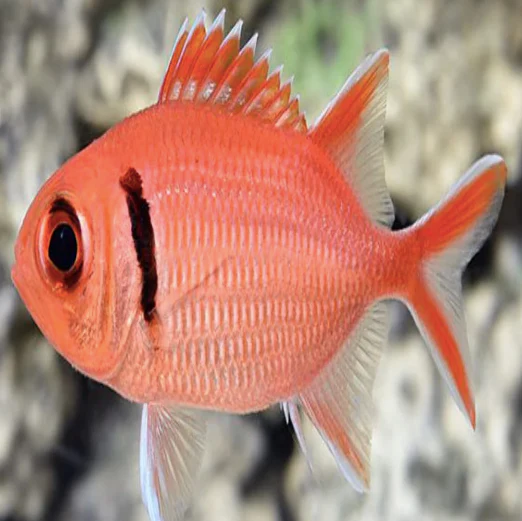
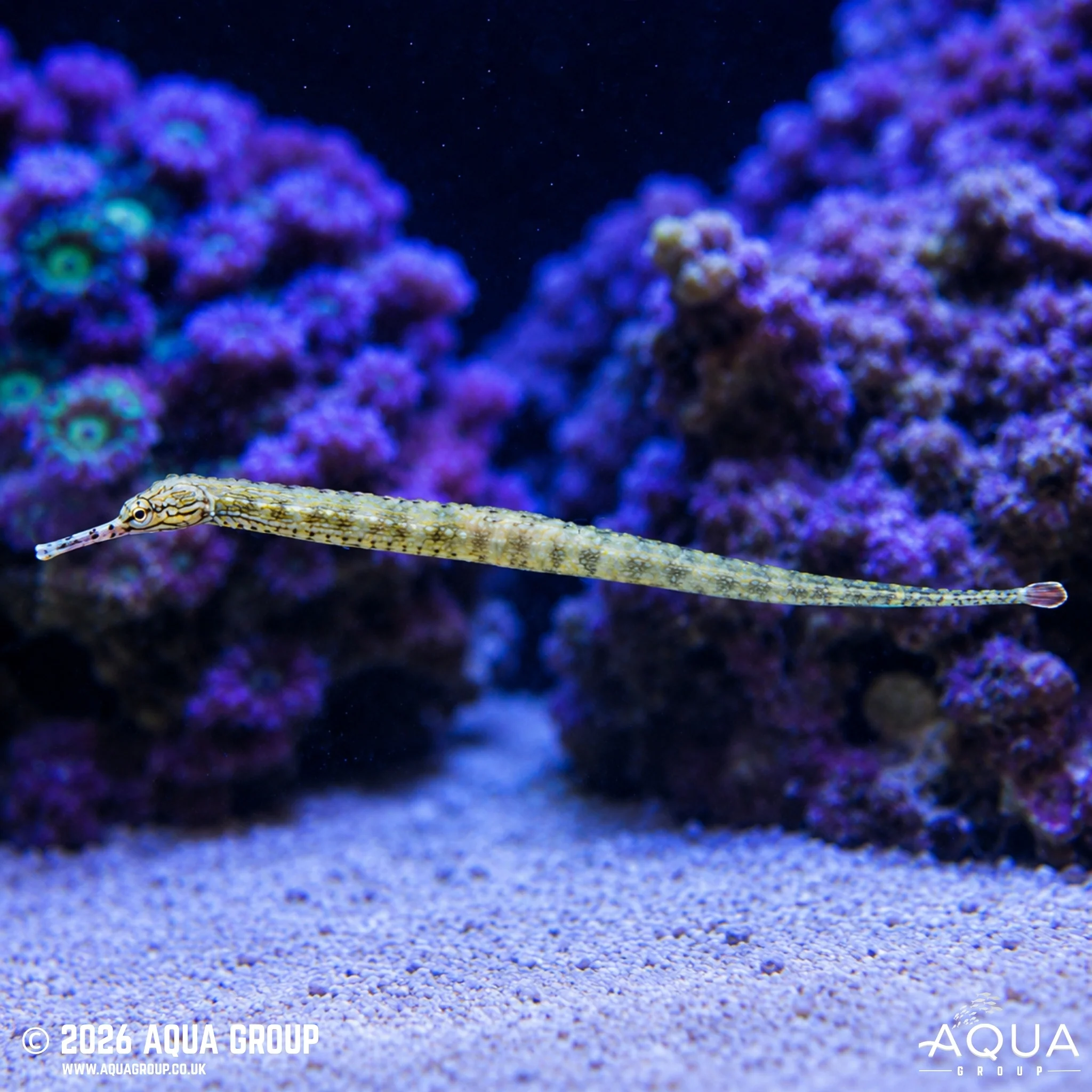
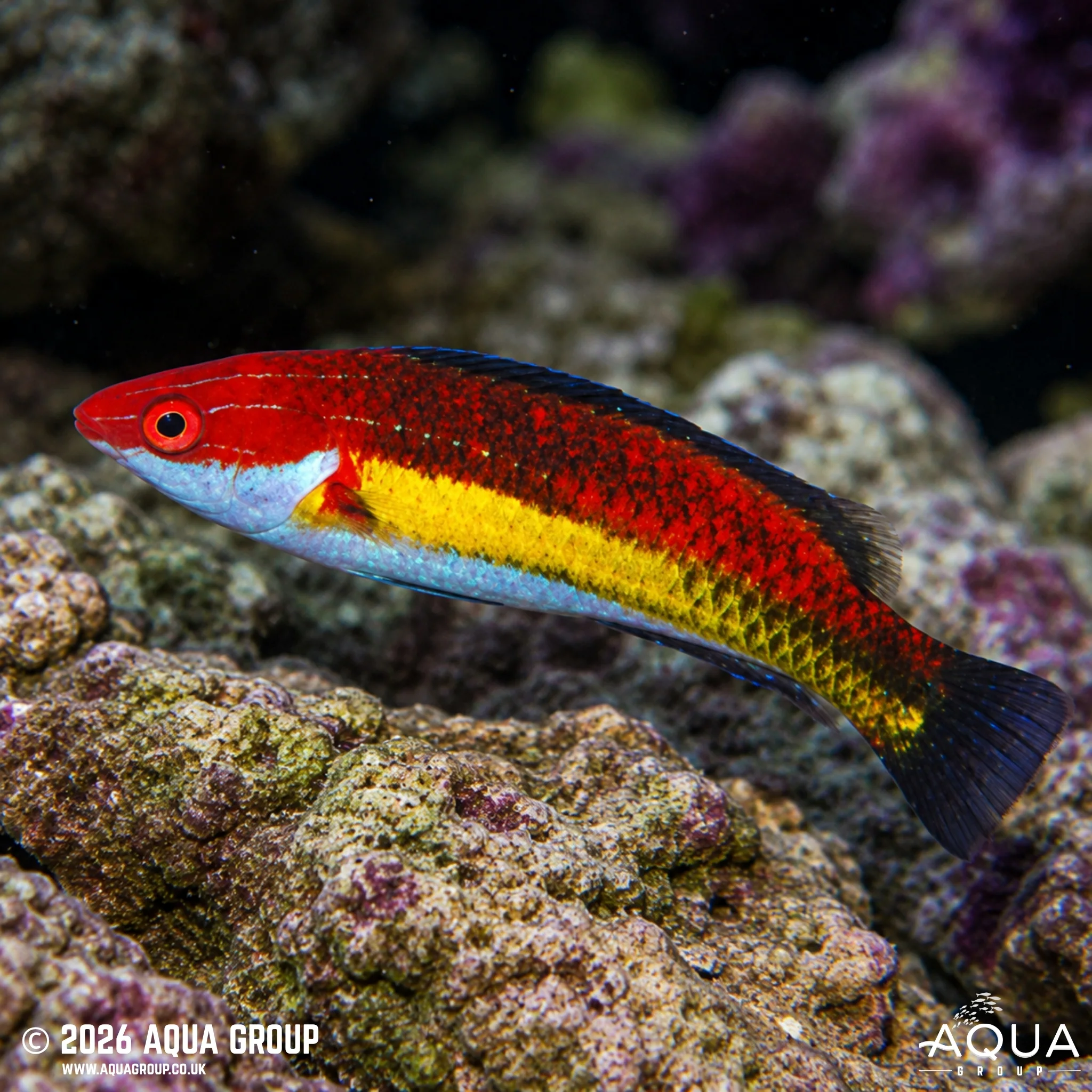
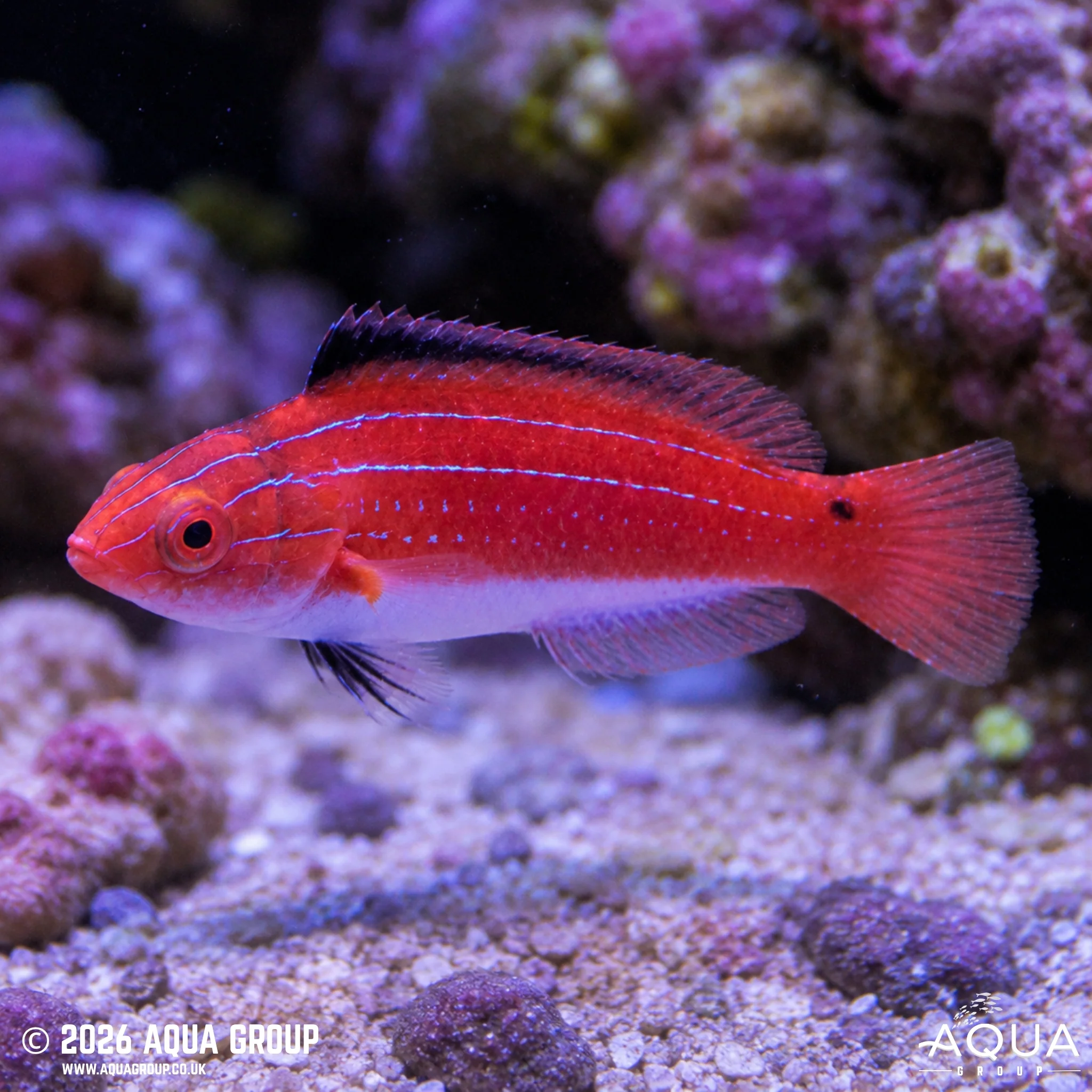
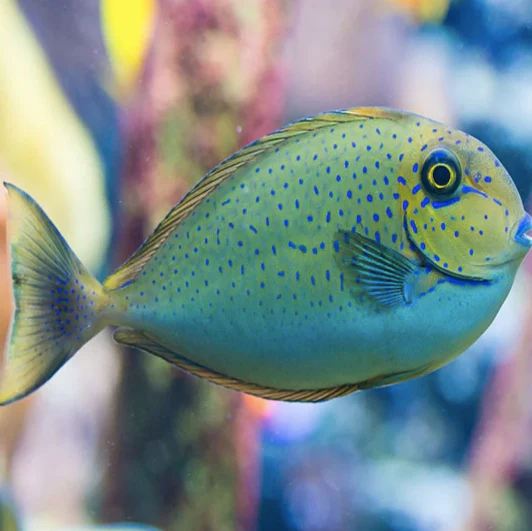
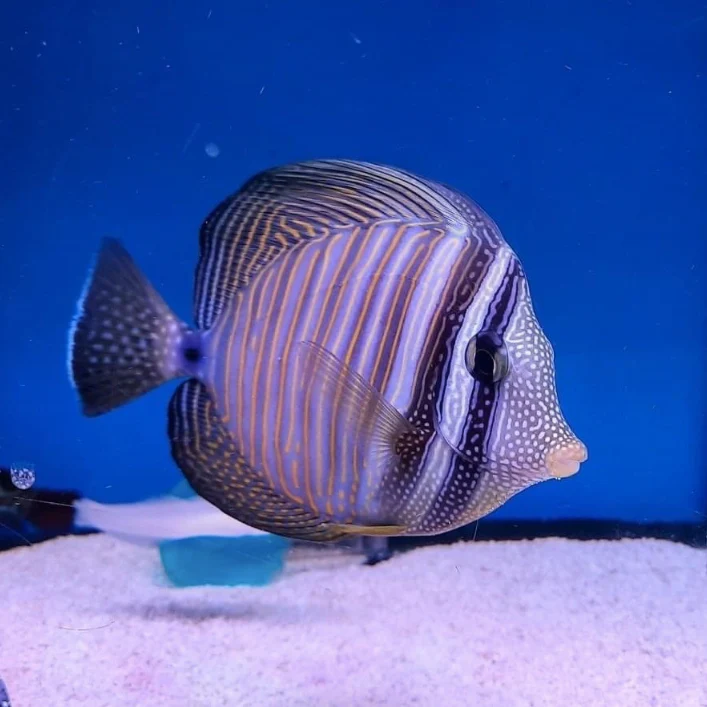
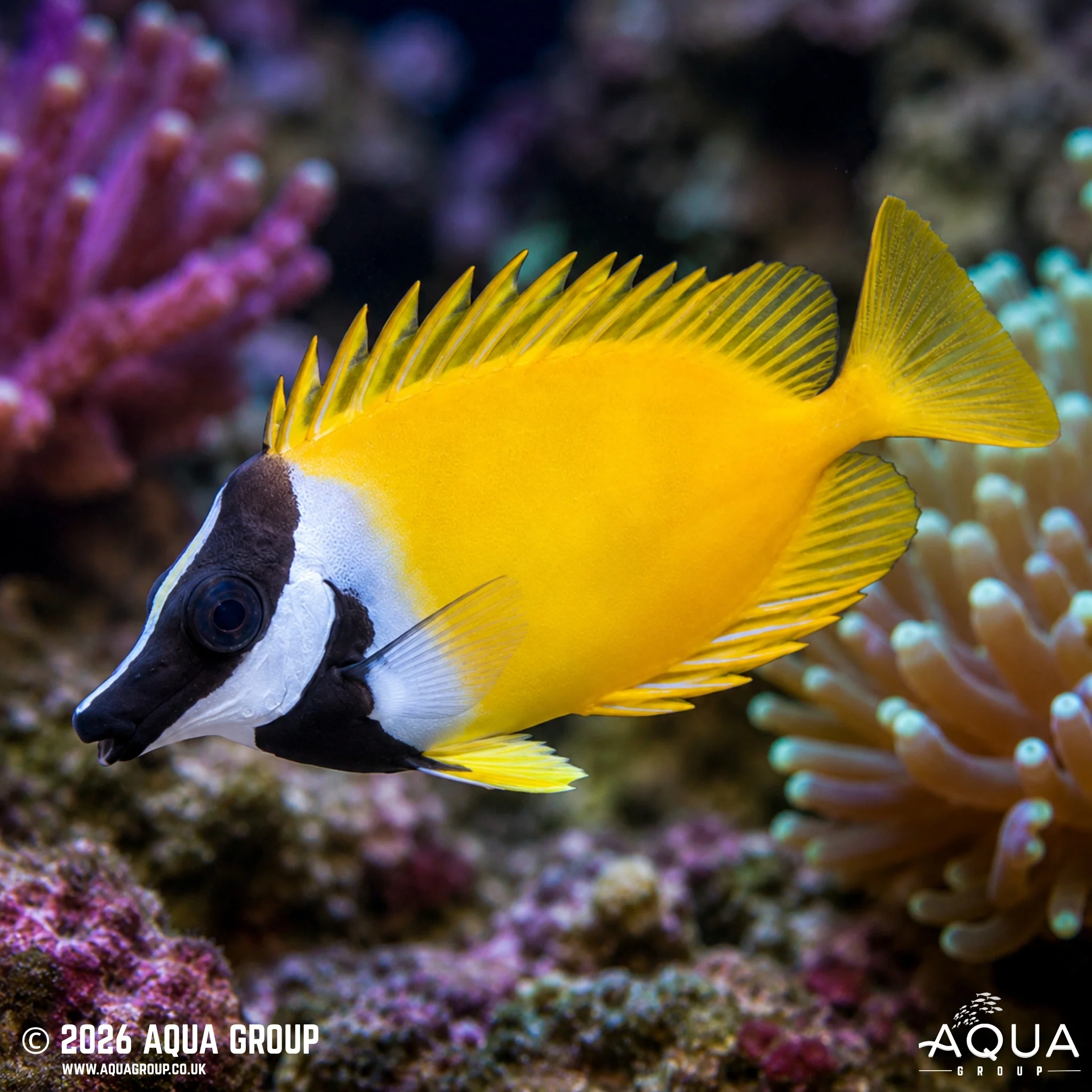
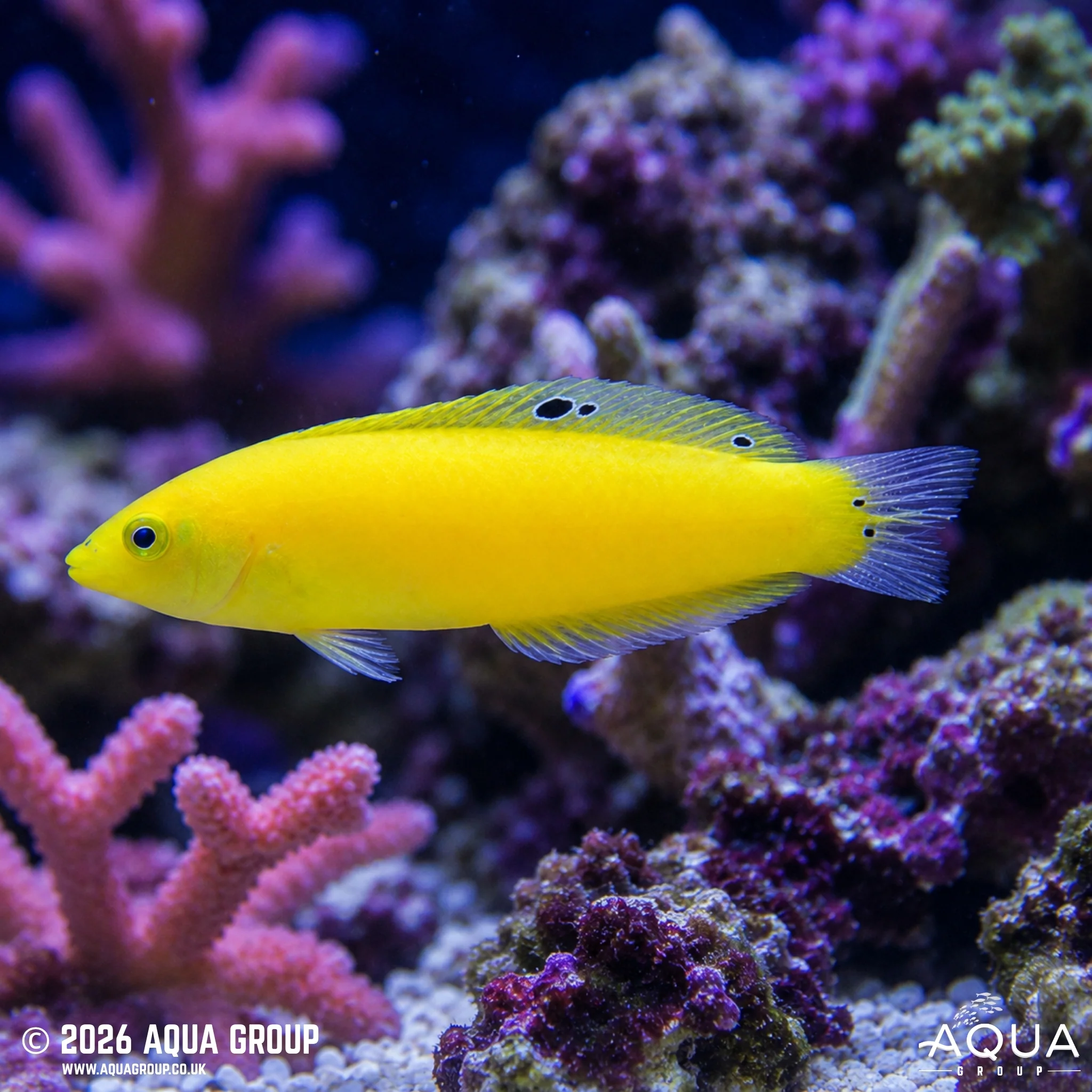
All images are a visual representation of the fish you will receive, made to be as accurate as possible. Please note that Mother Nature is a wonderful thing, and variation in patterns and colours will occur — that is part of the unique beauty of these animals.
Description
Valentini Puffer (Canthigaster valentini)
The Valentini Puffer, Canthigaster valentini, is a small but characterful marine pufferfish with a cream to white body, dark saddle-like markings, blue striping around the eyes and yellow tail highlights. Also known as the Black-saddled Toby, Saddled Valentini Puffer or Valentini Sharpnose Puffer, this Indo-Pacific species is popular for its personality, manageable size and curious behaviour. It is hardier than many specialist marine fish, but it is not fully reef safe and should be chosen carefully for aquariums with corals or ornamental invertebrates.
Common Name:
Valentini Puffer, Saddled Valentini Puffer, Valentini Sharpnose Puffer, Black-saddled Toby, Saddle Toby, Black-saddled Sharpnose Puffer.
Scientific Name (Latin):
Canthigaster valentini
Maximum Size:
Up to around 11 cm.
Water Type:
Marine
Origin / Natural Habitat:
Indo-Pacific, including the Red Sea and East Africa across the Indian Ocean and western Pacific to island reef regions of the central Pacific. Naturally found among coral heads, rocks, subtidal lagoon reefs and seaward reefs, usually on coastal reef habitats where it grazes and picks at algae, tunicates and small benthic invertebrates.
Water Parameters:
Temperature: 24–27°C
pH Range: 8.1–8.4
Hardness or Salinity: SG 1.020–1.025
Temperament:
Generally peaceful to semi-aggressive. Valentini Puffers are usually manageable with robust community marine fish, but they can be curious, nippy and territorial, especially towards slow-moving, long-finned or very timid tank mates. Males may be territorial, and only one should usually be kept unless the aquarium is large and carefully planned.
Diet:
Omnivorous grazer and micro-predator. In the wild, it feeds mainly on filamentous algae and tunicates, with smaller amounts of corals, bryozoans, worms, echinoderms, molluscs and other benthic foods. In the aquarium, offer a varied diet of chopped clam, mussel, cockle, prawn, mysis, krill, marine pellets, spirulina-based foods and algae sheets. Include hard-shelled foods regularly to help wear down the beak-like teeth.
Minimum Tank Size:
A minimum of 150 litres is recommended for a single specimen, with 200 litres or more preferred for mixed community aquariums. Provide mature rockwork, caves, open swimming room and good filtration.
Behaviour & Activity:
An inquisitive daytime fish that spends much of its time exploring rockwork, grazing surfaces and investigating potential foods with its beak-like mouth. It may hover, perch, pick at rocks and interact boldly with its surroundings. When frightened, puffers may inflate, so they should never be deliberately startled or handled roughly. Use a container rather than a net when moving where possible.
Reef Safe:
Reef Safe with Caution
May be kept in some reef aquariums, but it is not reliably safe with all corals or invertebrates. It may nip soft corals, LPS corals, zoanthids, tube worms, small snails, crabs, shrimps, urchin tube feet, clam mantles and other sessile or slow-moving invertebrates. It is usually a better choice for fish-only or carefully planned reef-with-caution systems.
Special Requirements or Care Notes:
Requires regular hard foods to prevent overgrown teeth. Avoid keeping with delicate ornamental shrimps, small crabs, prized snails or very fleshy corals if losses would be a concern. Do not use a net if it can be avoided, as puffers may inflate when stressed and can trap air if lifted out of water. Parts of pufferfish flesh can be toxic, so avoid allowing predators to attack it and remove any dead specimen promptly. Provide stable water quality and avoid copper-based treatments in reef systems with invertebrates.
Suitable for:
Intermediate fishkeepers
Availability:
Common in trade
All images are a visual representation of the fish you will receive, made to be as accurate as possible. Please note that Mother Nature is a wonderful thing, and variation in patterns and colours will occur — that is part of the unique beauty of these animals.