Original: $46.99
-65%$46.99
$16.45The Story
Purple Queen Anthias (Pseudanthias tuka)
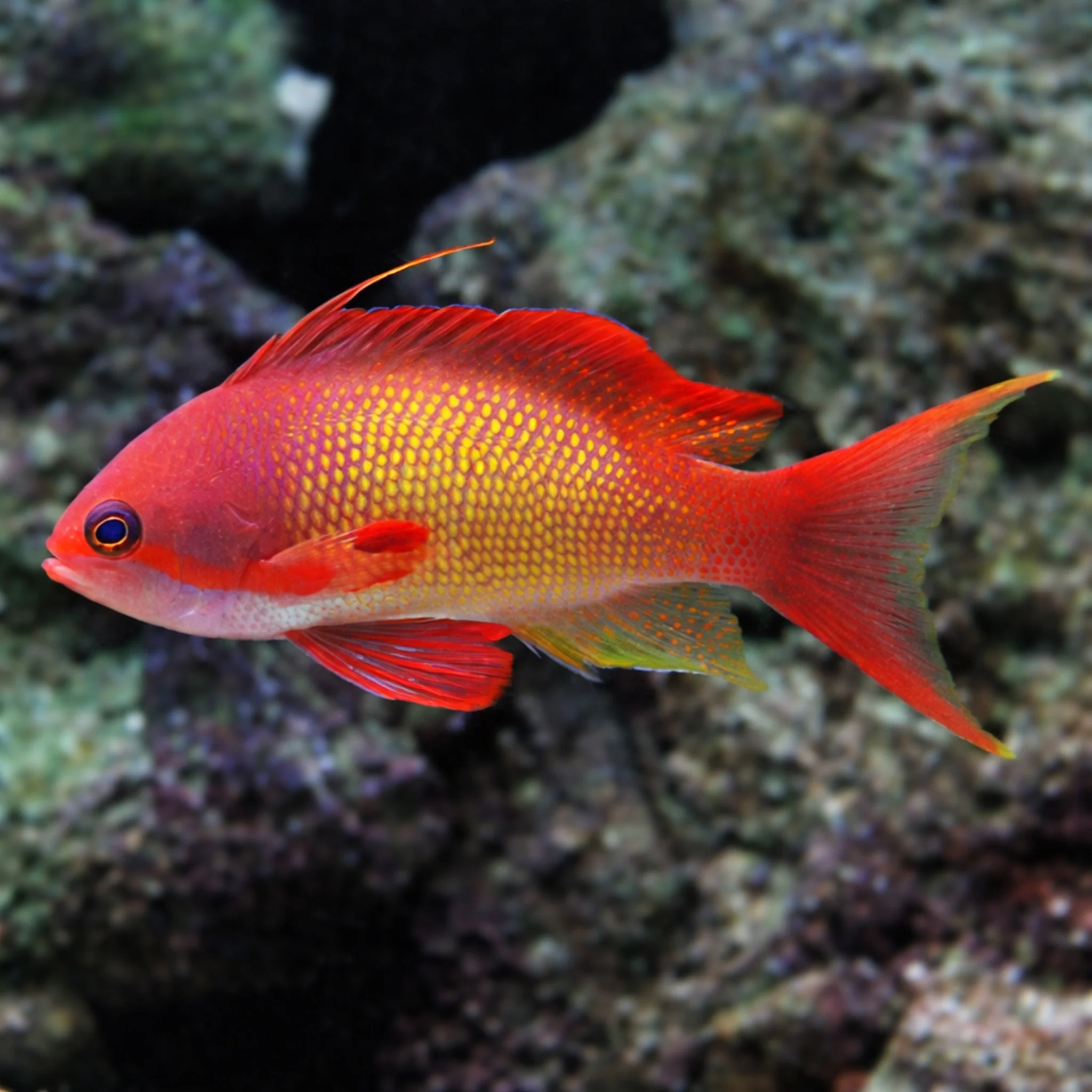
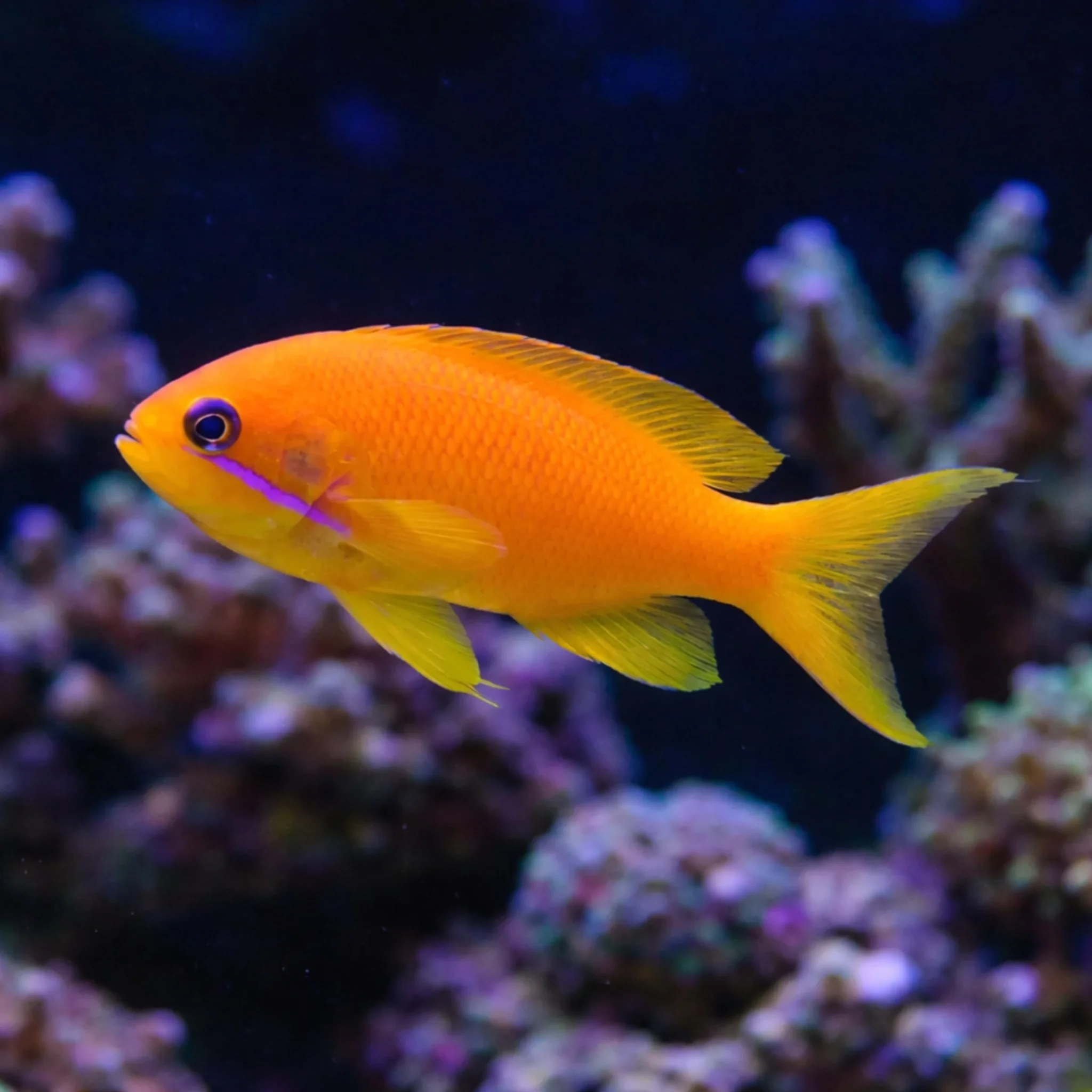
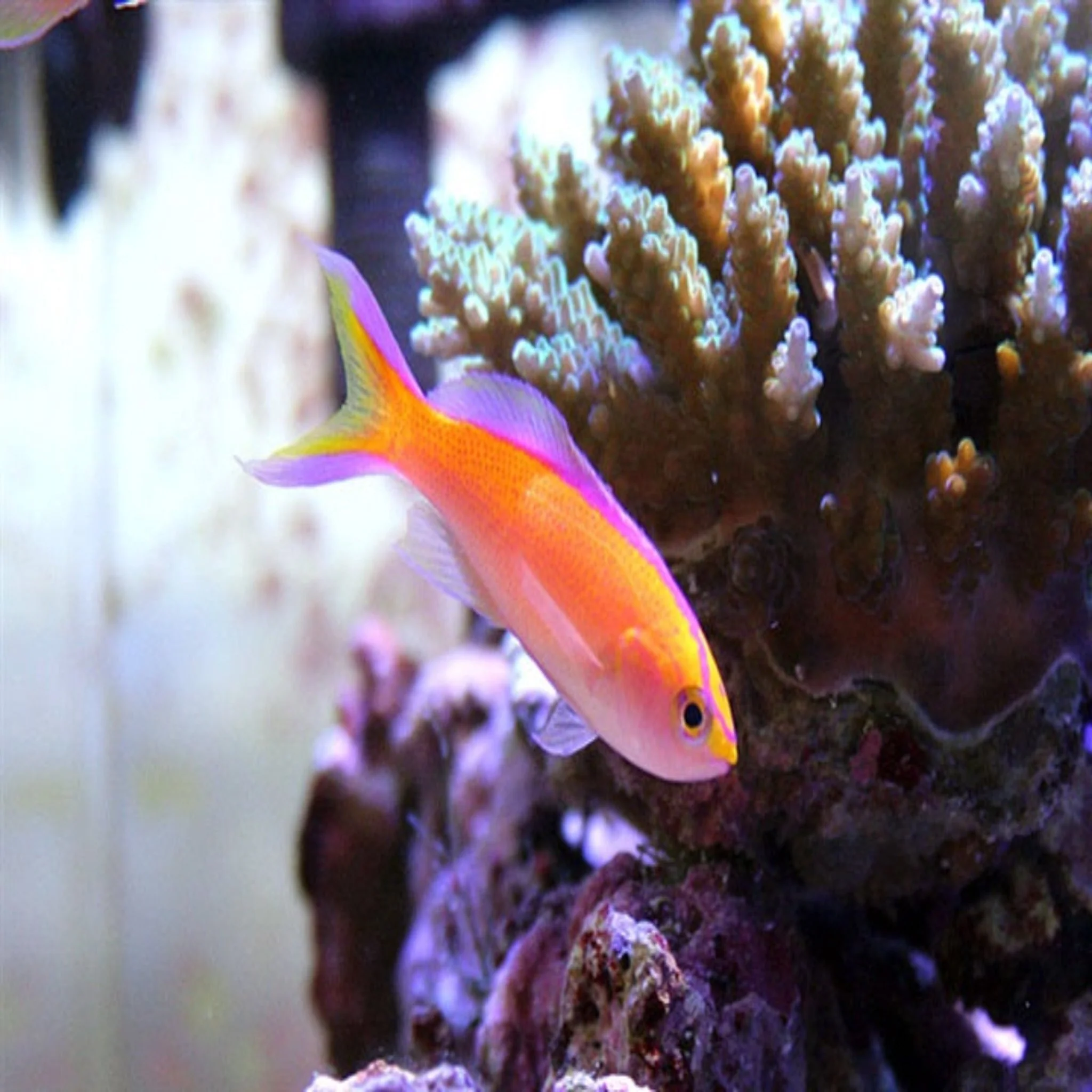
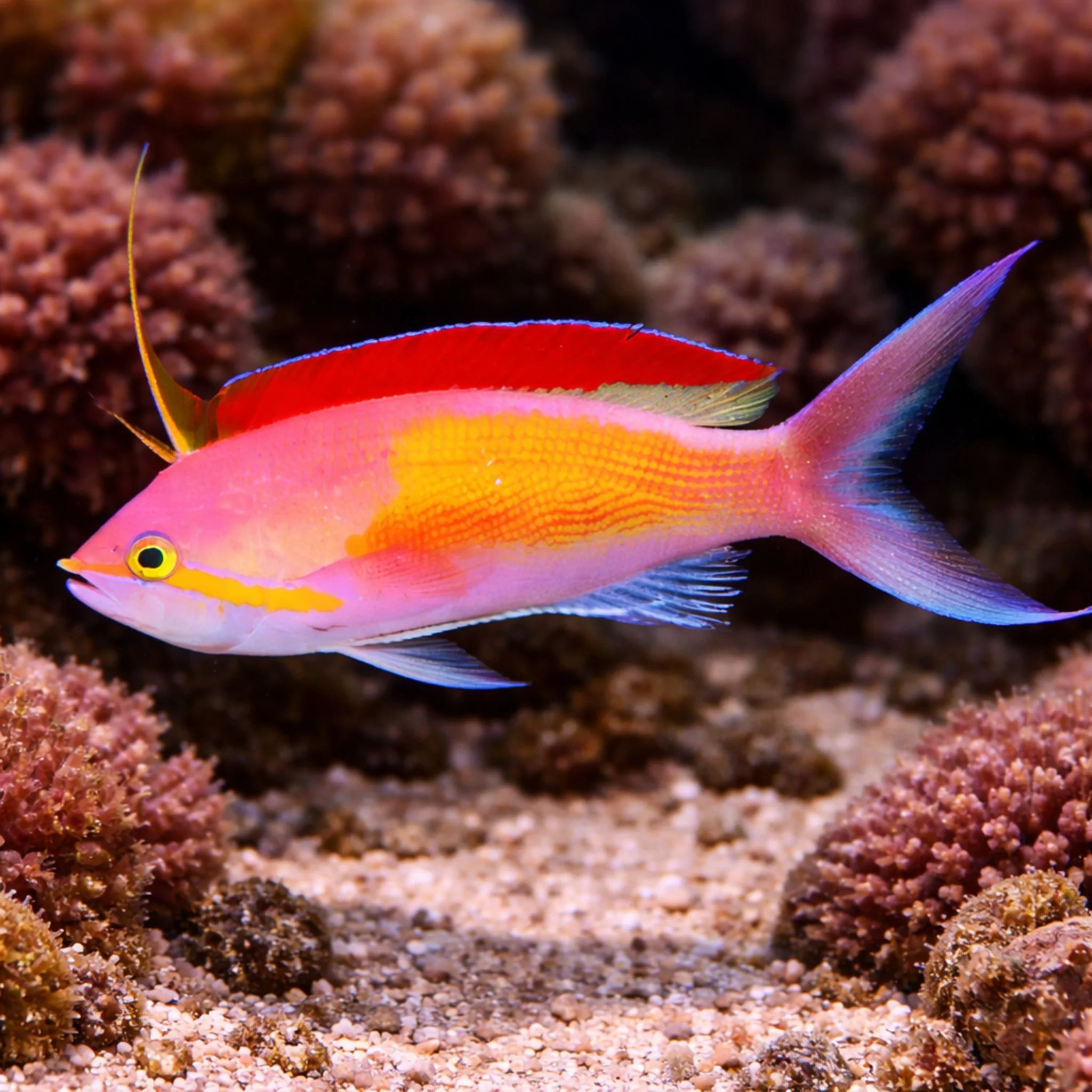
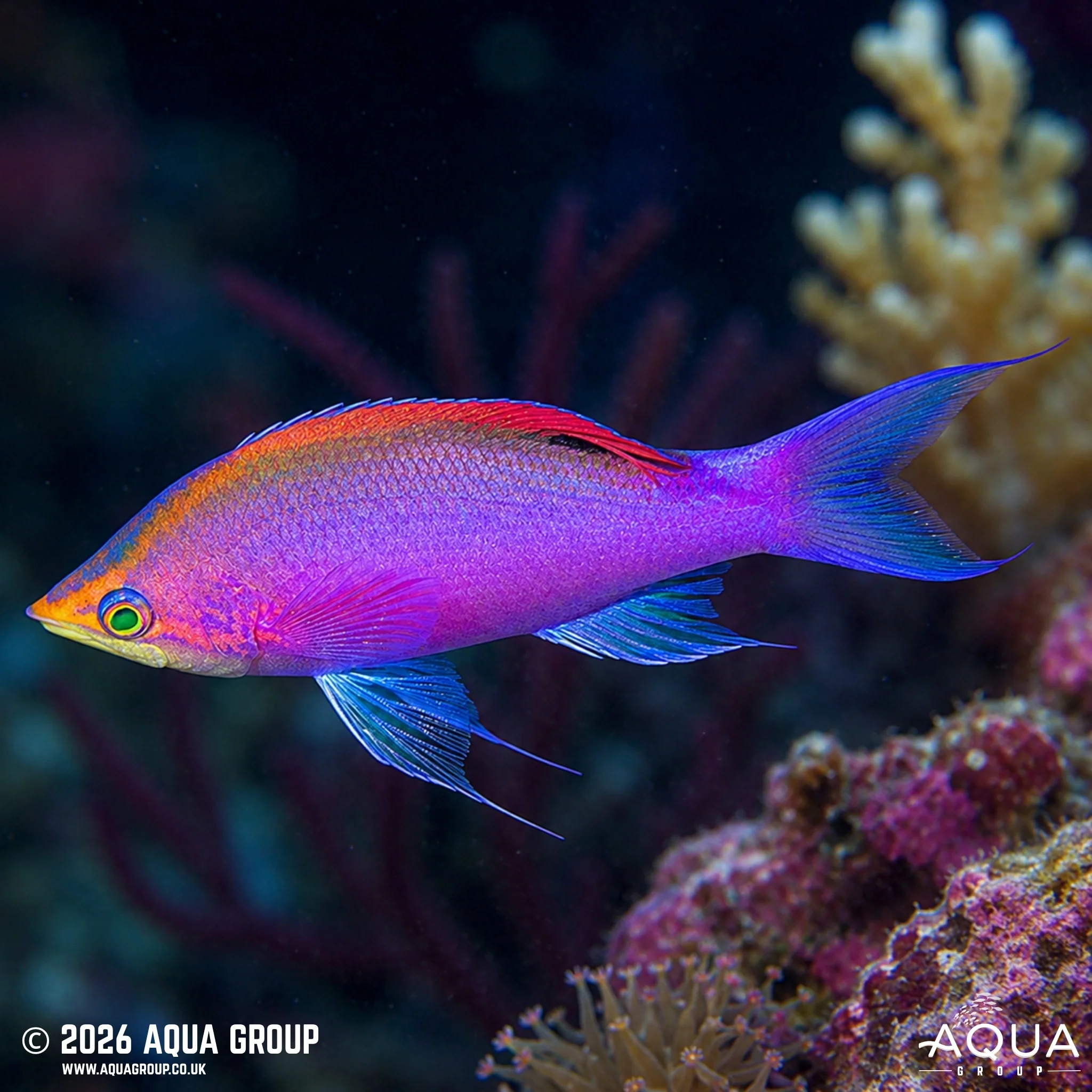
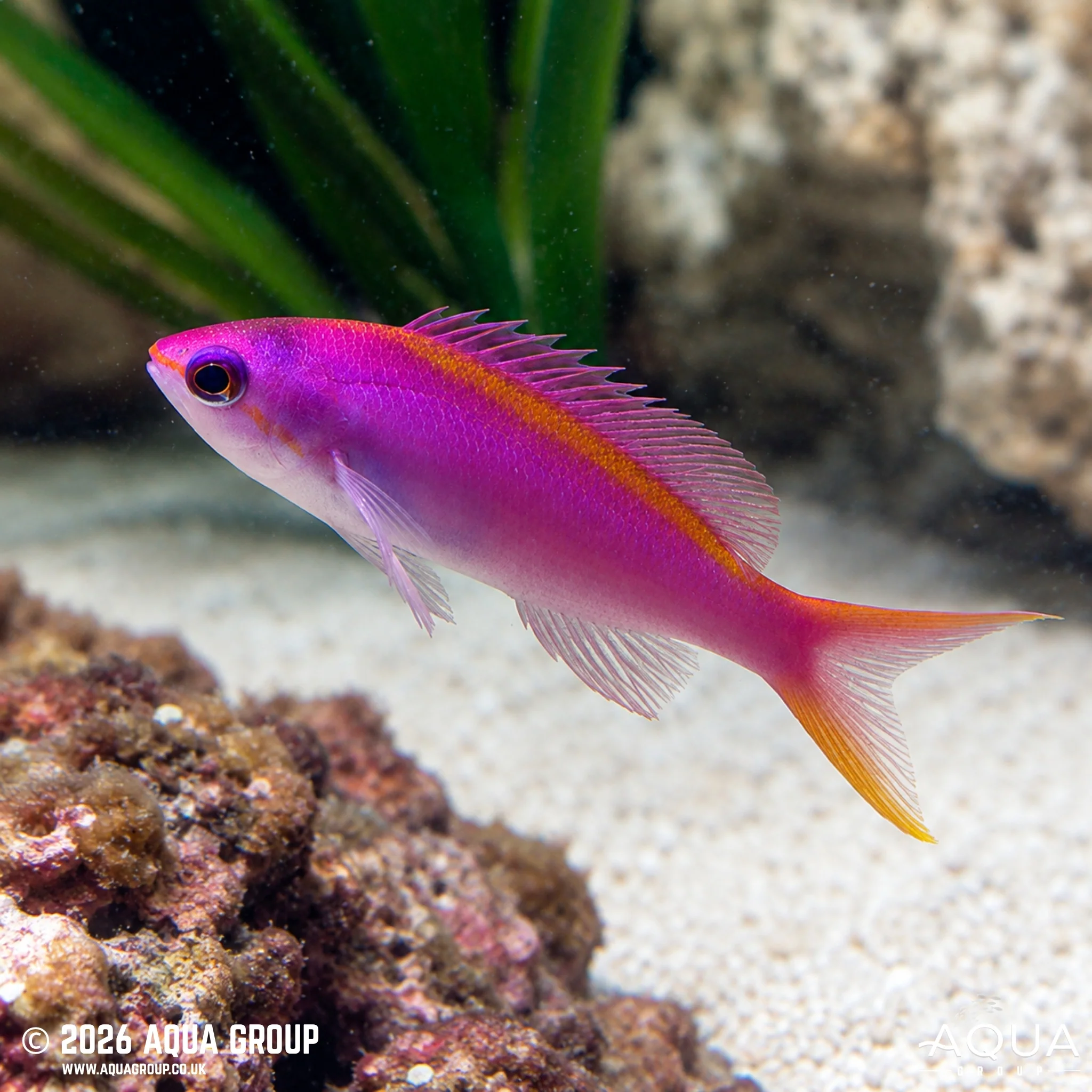
The Purple Queen Anthias, Pseudanthias tuka, is a stunning marine anthias with intense violet to magenta colouration, a yellow facial stripe and elegant schooling behaviour above the reef. Also known as the Tuka Anthias, Yellowstriped Anthias or Purple Queenfish, this Indo-Pacific species is one of the most beautiful anthias available, but also one of the most demanding. It is peaceful and reef safe, yet highly specialist because of its delicate shipping nature, reluctance to accept prepared foods and need for frequent small plankton-style feeds.
Common Name:
Purple Queen Anthias, Tuka Anthias, Yellowstriped Anthias, Yellowstripe Anthias, Purple Queenfish, Yellowstriped Fairy Basslet.
Scientific Name (Latin):
Pseudanthias tuka
Also listed by some sources as Mirolabrichthys tuka.
Maximum Size:
Up to around 12 cm.
Water Type:
Marine
Origin / Natural Habitat:
Indo-Pacific, especially continental reef systems and outer reef slopes. Naturally found forming aggregations above reef slopes, often at depths to over 30 m, where it feeds in the water column on drifting planktonic crustaceans and fish eggs.
Water Parameters:
Temperature: 24–27°C
pH Range: 8.1–8.4
Hardness or Salinity: SG 1.020–1.025
Temperament:
Peaceful but delicate. Best kept with calm reef-safe fish that will not bully it or outcompete it at feeding time. Males may become dominant towards other anthias, especially in small groups or cramped aquariums, so group structure and space are important.
Diet:
Specialist planktivorous carnivore. In the wild, it feeds on planktonic crustaceans and fish eggs. In the aquarium, offer very small, high-quality foods such as copepods, cyclops, calanus, enriched brineshrimp, small mysis, lobster eggs, fish eggs and fine marine frozen preparations. Many specimens are reluctant to accept dry foods and may need live or finely sized frozen foods to start feeding. Frequent small feeds throughout the day are essential.
Minimum Tank Size:
A minimum of 350 litres is recommended for a small group, with larger aquariums strongly preferred. This species needs stable water quality, strong oxygenation, open swimming space, mature rockwork and filtration capable of handling frequent feeding.
Behaviour & Activity:
An active mid-water shoaling anthias that spends much of its time hovering and feeding above reef structure. It is most naturally kept in a group, ideally with one male and several females where space allows. In aquariums it can be shy, especially when newly introduced, and may decline quickly if it does not feed. Provide open swimming areas, caves, overhangs and quieter zones away from aggressive tank mates.
Reef Safe:
Reef Safe
Safe with corals and most ornamental invertebrates. It does not nip corals and is suitable for reef aquariums in terms of compatibility, but its need for frequent feeding can increase nutrient levels, so strong filtration and careful maintenance are important in coral systems.
Special Requirements or Care Notes:
This is an expert-level anthias and should not be treated like hardier species such as Lyretail Anthias. Choose alert, feeding specimens with full bodies and avoid thin or newly imported fish that are not eating. Feed multiple times daily with tiny planktonic foods and keep only with peaceful tank mates. A mature aquarium with natural microfauna, excellent water quality and low stress is strongly recommended. A secure lid is advisable, as startled anthias may jump.
Suitable for:
Expert only
Availability:
Rare or occasional in trade
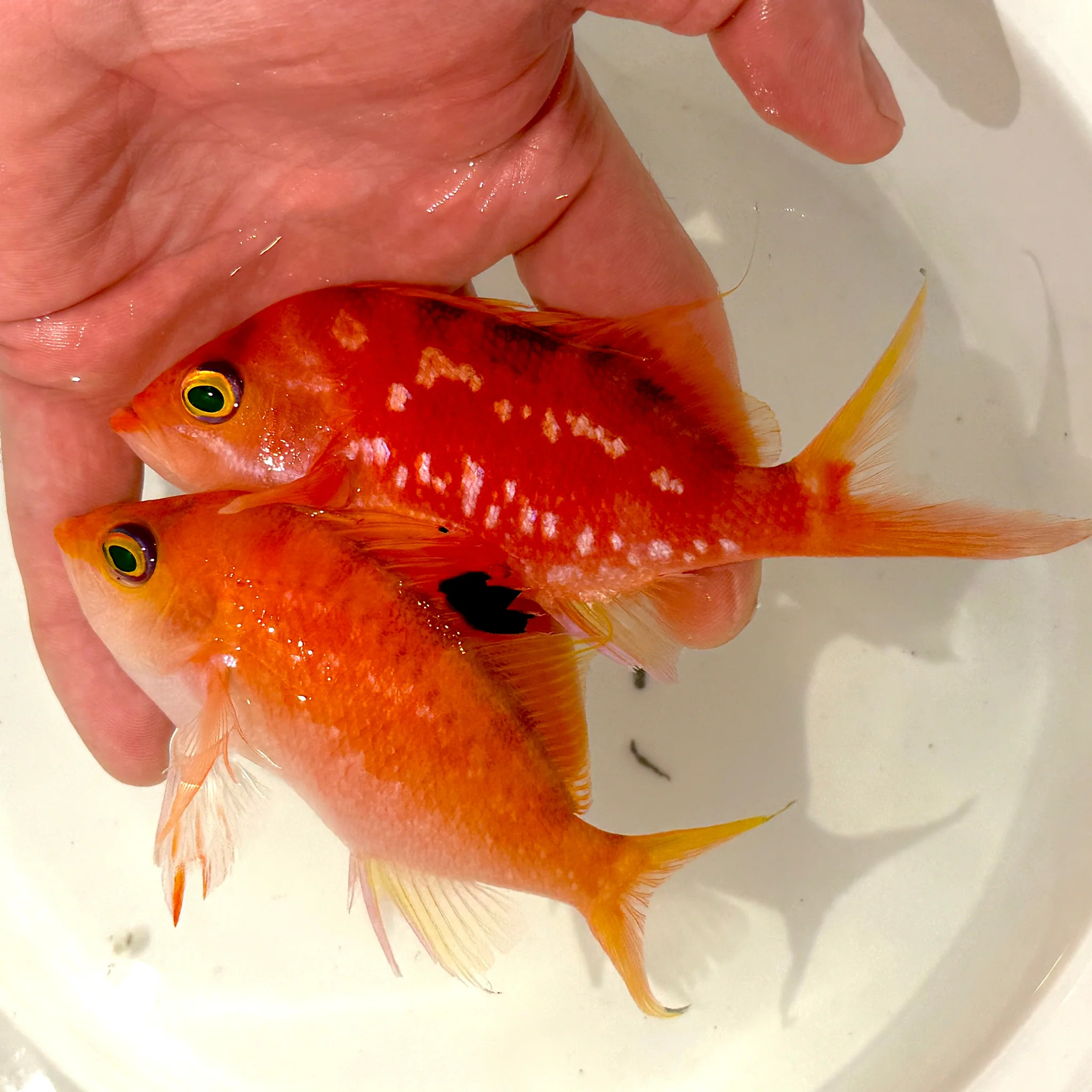
All images are a visual representation of the fish you will receive, made to be as accurate as possible. Please note that Mother Nature is a wonderful thing, and variation in patterns and colours will occur — that is part of the unique beauty of these animals.
Details & Craftsmanship
Every detail has been carefully considered to bring you the perfect product.
Description
Purple Queen Anthias (Pseudanthias tuka)
The Purple Queen Anthias, Pseudanthias tuka, is a stunning marine anthias with intense violet to magenta colouration, a yellow facial stripe and elegant schooling behaviour above the reef. Also known as the Tuka Anthias, Yellowstriped Anthias or Purple Queenfish, this Indo-Pacific species is one of the most beautiful anthias available, but also one of the most demanding. It is peaceful and reef safe, yet highly specialist because of its delicate shipping nature, reluctance to accept prepared foods and need for frequent small plankton-style feeds.
Common Name:
Purple Queen Anthias, Tuka Anthias, Yellowstriped Anthias, Yellowstripe Anthias, Purple Queenfish, Yellowstriped Fairy Basslet.
Scientific Name (Latin):
Pseudanthias tuka
Also listed by some sources as Mirolabrichthys tuka.
Maximum Size:
Up to around 12 cm.
Water Type:
Marine
Origin / Natural Habitat:
Indo-Pacific, especially continental reef systems and outer reef slopes. Naturally found forming aggregations above reef slopes, often at depths to over 30 m, where it feeds in the water column on drifting planktonic crustaceans and fish eggs.
Water Parameters:
Temperature: 24–27°C
pH Range: 8.1–8.4
Hardness or Salinity: SG 1.020–1.025
Temperament:
Peaceful but delicate. Best kept with calm reef-safe fish that will not bully it or outcompete it at feeding time. Males may become dominant towards other anthias, especially in small groups or cramped aquariums, so group structure and space are important.
Diet:
Specialist planktivorous carnivore. In the wild, it feeds on planktonic crustaceans and fish eggs. In the aquarium, offer very small, high-quality foods such as copepods, cyclops, calanus, enriched brineshrimp, small mysis, lobster eggs, fish eggs and fine marine frozen preparations. Many specimens are reluctant to accept dry foods and may need live or finely sized frozen foods to start feeding. Frequent small feeds throughout the day are essential.
Minimum Tank Size:
A minimum of 350 litres is recommended for a small group, with larger aquariums strongly preferred. This species needs stable water quality, strong oxygenation, open swimming space, mature rockwork and filtration capable of handling frequent feeding.
Behaviour & Activity:
An active mid-water shoaling anthias that spends much of its time hovering and feeding above reef structure. It is most naturally kept in a group, ideally with one male and several females where space allows. In aquariums it can be shy, especially when newly introduced, and may decline quickly if it does not feed. Provide open swimming areas, caves, overhangs and quieter zones away from aggressive tank mates.
Reef Safe:
Reef Safe
Safe with corals and most ornamental invertebrates. It does not nip corals and is suitable for reef aquariums in terms of compatibility, but its need for frequent feeding can increase nutrient levels, so strong filtration and careful maintenance are important in coral systems.
Special Requirements or Care Notes:
This is an expert-level anthias and should not be treated like hardier species such as Lyretail Anthias. Choose alert, feeding specimens with full bodies and avoid thin or newly imported fish that are not eating. Feed multiple times daily with tiny planktonic foods and keep only with peaceful tank mates. A mature aquarium with natural microfauna, excellent water quality and low stress is strongly recommended. A secure lid is advisable, as startled anthias may jump.
Suitable for:
Expert only
Availability:
Rare or occasional in trade
All images are a visual representation of the fish you will receive, made to be as accurate as possible. Please note that Mother Nature is a wonderful thing, and variation in patterns and colours will occur — that is part of the unique beauty of these animals.