Original: $267.15
-65%$267.15
$93.50The Story
Water parameters
Temperature: 74–81°F
Salinity: 1.025 SG
Alkalinity: 8–12 dKH
Calcium: 400–450 ppm
Magnesium: 1250–1350 ppm
Nitrates: 5–10 ppm
Phosphates: 0.03–0.10 ppm
Stability is key: Avoid fluctuations in water chemistry, as this is a common cause of stress and tissue loss.
Lighting
Provide moderate to high lighting, but avoid excessive intensity, which can cause bleaching. Adjustable LEDs can be used to replicate natural reef conditions. A PAR range of 100-250 is often recommended.
Water flow
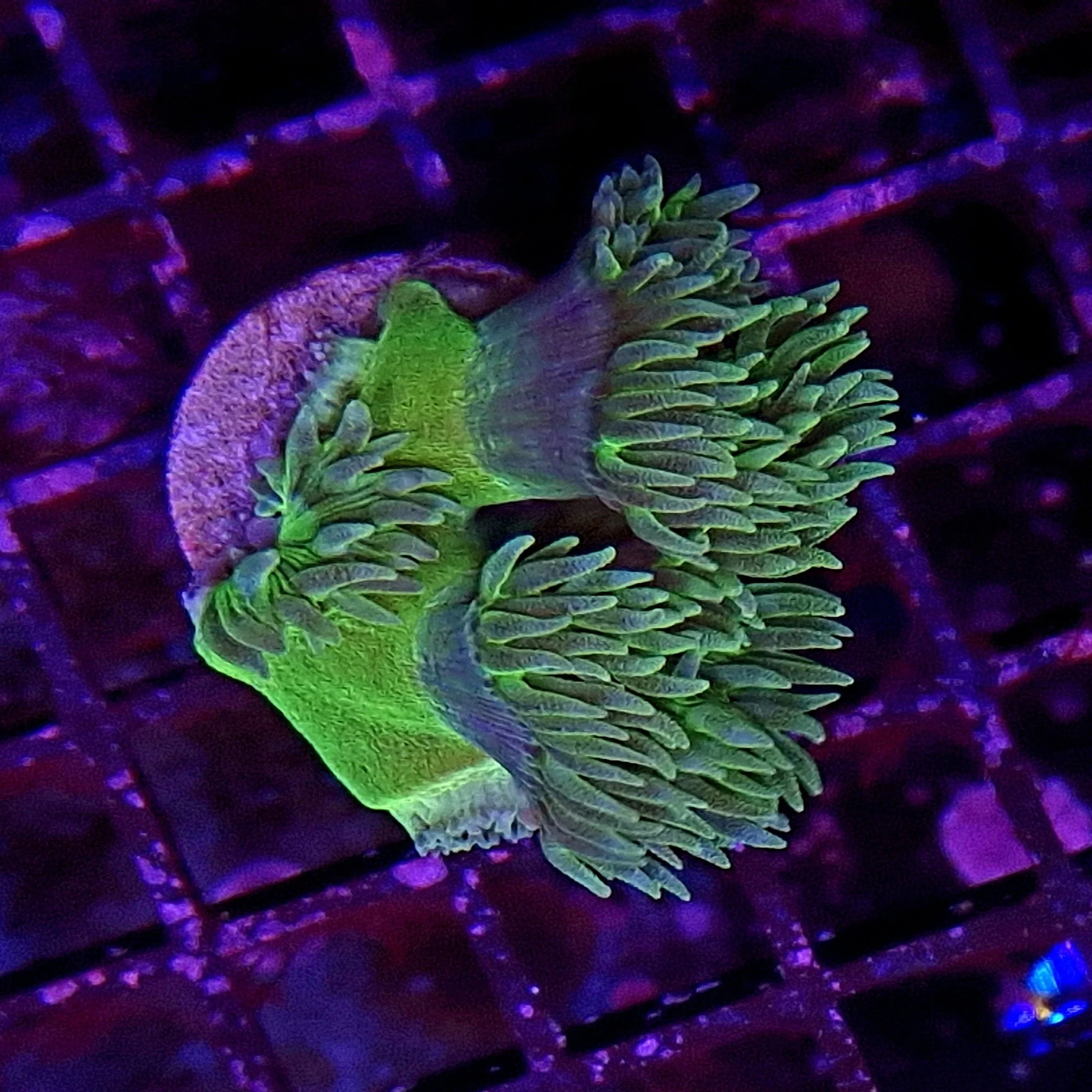
Requires moderate, indirect water flow to keep tentacles swaying gently. Avoid strong, direct flow, which can stress or tear the coral's tissues. A varied, back-and-forth motion is ideal.
Placement and spacing
Place in the mid-to-lower sections of the tank.
Maintain ample space between torch corals and other corals to prevent their aggressive sweeper tentacles from stinging them.
Feeding
Torch corals are photosynthetic but benefit from supplemental feeding. Feed small, meaty foods like mysis shrimp or marine snow. Occasional feeding (e.g., once a week) is sufficient.
Description
Water parameters
Temperature: 74–81°F
Salinity: 1.025 SG
Alkalinity: 8–12 dKH
Calcium: 400–450 ppm
Magnesium: 1250–1350 ppm
Nitrates: 5–10 ppm
Phosphates: 0.03–0.10 ppm
Stability is key: Avoid fluctuations in water chemistry, as this is a common cause of stress and tissue loss.
Lighting
Provide moderate to high lighting, but avoid excessive intensity, which can cause bleaching. Adjustable LEDs can be used to replicate natural reef conditions. A PAR range of 100-250 is often recommended.
Water flow
Requires moderate, indirect water flow to keep tentacles swaying gently. Avoid strong, direct flow, which can stress or tear the coral's tissues. A varied, back-and-forth motion is ideal.
Placement and spacing
Place in the mid-to-lower sections of the tank.
Maintain ample space between torch corals and other corals to prevent their aggressive sweeper tentacles from stinging them.
Feeding
Torch corals are photosynthetic but benefit from supplemental feeding. Feed small, meaty foods like mysis shrimp or marine snow. Occasional feeding (e.g., once a week) is sufficient.