The Story
Halloween Hermit Crab (Ciliopagurus strigatus)
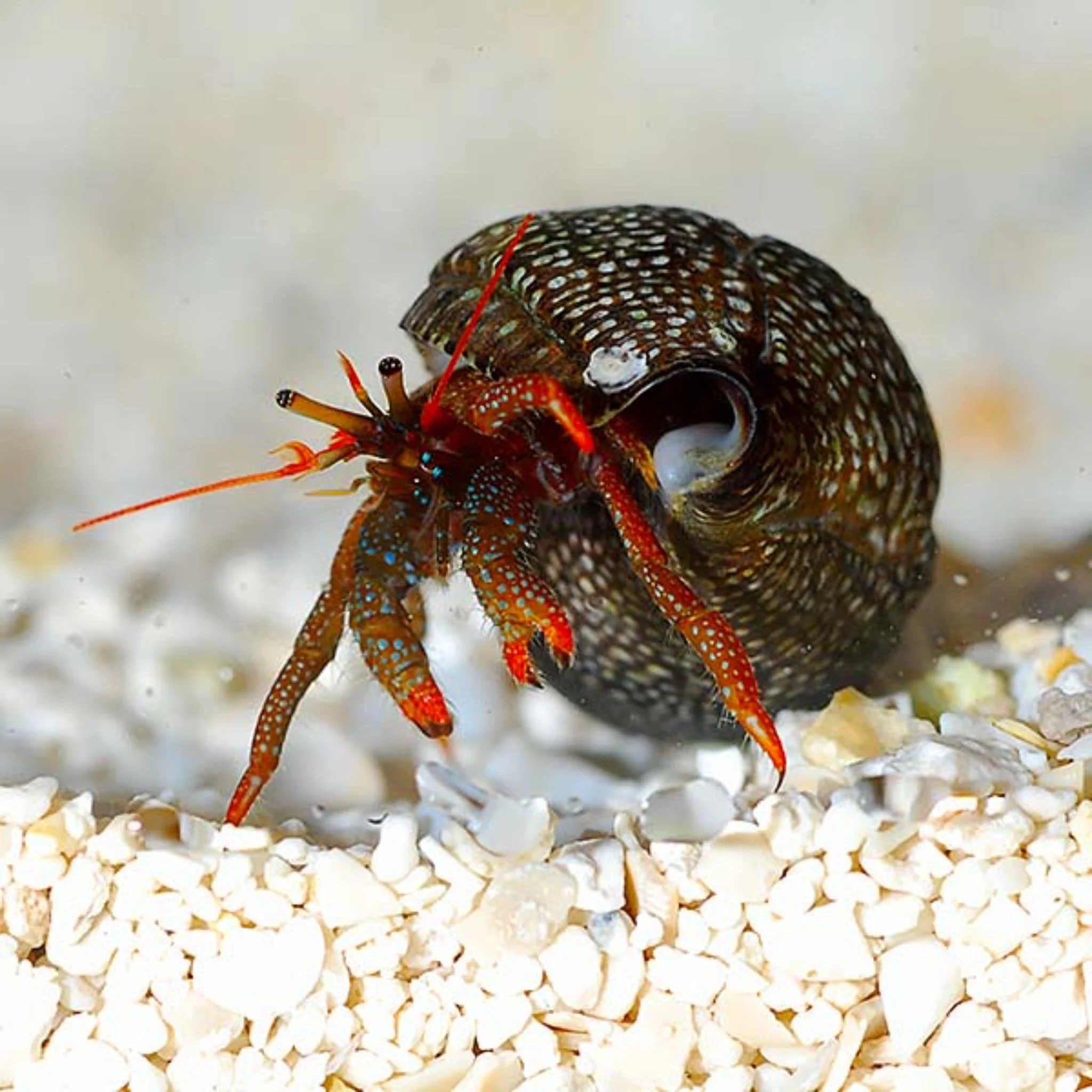
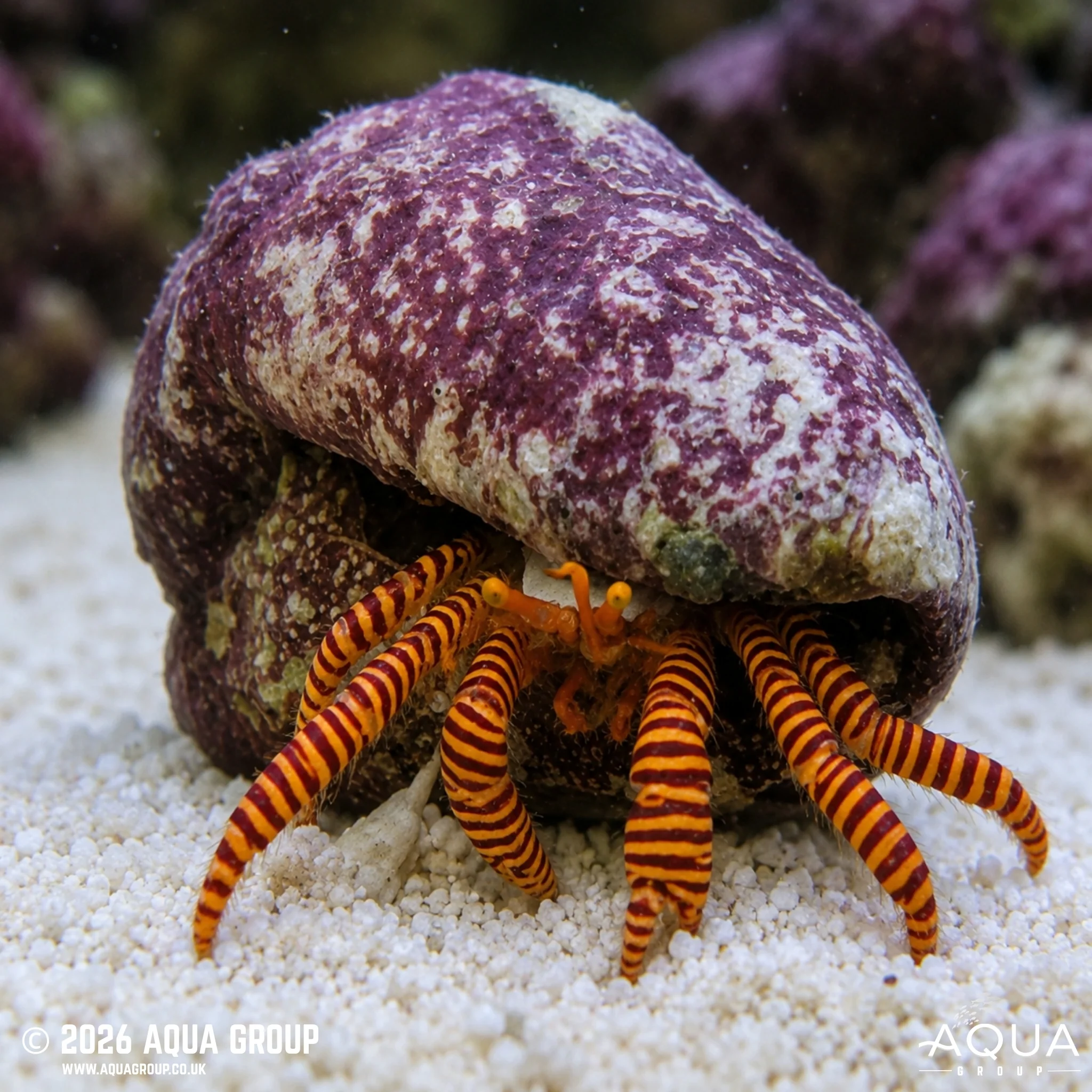
The Halloween Hermit Crab, Ciliopagurus strigatus, is a colourful marine hermit crab with bright orange legs, red banding and vivid white striping that gives it a striking “Halloween” appearance. Also known as the Striped Hermit Crab or Orange-legged Hermit Crab, this Indo-Pacific clean-up crew invertebrate is valued for grazing algae, scavenging leftover foods and adding movement to mature reef aquariums. It is generally reef safe with caution, but it is larger and stronger than many small hermits, so it should be kept with suitable spare shells and careful consideration around snails and loose coral frags.
Common Name:
Halloween Hermit Crab, Halloween Hermit, Striped Hermit Crab, Orange-legged Hermit Crab, Cone Shell Hermit Crab.
Scientific Name (Latin):
Ciliopagurus strigatus
Maximum Size:
Up to around 5 cm.
Water Type:
Marine
Origin / Natural Habitat:
Indo-Pacific, including tropical reef regions from the Indian Ocean across to the Pacific. Naturally found in reef-associated habitats, sandy areas around reefs, coral rubble, coastal reef flats and shallow tropical marine environments, with depth records from very shallow water down to around 90 m.
Water Parameters:
Temperature: 24–27°C
pH Range: 8.1–8.4
Hardness or Salinity: SG 1.023–1.025
Temperament:
Generally peaceful, but opportunistic and stronger than many small clean-up crew hermits. It may defend a chosen shell, compete with other hermit crabs or attack snails if it needs a larger shell. Best kept with peaceful reef fish and invertebrates that are not likely to prey on crabs.
Diet:
Omnivorous scavenger and algae grazer. In the aquarium, it will feed on film algae, filamentous algae, leftover fish food, detritus and meaty scraps. Supplement with algae wafers, marine algae sheets, sinking pellets, small pieces of mysis, krill, clam or other marine foods if natural algae and leftovers are limited. Feeding helps reduce the chance of it harassing snails or other small invertebrates for food.
Minimum Tank Size:
A minimum of 60 litres is recommended for a single specimen, with larger aquariums preferred for mixed clean-up crews or multiple hermit crabs. Provide mature live rock, open substrate and stable water quality.
Behaviour & Activity:
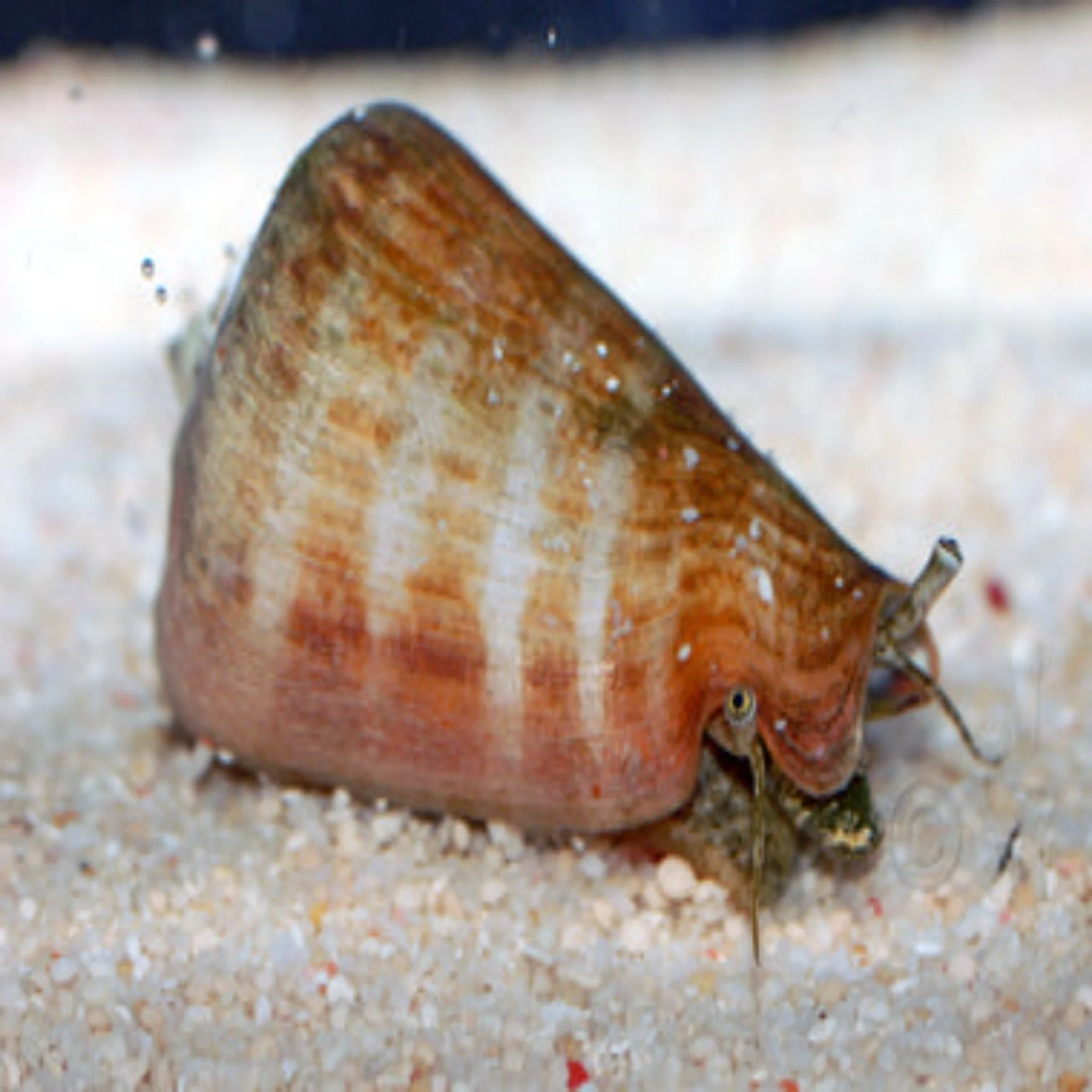
An active foraging hermit crab that moves over rockwork, sand and aquarium surfaces searching for algae and leftover foods. It often uses cone-shaped shells and may swap shells as it grows. Like other hermit crabs, it can climb, dig lightly and move small objects while foraging. Secure loose frags and provide a selection of empty shells in different sizes to reduce competition with snails.
Reef Safe:
Reef Safe with Caution
Generally safe with corals and most reef livestock, and it does not deliberately eat coral tissue. The caution is due to its size and behaviour: it may knock over loose coral frags, disturb small items, compete with other hermits and kill snails for shells or food. It is best kept in low to moderate numbers rather than overcrowded as a clean-up crew animal.
Special Requirements or Care Notes:
Provide spare empty shells of suitable sizes and shapes at all times. Slow acclimation is important, as marine crustaceans are sensitive to sudden salinity, pH and temperature changes. Avoid copper-based treatments and high nitrate levels. Do not keep with hermit- or crab-eating fish such as triggers, puffers, large wrasses, hawkfish or aggressive predatory crabs. Secure loose corals and frags before adding, as larger hermits can bulldoze small pieces while grazing.
Suitable for:
Beginner to intermediate fishkeepers
Availability:
Common in trade
All images are a visual representation of the animal you will receive, made to be as accurate as possible. Please note that Mother Nature is a wonderful thing, and variation in patterns and colours will occur — that is part of the unique beauty of these animals.
Description
Halloween Hermit Crab (Ciliopagurus strigatus)
The Halloween Hermit Crab, Ciliopagurus strigatus, is a colourful marine hermit crab with bright orange legs, red banding and vivid white striping that gives it a striking “Halloween” appearance. Also known as the Striped Hermit Crab or Orange-legged Hermit Crab, this Indo-Pacific clean-up crew invertebrate is valued for grazing algae, scavenging leftover foods and adding movement to mature reef aquariums. It is generally reef safe with caution, but it is larger and stronger than many small hermits, so it should be kept with suitable spare shells and careful consideration around snails and loose coral frags.
Common Name:
Halloween Hermit Crab, Halloween Hermit, Striped Hermit Crab, Orange-legged Hermit Crab, Cone Shell Hermit Crab.
Scientific Name (Latin):
Ciliopagurus strigatus
Maximum Size:
Up to around 5 cm.
Water Type:
Marine
Origin / Natural Habitat:
Indo-Pacific, including tropical reef regions from the Indian Ocean across to the Pacific. Naturally found in reef-associated habitats, sandy areas around reefs, coral rubble, coastal reef flats and shallow tropical marine environments, with depth records from very shallow water down to around 90 m.
Water Parameters:
Temperature: 24–27°C
pH Range: 8.1–8.4
Hardness or Salinity: SG 1.023–1.025
Temperament:
Generally peaceful, but opportunistic and stronger than many small clean-up crew hermits. It may defend a chosen shell, compete with other hermit crabs or attack snails if it needs a larger shell. Best kept with peaceful reef fish and invertebrates that are not likely to prey on crabs.
Diet:
Omnivorous scavenger and algae grazer. In the aquarium, it will feed on film algae, filamentous algae, leftover fish food, detritus and meaty scraps. Supplement with algae wafers, marine algae sheets, sinking pellets, small pieces of mysis, krill, clam or other marine foods if natural algae and leftovers are limited. Feeding helps reduce the chance of it harassing snails or other small invertebrates for food.
Minimum Tank Size:
A minimum of 60 litres is recommended for a single specimen, with larger aquariums preferred for mixed clean-up crews or multiple hermit crabs. Provide mature live rock, open substrate and stable water quality.
Behaviour & Activity:
An active foraging hermit crab that moves over rockwork, sand and aquarium surfaces searching for algae and leftover foods. It often uses cone-shaped shells and may swap shells as it grows. Like other hermit crabs, it can climb, dig lightly and move small objects while foraging. Secure loose frags and provide a selection of empty shells in different sizes to reduce competition with snails.
Reef Safe:
Reef Safe with Caution
Generally safe with corals and most reef livestock, and it does not deliberately eat coral tissue. The caution is due to its size and behaviour: it may knock over loose coral frags, disturb small items, compete with other hermits and kill snails for shells or food. It is best kept in low to moderate numbers rather than overcrowded as a clean-up crew animal.
Special Requirements or Care Notes:
Provide spare empty shells of suitable sizes and shapes at all times. Slow acclimation is important, as marine crustaceans are sensitive to sudden salinity, pH and temperature changes. Avoid copper-based treatments and high nitrate levels. Do not keep with hermit- or crab-eating fish such as triggers, puffers, large wrasses, hawkfish or aggressive predatory crabs. Secure loose corals and frags before adding, as larger hermits can bulldoze small pieces while grazing.
Suitable for:
Beginner to intermediate fishkeepers
Availability:
Common in trade
All images are a visual representation of the animal you will receive, made to be as accurate as possible. Please note that Mother Nature is a wonderful thing, and variation in patterns and colours will occur — that is part of the unique beauty of these animals.