Original: $161.10
-65%$161.10
$56.38The Story
Marshall Islands Wrasse (Thalassoma lutescens)
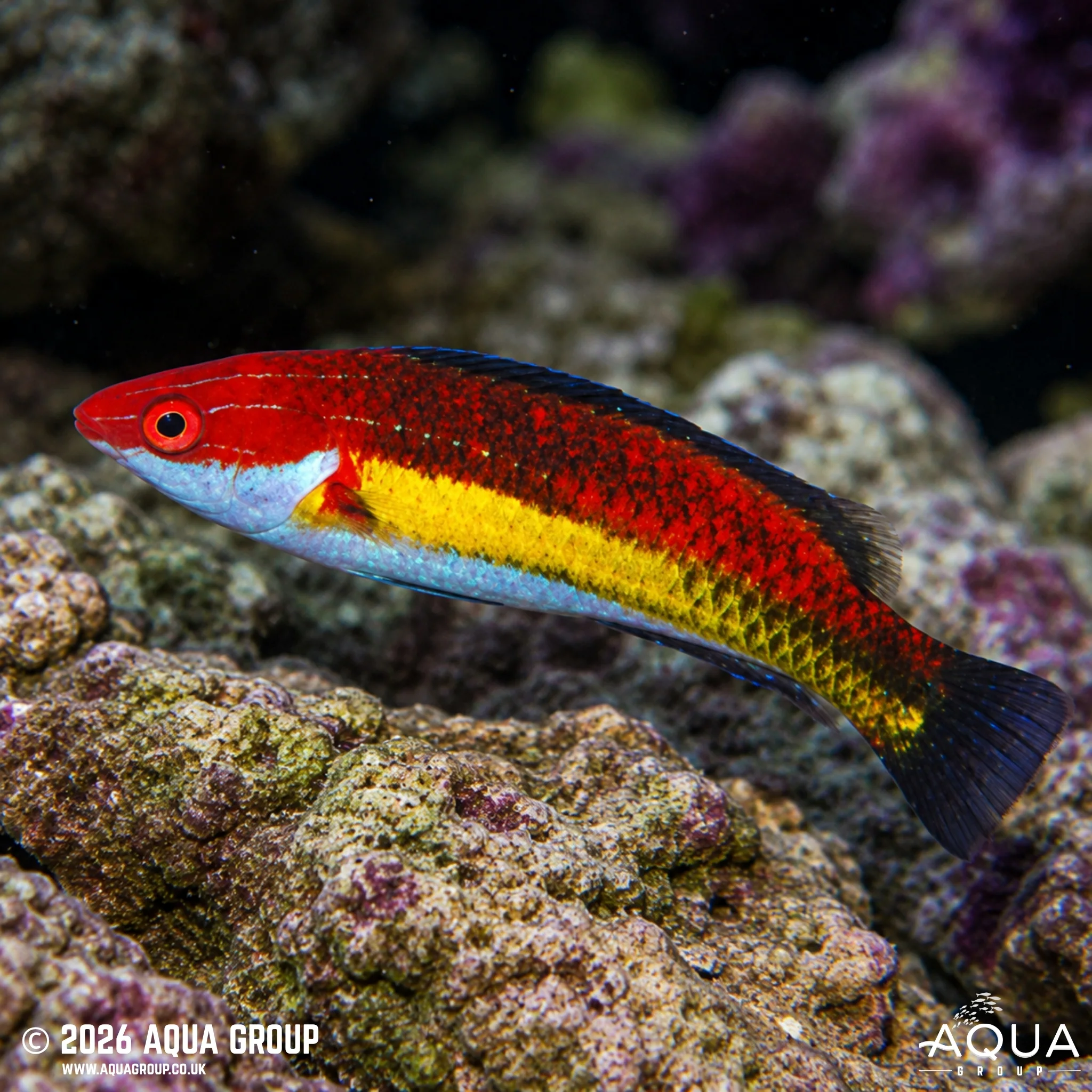
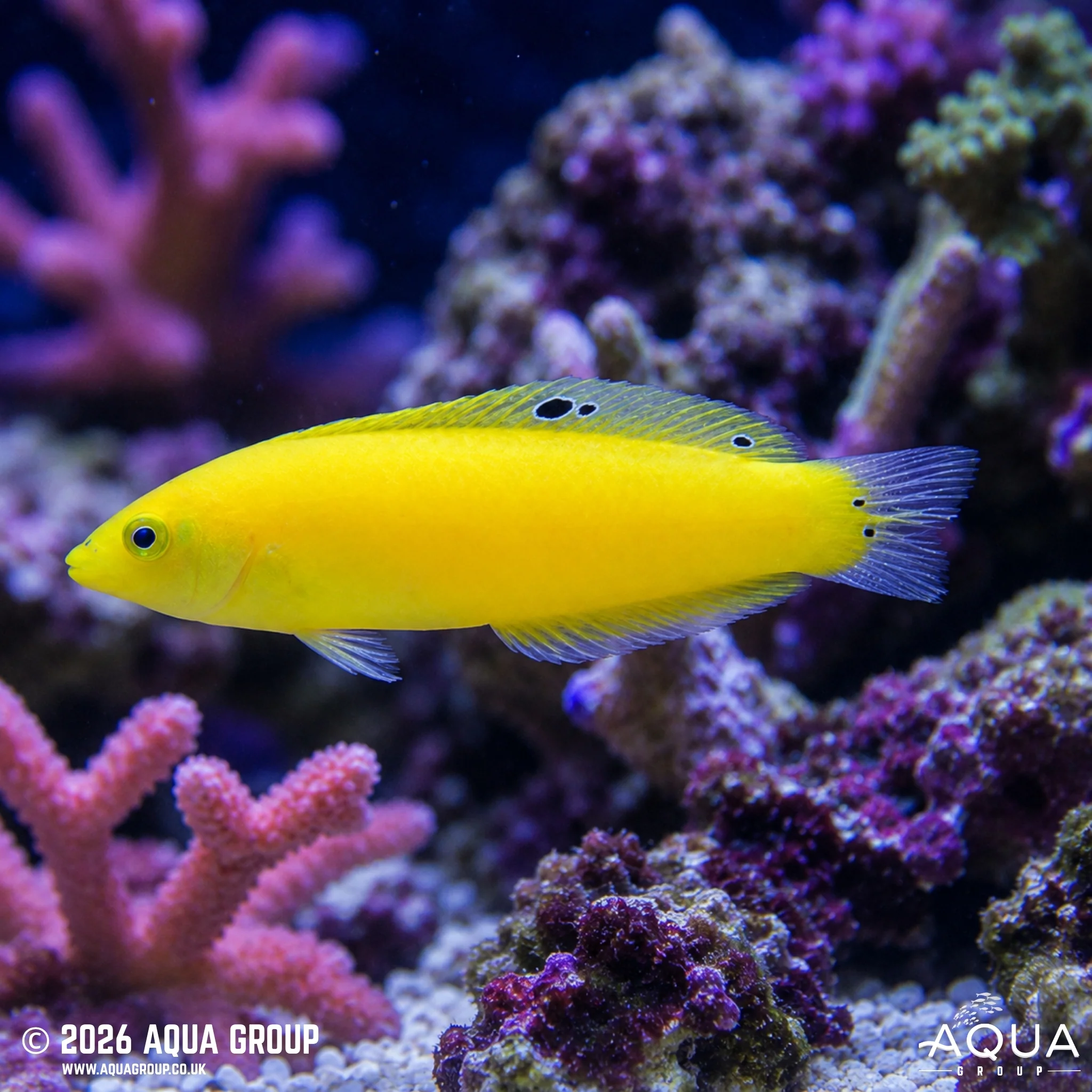
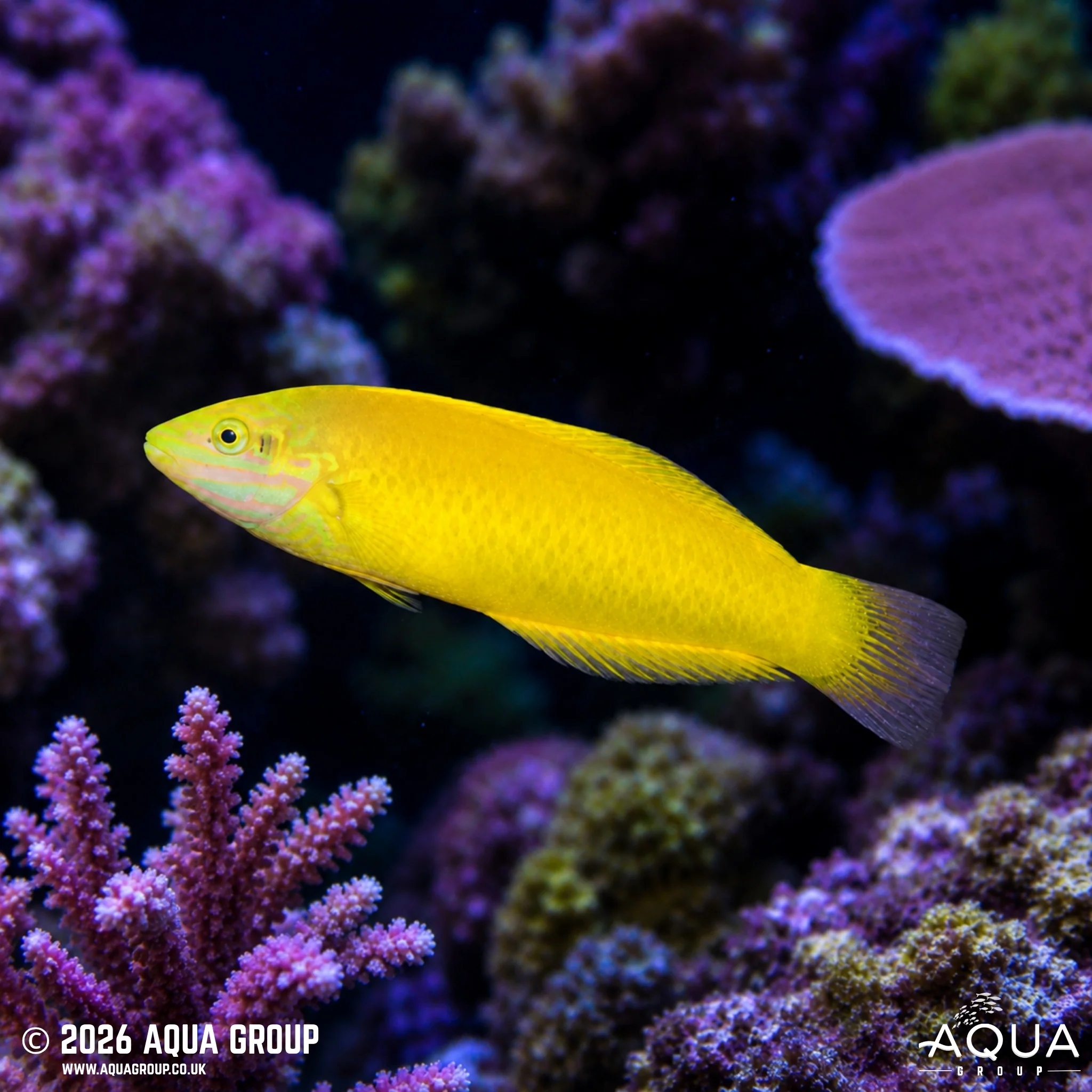
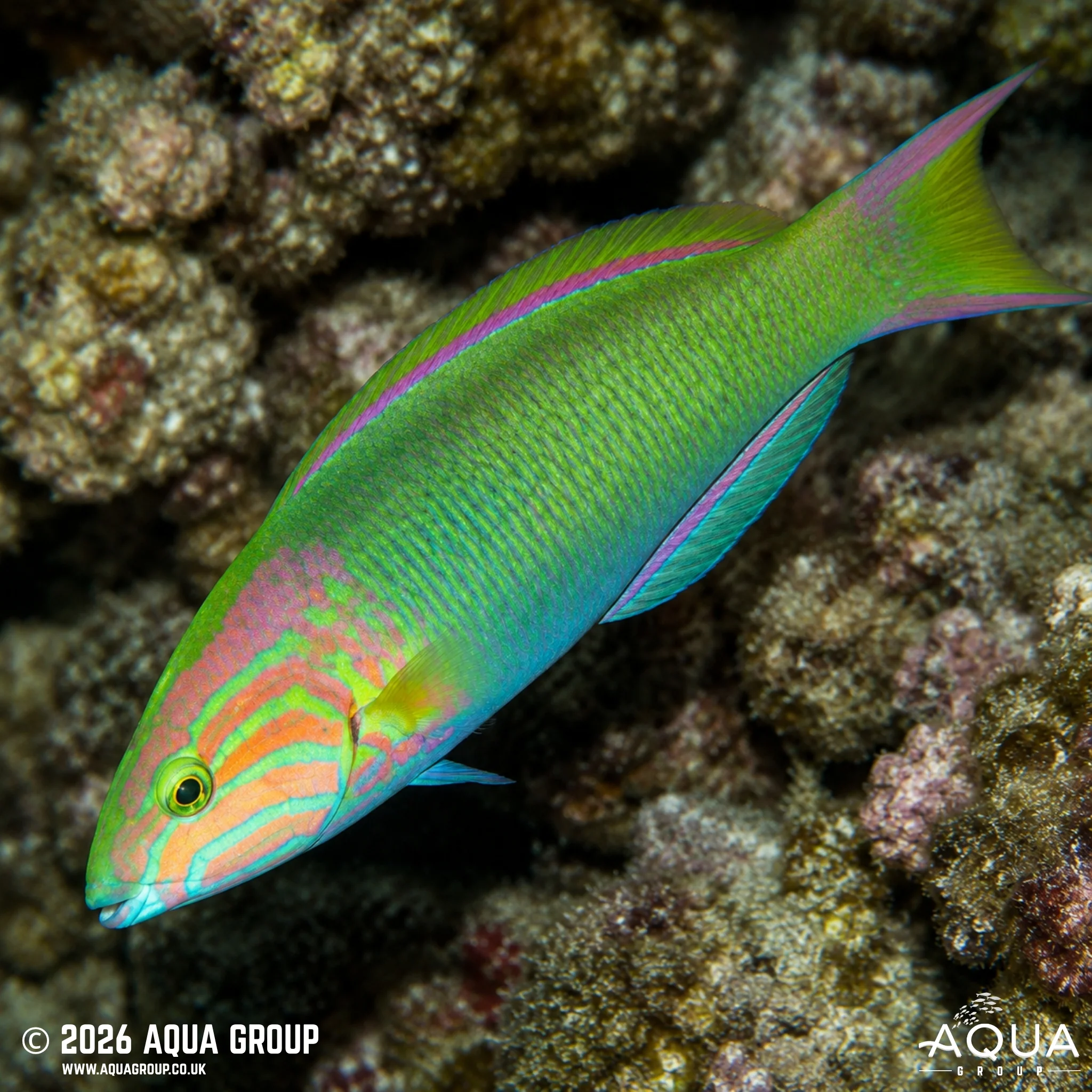
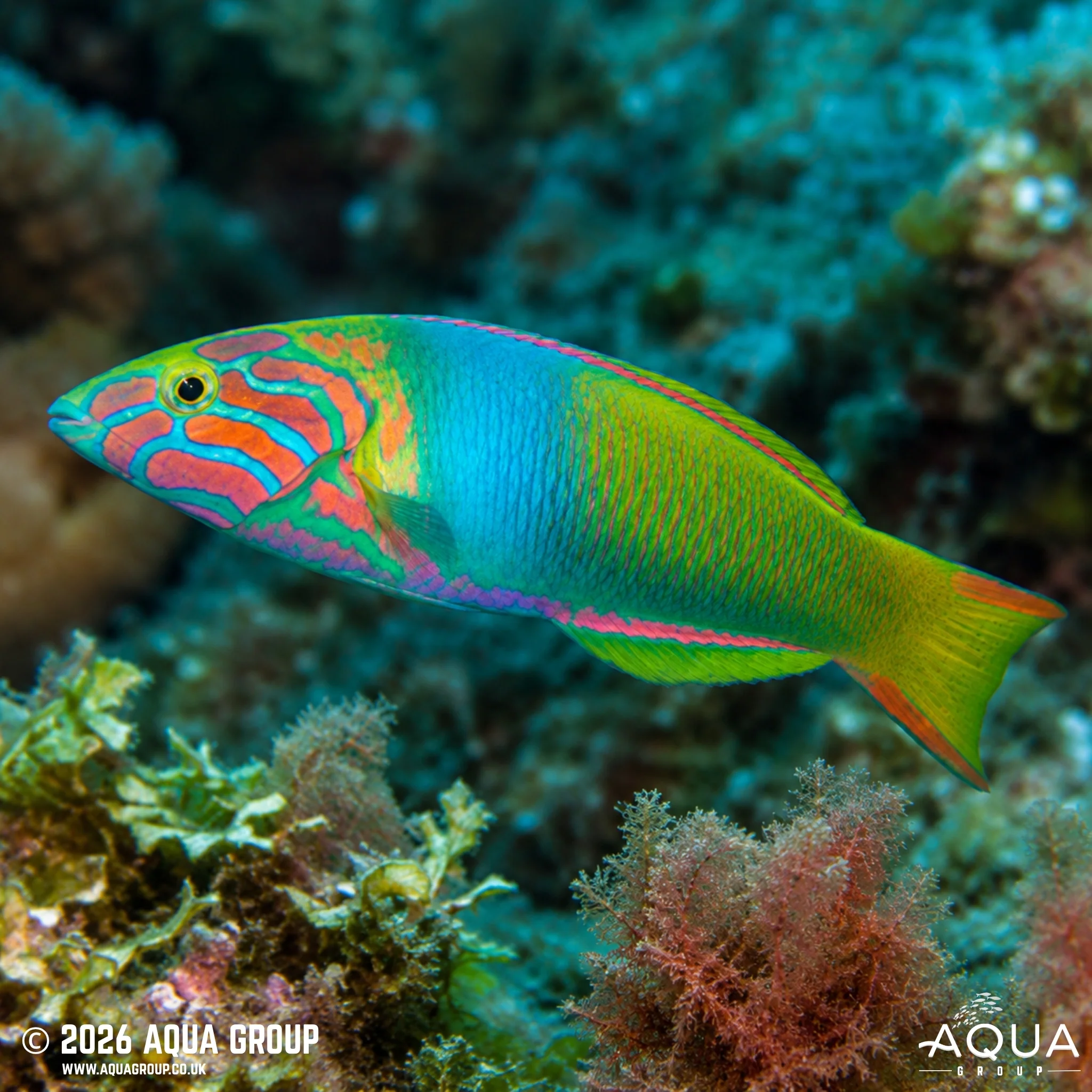
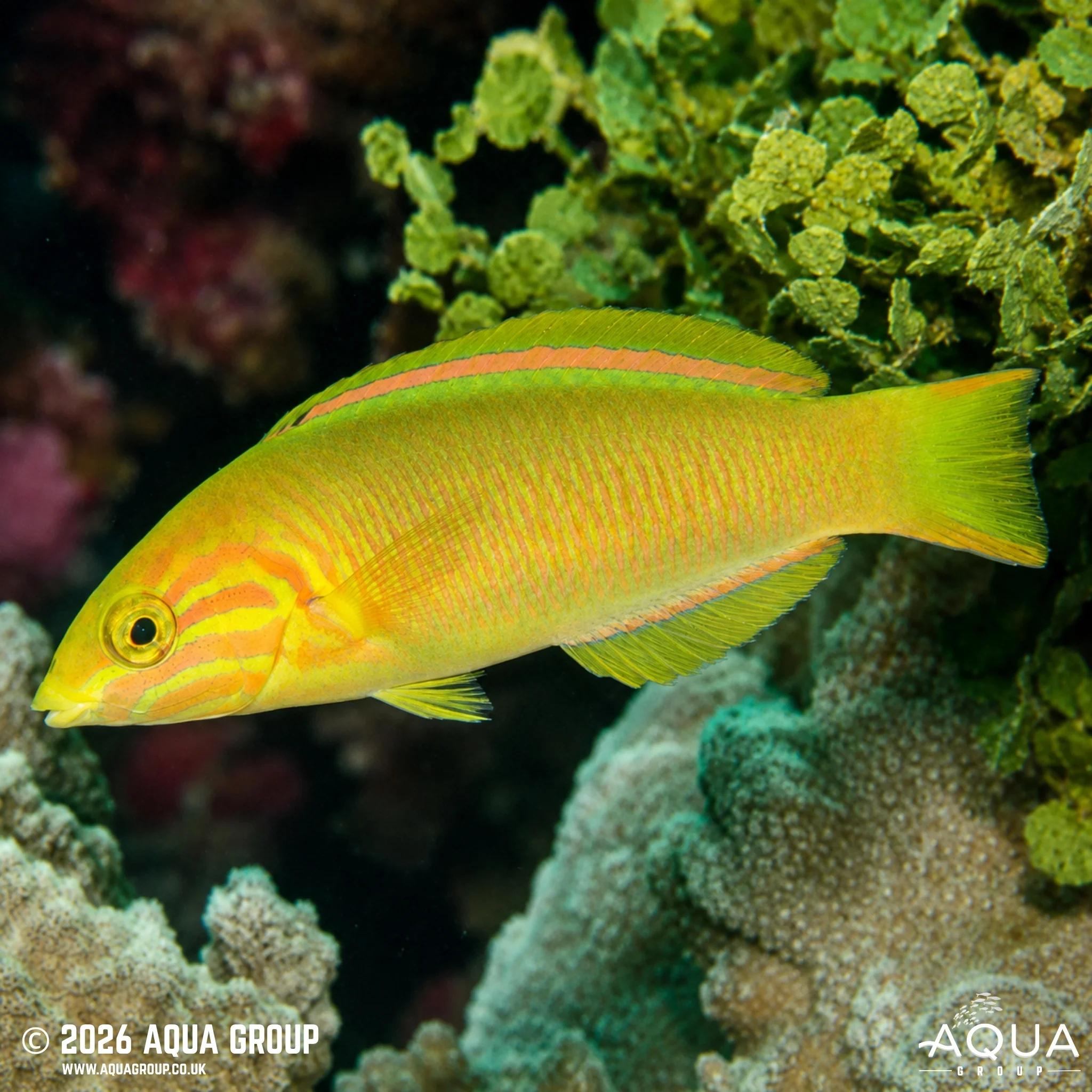
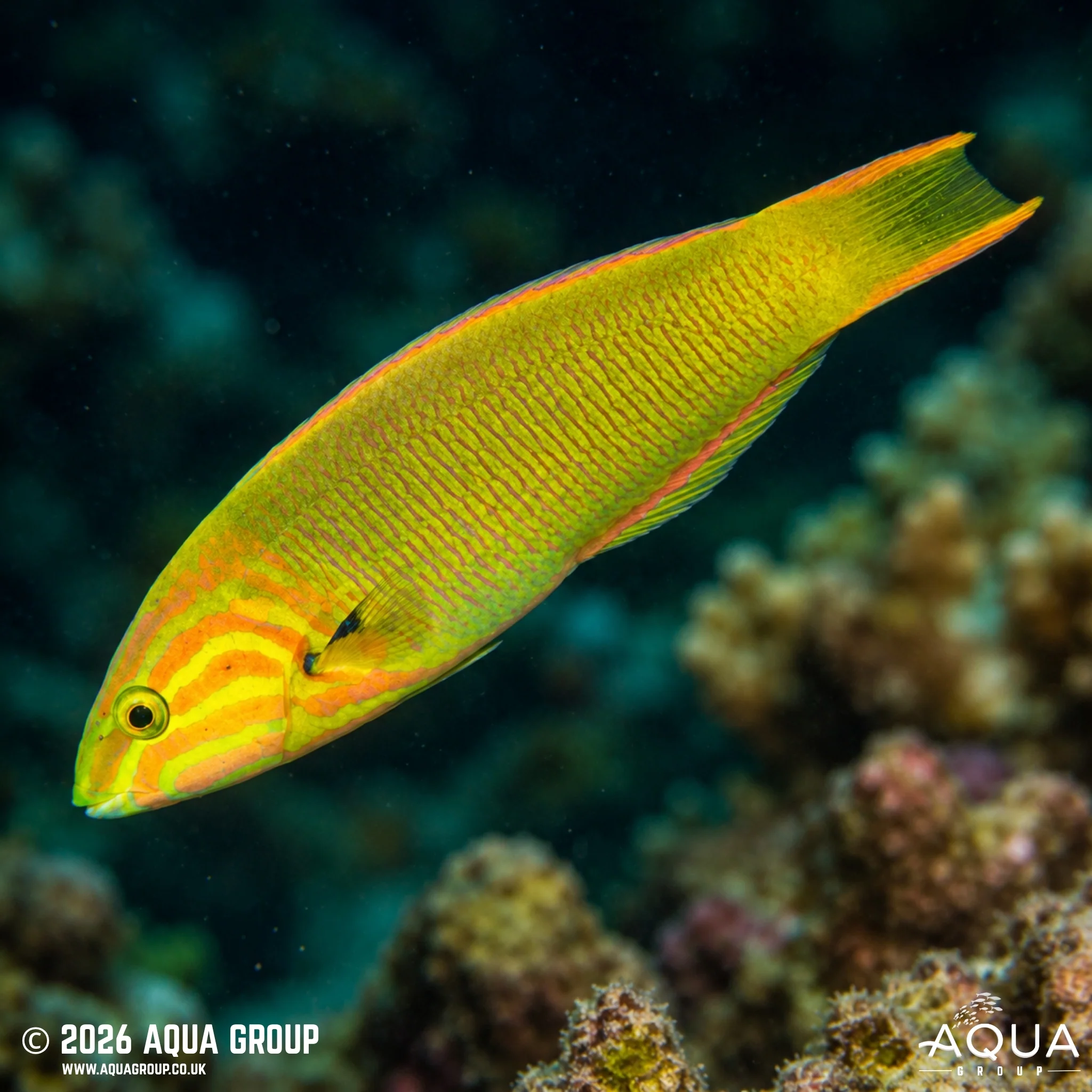
The Marshall Islands Wrasse is a large, colourful and highly active marine wrasse, known for its striking yellow, green, blue and orange colouration that changes dramatically as the fish matures. Also sold as the Sunset Wrasse or Green Moon Wrasse, this species is bold, fast-moving and full of character, but it is not suitable for small or quiet reef aquariums. It is best kept in a spacious, mature marine system with robust tank mates, strong filtration and plenty of open swimming room.
Common Name:
Marshall Islands Wrasse. Also commonly referred to as the Sunset Wrasse, Green Moon Wrasse, Yellow-Brown Wrasse, Yellow Moon Wrasse, Banana Wrasse or Blue-Fin Wrasse.
Scientific Name (Latin):
Thalassoma lutescens
Maximum Size:
Up to around 30 cm, making it a large and powerful wrasse that needs significant swimming space.
Water Type:
Marine.
Origin / Natural Habitat:
Widespread across the Indo-Pacific, including the Marshall Islands and surrounding reef regions. In the wild, it is found around clear outer lagoons, seaward reefs, sandy and rubble areas, and coral-rich reef zones, often in shallow exposed reef habitats.
Water Parameters:
Temperature: 24–28°C
pH Range: 8.1–8.4
Salinity: 1.020–1.025 SG
Temperament:
Semi-aggressive to aggressive. Juveniles and smaller specimens can be manageable, but adults can become boisterous, territorial and dominant. Best kept with similarly robust marine fish that can handle an active wrasse. Avoid timid, delicate or very small tank mates.
Diet:
Carnivorous. In the wild, it feeds mainly on shelled benthic invertebrates such as crabs, shrimps, snails, bivalves, brittle stars and sea urchins, as well as worms and fish eggs. In the aquarium it should be offered a varied meaty diet including frozen mysis, brineshrimp, krill, chopped clam, mussel, cockle, prawn, squid, white fish and quality marine pellets. Feed well and regularly, as this is a very active species.
Minimum Tank Size:
A practical long-term recommendation is at least 800–1,000 litres for an adult, with larger aquariums strongly preferred. This species is a powerful swimmer and should not be planned for as a small reef wrasse.
Behaviour & Activity:
This is a very active daytime wrasse that spends much of the day swimming, hunting, turning over small items and searching rockwork, sand and rubble for food. It may jump from open aquariums, so a tight-fitting lid or covered system is essential. Like many wrasses, it can change sex from female to male, with mature terminal males developing stronger colour and more territorial behaviour.
Reef Safe:
Reef Safe with Caution
This species is generally not a coral-eater, but it is not safe with many ornamental invertebrates. It may eat shrimps, crabs, snails, brittle stars, small urchins, worms, small bivalves and very small fish. It is best suited to fish-only systems, FOWLR aquariums, or large reef aquariums where the keeper understands the risk to clean-up crew and ornamental invertebrates.
Special Requirements or Care Notes:
Best kept in a mature, spacious marine aquarium with excellent filtration, strong oxygenation, live rock, open swimming areas and plenty of territory breaks. A sand bed is beneficial for comfort and natural behaviour, although this species is not as sand-dependent as some burying wrasses. Add with care, ideally later in the stocking order, as established adults may harass new or timid fish. A secure lid is essential.
Suitable for:
Experienced marine fishkeepers
Availability:
Occasional in trade
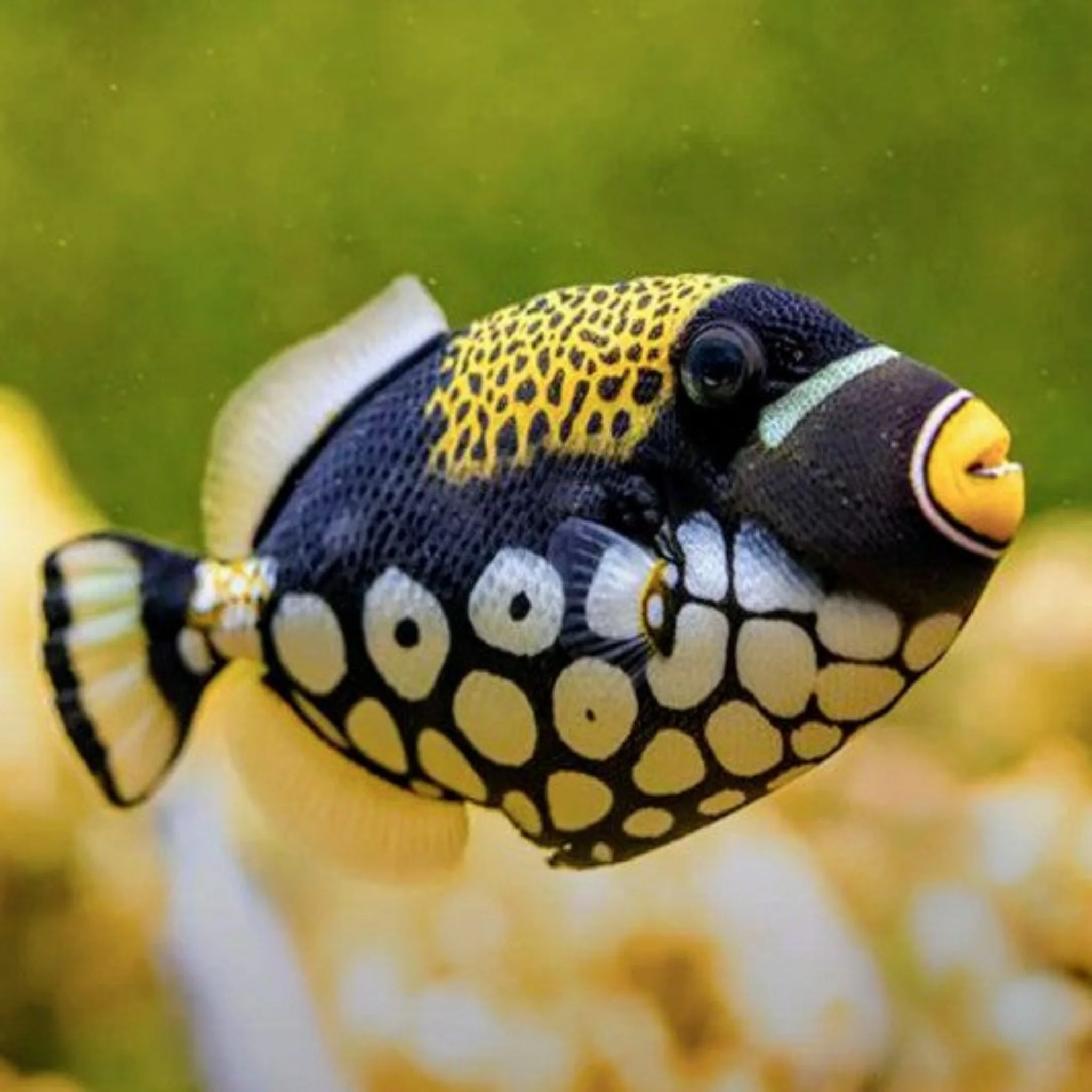
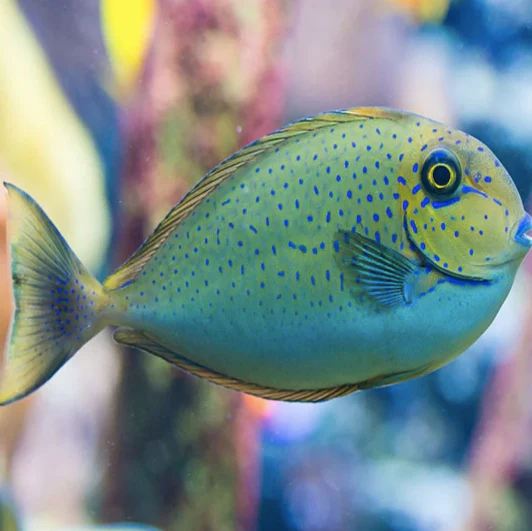
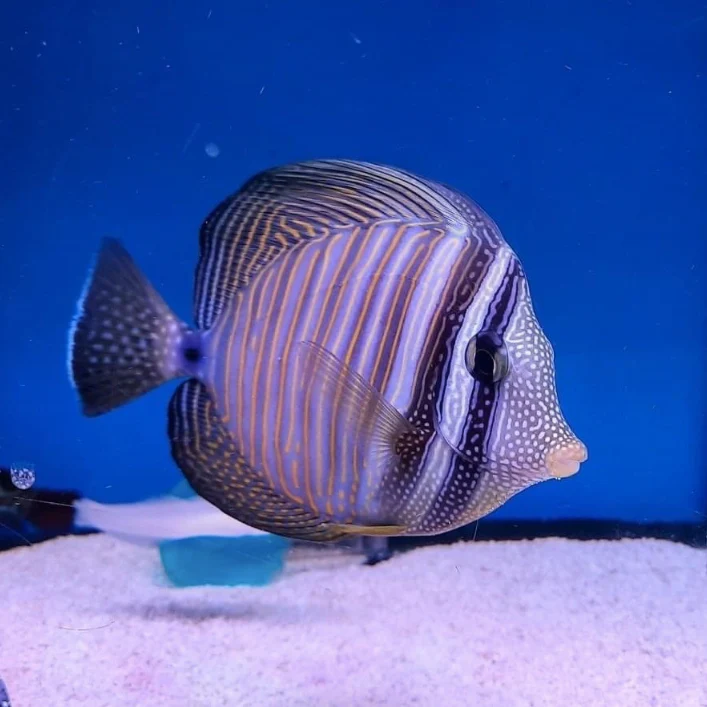
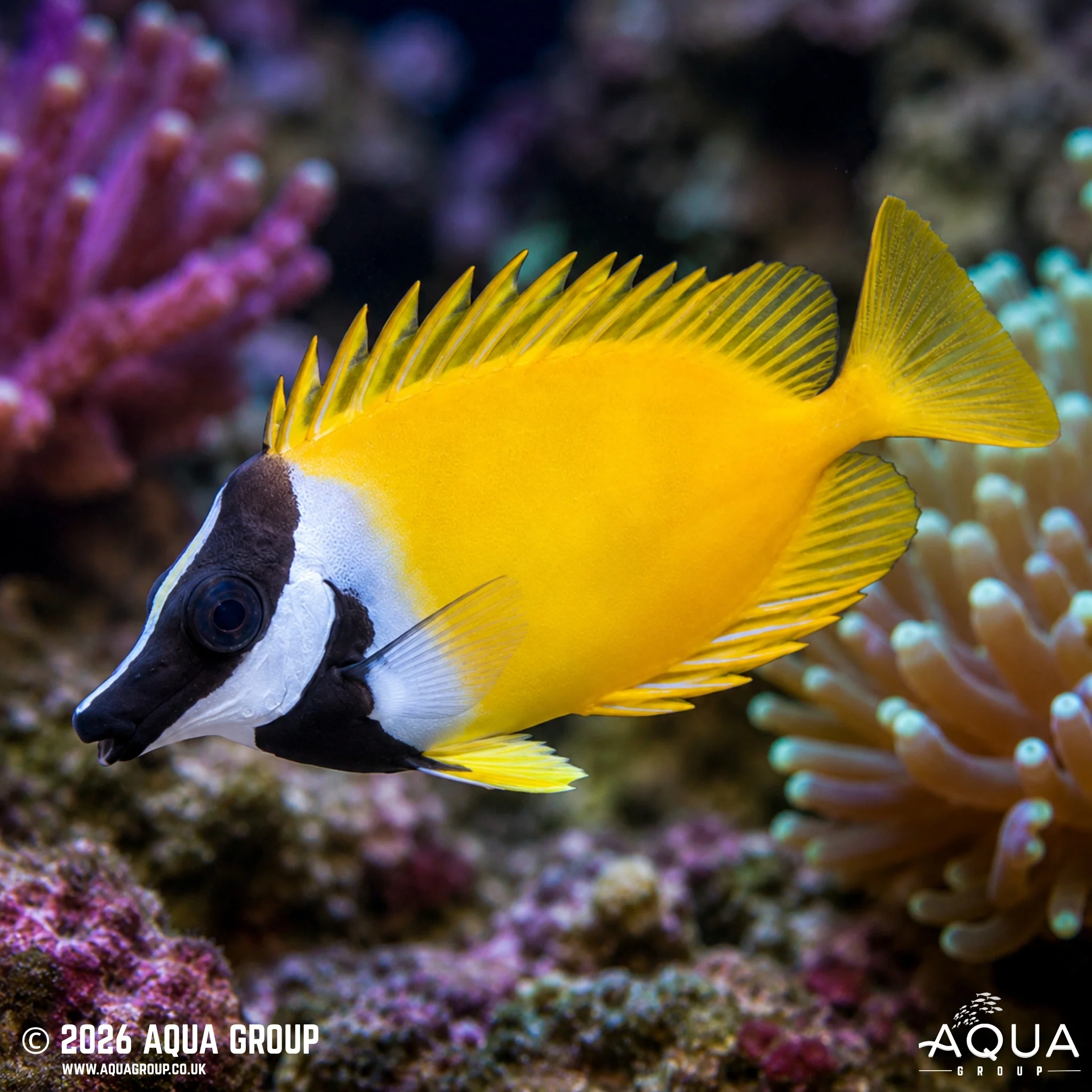
All images are a visual representation of the fish you will receive, made to be as accurate as possible. Please note that Mother Nature is a wonderful thing, and variation in patterns and colours will occur — that is part of the unique beauty of these animals.
Details & Craftsmanship
Every detail has been carefully considered to bring you the perfect product.
Details & Craftsmanship
Every detail has been carefully considered to bring you the perfect product.
Details & Craftsmanship
Every detail has been carefully considered to bring you the perfect product.
Description
Marshall Islands Wrasse (Thalassoma lutescens)
The Marshall Islands Wrasse is a large, colourful and highly active marine wrasse, known for its striking yellow, green, blue and orange colouration that changes dramatically as the fish matures. Also sold as the Sunset Wrasse or Green Moon Wrasse, this species is bold, fast-moving and full of character, but it is not suitable for small or quiet reef aquariums. It is best kept in a spacious, mature marine system with robust tank mates, strong filtration and plenty of open swimming room.
Common Name:
Marshall Islands Wrasse. Also commonly referred to as the Sunset Wrasse, Green Moon Wrasse, Yellow-Brown Wrasse, Yellow Moon Wrasse, Banana Wrasse or Blue-Fin Wrasse.
Scientific Name (Latin):
Thalassoma lutescens
Maximum Size:
Up to around 30 cm, making it a large and powerful wrasse that needs significant swimming space.
Water Type:
Marine.
Origin / Natural Habitat:
Widespread across the Indo-Pacific, including the Marshall Islands and surrounding reef regions. In the wild, it is found around clear outer lagoons, seaward reefs, sandy and rubble areas, and coral-rich reef zones, often in shallow exposed reef habitats.
Water Parameters:
Temperature: 24–28°C
pH Range: 8.1–8.4
Salinity: 1.020–1.025 SG
Temperament:
Semi-aggressive to aggressive. Juveniles and smaller specimens can be manageable, but adults can become boisterous, territorial and dominant. Best kept with similarly robust marine fish that can handle an active wrasse. Avoid timid, delicate or very small tank mates.
Diet:
Carnivorous. In the wild, it feeds mainly on shelled benthic invertebrates such as crabs, shrimps, snails, bivalves, brittle stars and sea urchins, as well as worms and fish eggs. In the aquarium it should be offered a varied meaty diet including frozen mysis, brineshrimp, krill, chopped clam, mussel, cockle, prawn, squid, white fish and quality marine pellets. Feed well and regularly, as this is a very active species.
Minimum Tank Size:
A practical long-term recommendation is at least 800–1,000 litres for an adult, with larger aquariums strongly preferred. This species is a powerful swimmer and should not be planned for as a small reef wrasse.
Behaviour & Activity:
This is a very active daytime wrasse that spends much of the day swimming, hunting, turning over small items and searching rockwork, sand and rubble for food. It may jump from open aquariums, so a tight-fitting lid or covered system is essential. Like many wrasses, it can change sex from female to male, with mature terminal males developing stronger colour and more territorial behaviour.
Reef Safe:
Reef Safe with Caution
This species is generally not a coral-eater, but it is not safe with many ornamental invertebrates. It may eat shrimps, crabs, snails, brittle stars, small urchins, worms, small bivalves and very small fish. It is best suited to fish-only systems, FOWLR aquariums, or large reef aquariums where the keeper understands the risk to clean-up crew and ornamental invertebrates.
Special Requirements or Care Notes:
Best kept in a mature, spacious marine aquarium with excellent filtration, strong oxygenation, live rock, open swimming areas and plenty of territory breaks. A sand bed is beneficial for comfort and natural behaviour, although this species is not as sand-dependent as some burying wrasses. Add with care, ideally later in the stocking order, as established adults may harass new or timid fish. A secure lid is essential.
Suitable for:
Experienced marine fishkeepers
Availability:
Occasional in trade
All images are a visual representation of the fish you will receive, made to be as accurate as possible. Please note that Mother Nature is a wonderful thing, and variation in patterns and colours will occur — that is part of the unique beauty of these animals.