Original: $161.10
-65%$161.10
$56.38The Story
Purple Tilefish (Hoplolatilus purpureus)
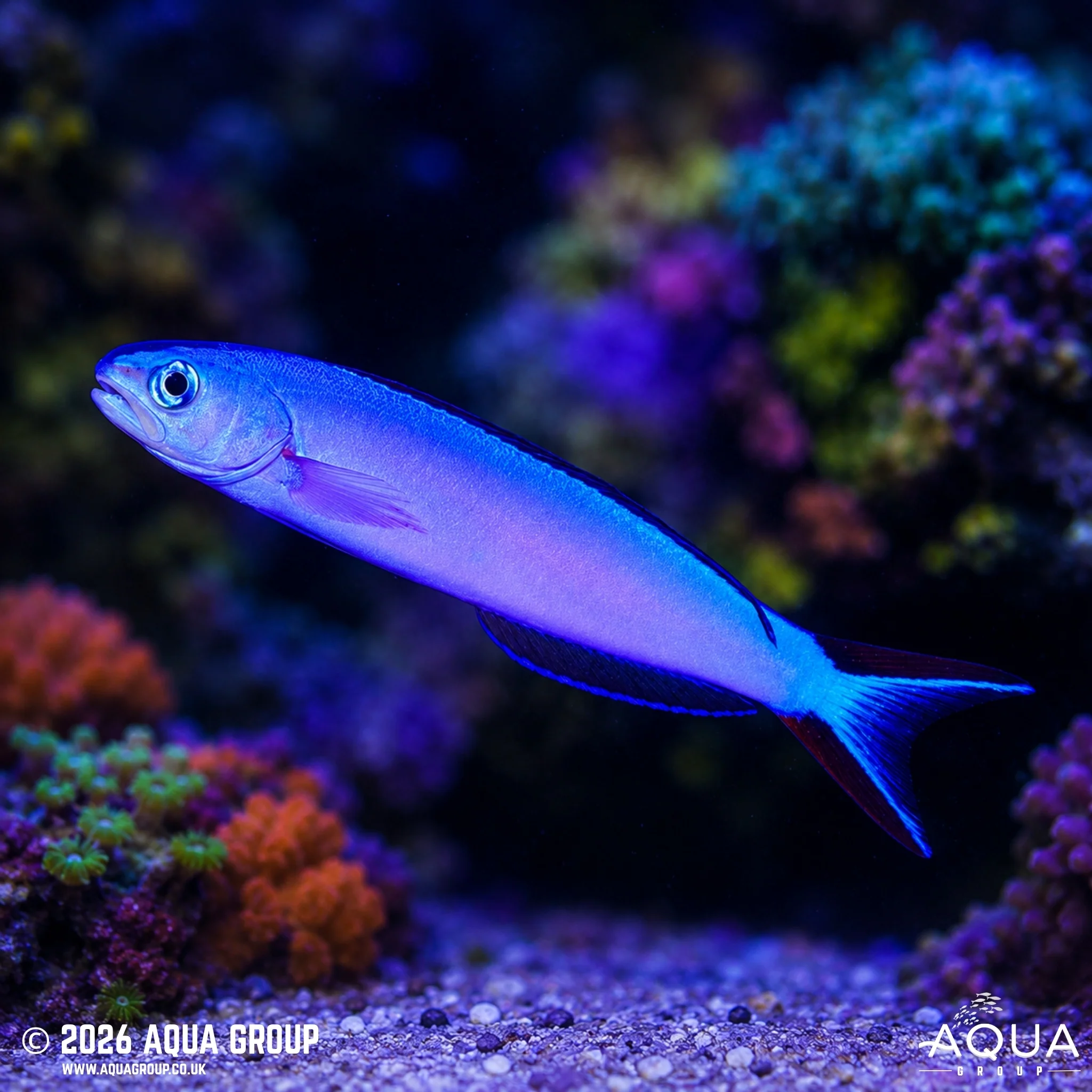
The Purple Tilefish, Hoplolatilus purpureus, is a beautiful and unusual marine tilefish with a slender magenta to purple body, elegant swimming style and red edging to the tail. Also known as the Purple Sand Tilefish, this Indo-West Pacific species is found over sand and rubble patches on steep seaward reef slopes. It is peaceful and reef safe, but it is also shy, fast-moving and prone to jumping, so it needs a mature aquarium with a deep sand bed, secure lid and calm tank mates.
Common Name:
Purple Tilefish, Purple Sand Tilefish, Purple Tile Fish.
Scientific Name (Latin):
Hoplolatilus purpureus
Maximum Size:
Up to around 13 cm.
Water Type:
Marine
Origin / Natural Habitat:
Indo-West Pacific, including the Philippines, Indonesia, Timor-Leste, Papua New Guinea and the Solomon Islands. Naturally found on sand and rubble patches of steep seaward reef slopes, usually in pairs, at depths of around 30–85 m.
Water Parameters:
Temperature: 23–26°C
pH Range: 8.1–8.4
Hardness or Salinity: SG 1.020–1.025
Temperament:
Peaceful but nervous. Best kept with calm reef-safe fish that will not bully it or compete too aggressively for food. Avoid aggressive damsels, dottybacks, large wrasses, triggers, puffers and fast, boisterous tank mates that may cause hiding or jumping.
Diet:
Carnivorous planktivore. In the aquarium, offer small meaty foods such as frozen mysis, enriched brineshrimp, copepods, cyclops, calanus, finely chopped krill, marine micro pellets and finely chopped seafood. Small regular feeds are best, especially while newly introduced specimens are settling.
Minimum Tank Size:
A minimum of 250 litres is recommended for a single specimen, with 300 litres or more preferred for a pair. Longer aquariums with open swimming space are ideal.
Behaviour & Activity:
An active but cautious tilefish that spends time hovering and swimming above the substrate, retreating rapidly into burrows or cover when startled. It appreciates a deep sandy area mixed with small rubble, as well as stable rockwork, caves and shaded retreats. In nature it is often found in pairs and may form a secure home area over sand and rubble.
Reef Safe:
Reef Safe
Safe with corals and most ornamental invertebrates. It does not nip coral tissue or attack typical reef clean-up crew animals. The main reef concerns are its need for a suitable sand/rubble area, low-stress tank mates and a tightly covered aquarium.
Special Requirements or Care Notes:
A tight-fitting lid or mesh cover is essential, as tilefish are powerful jumpers and may launch from the aquarium when startled. Provide a deep soft sand bed, ideally with small rubble pieces, so the fish can dig or shelter naturally. Keep under moderate rather than harsh lighting where possible, reflecting its deeper reef-slope habitat. Add only to a mature, stable aquarium with excellent water quality and good oxygenation. Newly imported specimens can be shy and sensitive, so careful acclimation and feeding observation are important.
Suitable for:
Experienced fishkeepers
Availability:
Rare or occasional in trade
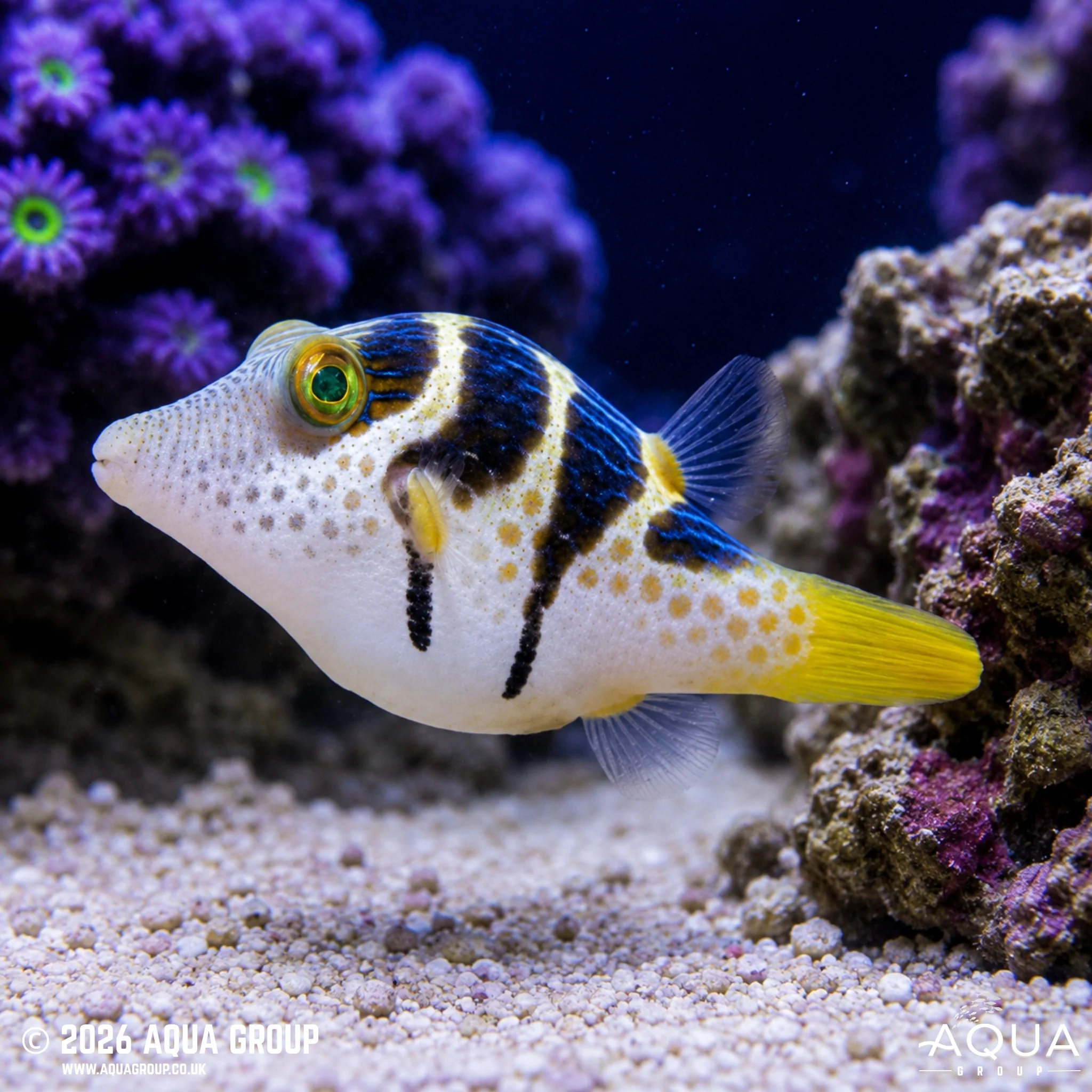
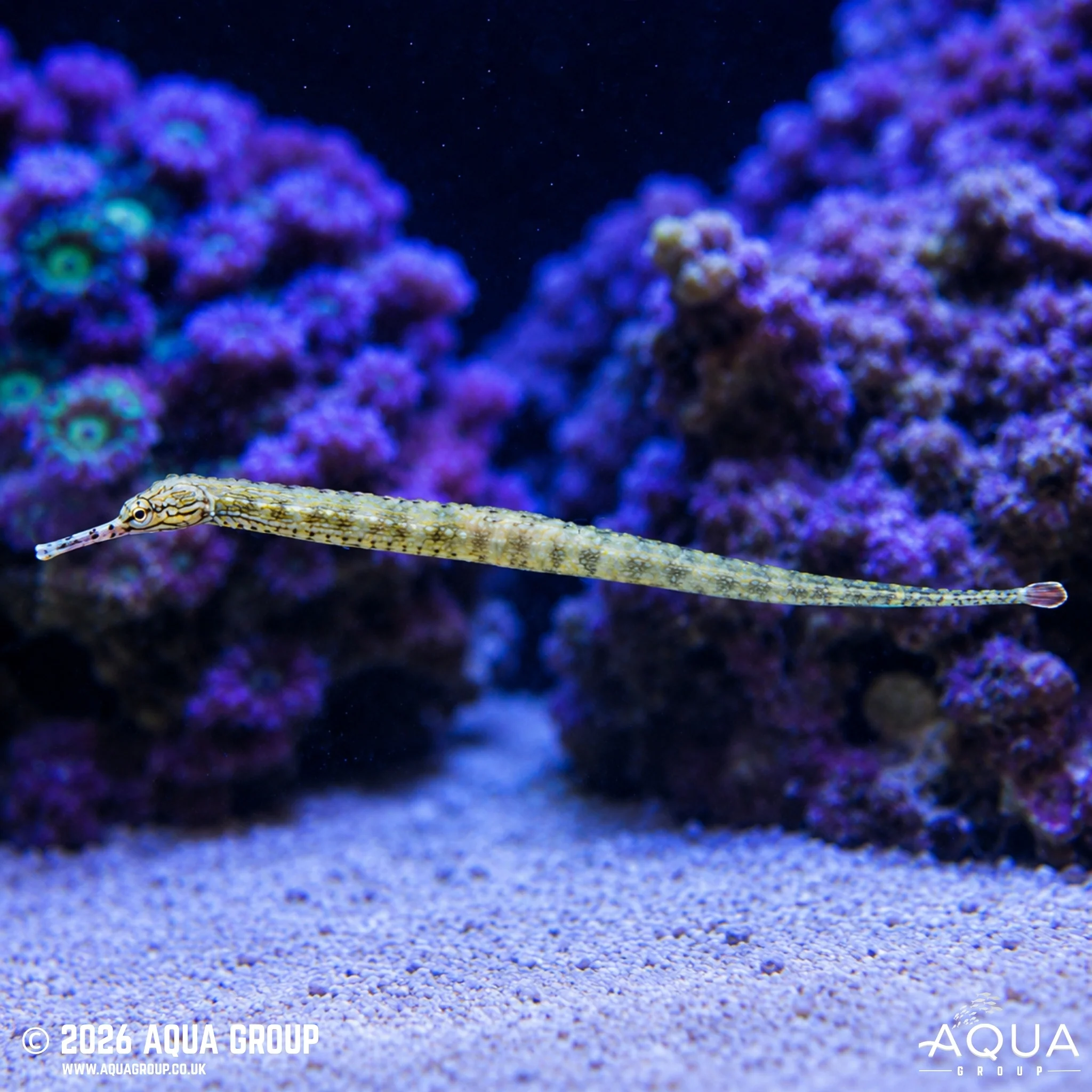
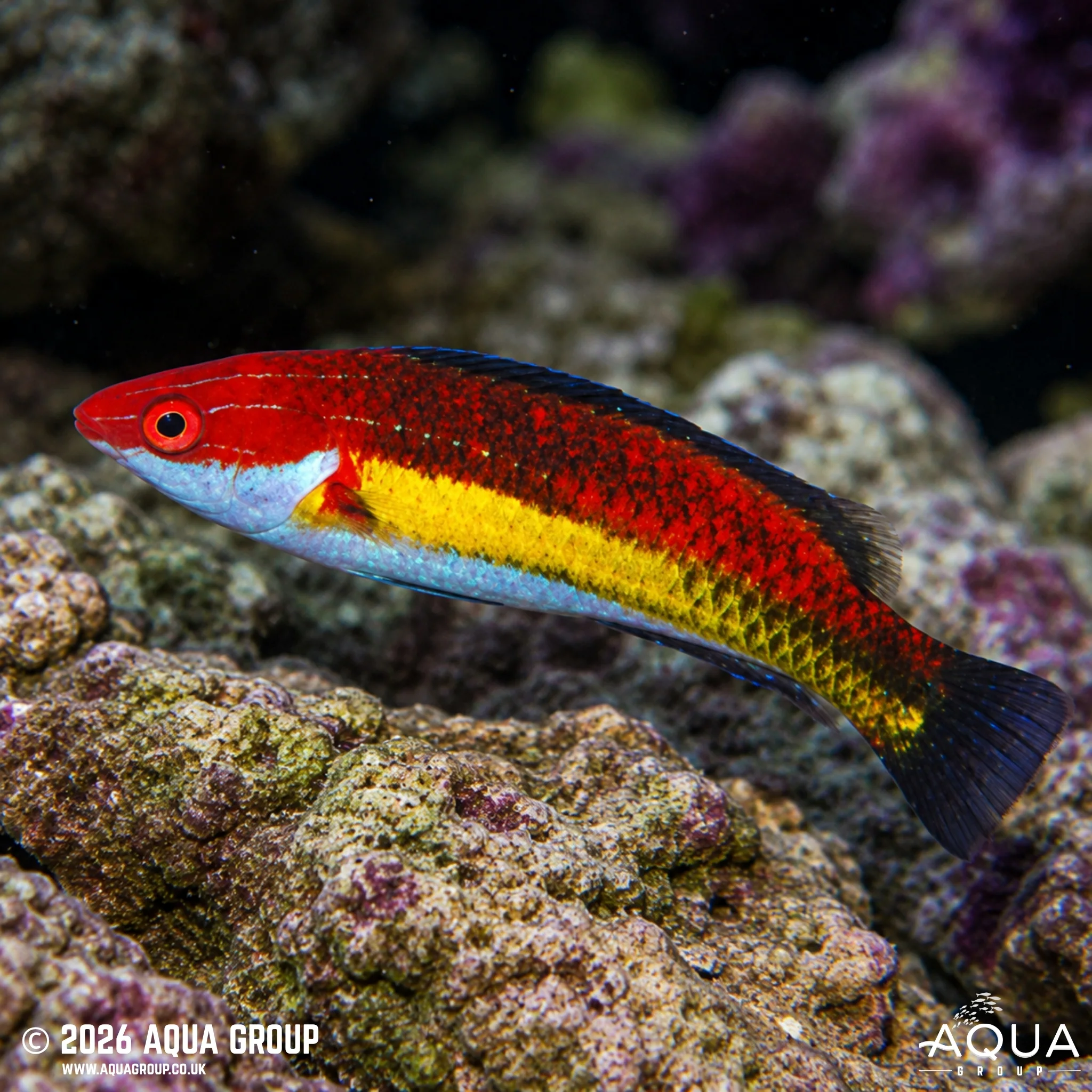
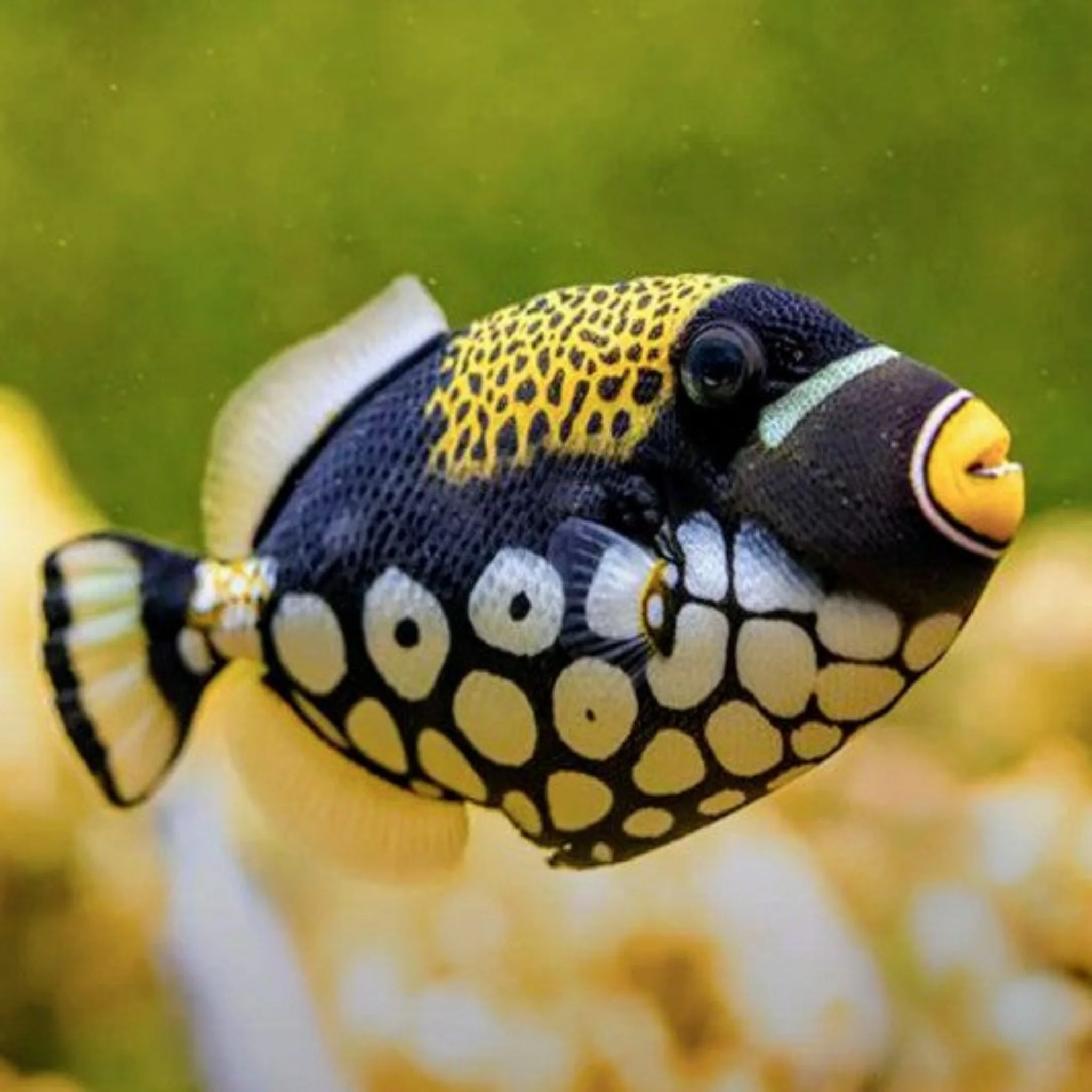
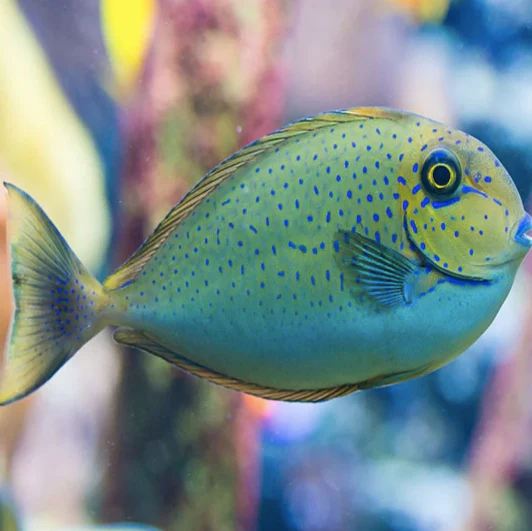
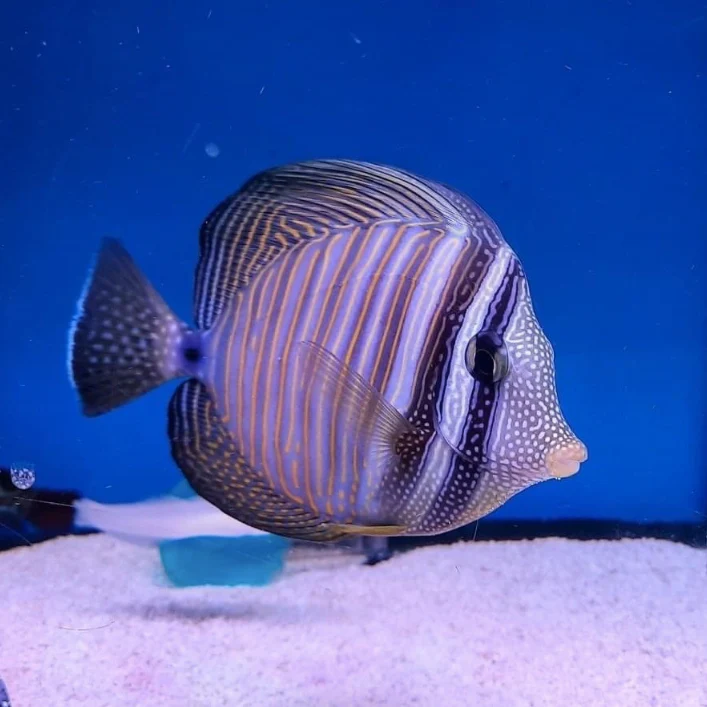
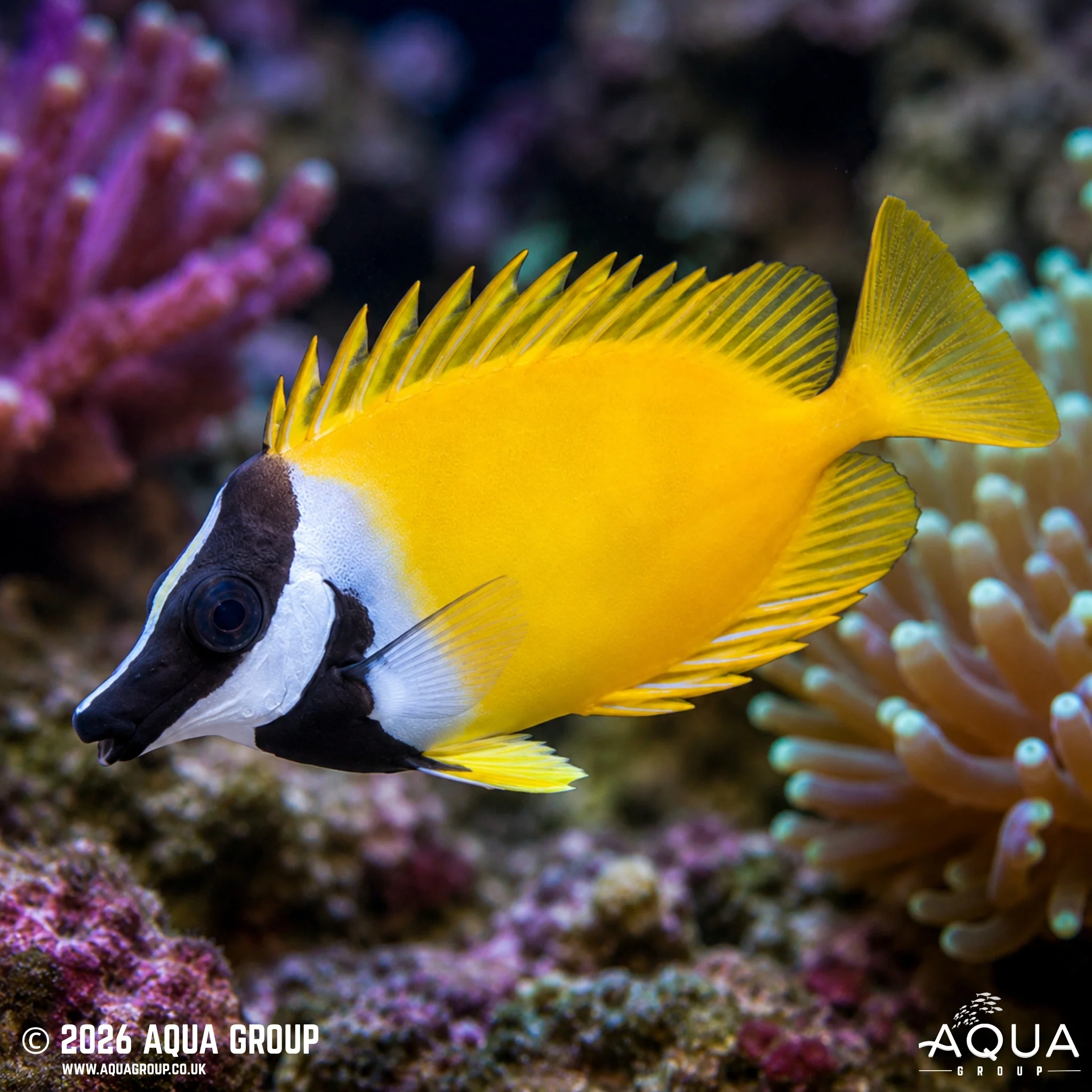
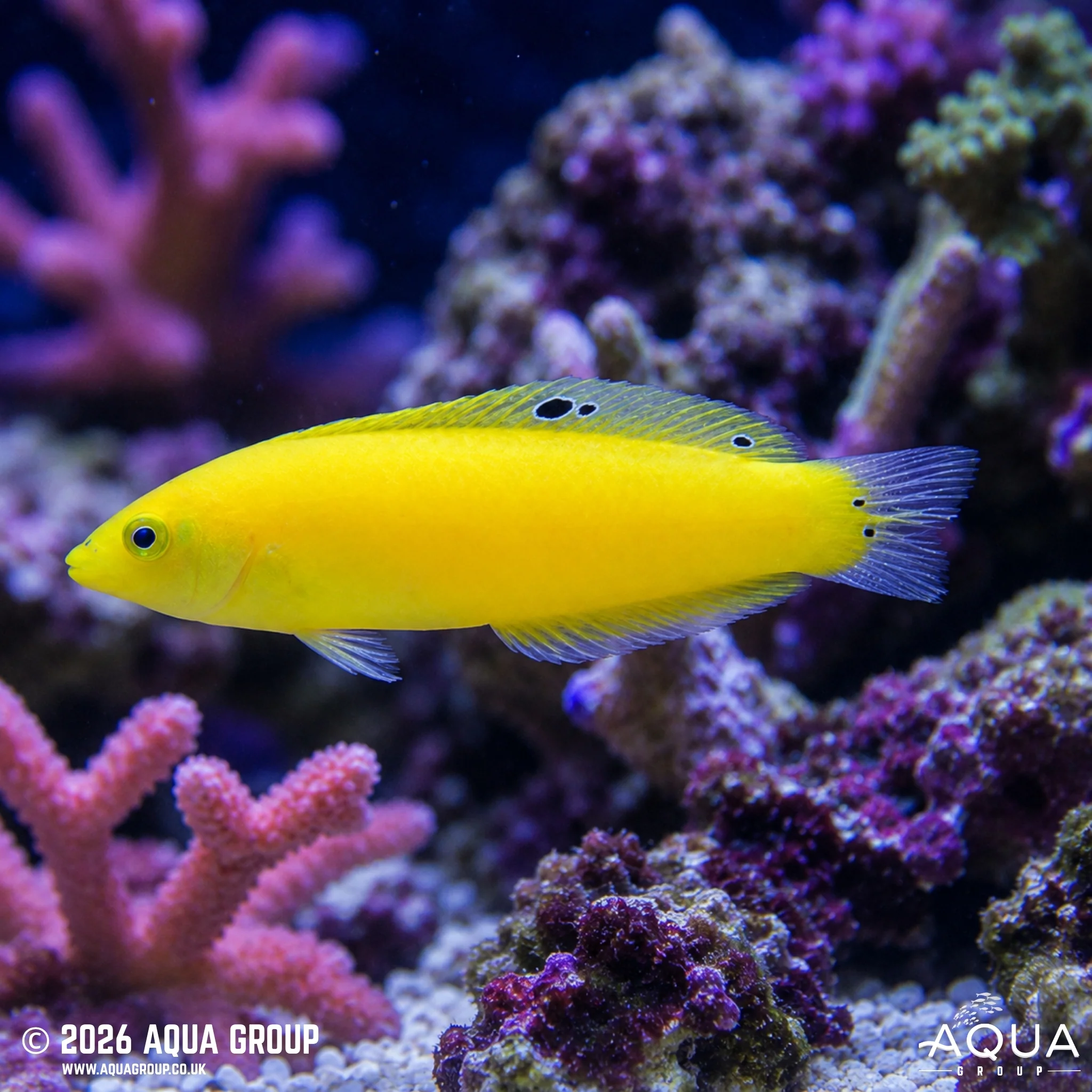
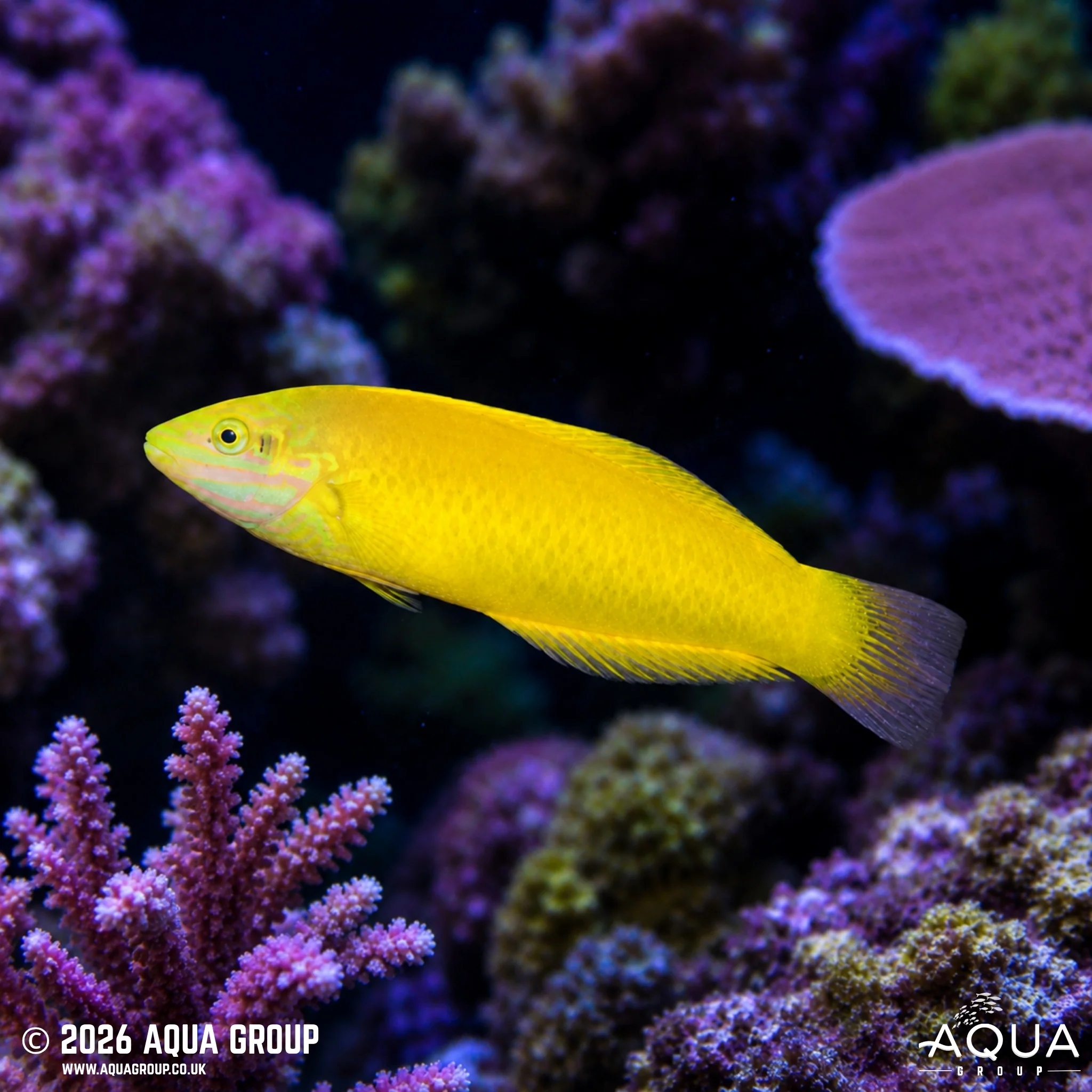
All images are a visual representation of the fish you will receive, made to be as accurate as possible. Please note that Mother Nature is a wonderful thing, and variation in patterns and colours will occur — that is part of the unique beauty of these animals.
Description
Purple Tilefish (Hoplolatilus purpureus)
The Purple Tilefish, Hoplolatilus purpureus, is a beautiful and unusual marine tilefish with a slender magenta to purple body, elegant swimming style and red edging to the tail. Also known as the Purple Sand Tilefish, this Indo-West Pacific species is found over sand and rubble patches on steep seaward reef slopes. It is peaceful and reef safe, but it is also shy, fast-moving and prone to jumping, so it needs a mature aquarium with a deep sand bed, secure lid and calm tank mates.
Common Name:
Purple Tilefish, Purple Sand Tilefish, Purple Tile Fish.
Scientific Name (Latin):
Hoplolatilus purpureus
Maximum Size:
Up to around 13 cm.
Water Type:
Marine
Origin / Natural Habitat:
Indo-West Pacific, including the Philippines, Indonesia, Timor-Leste, Papua New Guinea and the Solomon Islands. Naturally found on sand and rubble patches of steep seaward reef slopes, usually in pairs, at depths of around 30–85 m.
Water Parameters:
Temperature: 23–26°C
pH Range: 8.1–8.4
Hardness or Salinity: SG 1.020–1.025
Temperament:
Peaceful but nervous. Best kept with calm reef-safe fish that will not bully it or compete too aggressively for food. Avoid aggressive damsels, dottybacks, large wrasses, triggers, puffers and fast, boisterous tank mates that may cause hiding or jumping.
Diet:
Carnivorous planktivore. In the aquarium, offer small meaty foods such as frozen mysis, enriched brineshrimp, copepods, cyclops, calanus, finely chopped krill, marine micro pellets and finely chopped seafood. Small regular feeds are best, especially while newly introduced specimens are settling.
Minimum Tank Size:
A minimum of 250 litres is recommended for a single specimen, with 300 litres or more preferred for a pair. Longer aquariums with open swimming space are ideal.
Behaviour & Activity:
An active but cautious tilefish that spends time hovering and swimming above the substrate, retreating rapidly into burrows or cover when startled. It appreciates a deep sandy area mixed with small rubble, as well as stable rockwork, caves and shaded retreats. In nature it is often found in pairs and may form a secure home area over sand and rubble.
Reef Safe:
Reef Safe
Safe with corals and most ornamental invertebrates. It does not nip coral tissue or attack typical reef clean-up crew animals. The main reef concerns are its need for a suitable sand/rubble area, low-stress tank mates and a tightly covered aquarium.
Special Requirements or Care Notes:
A tight-fitting lid or mesh cover is essential, as tilefish are powerful jumpers and may launch from the aquarium when startled. Provide a deep soft sand bed, ideally with small rubble pieces, so the fish can dig or shelter naturally. Keep under moderate rather than harsh lighting where possible, reflecting its deeper reef-slope habitat. Add only to a mature, stable aquarium with excellent water quality and good oxygenation. Newly imported specimens can be shy and sensitive, so careful acclimation and feeding observation are important.
Suitable for:
Experienced fishkeepers
Availability:
Rare or occasional in trade
All images are a visual representation of the fish you will receive, made to be as accurate as possible. Please note that Mother Nature is a wonderful thing, and variation in patterns and colours will occur — that is part of the unique beauty of these animals.