Original: $67.12
-65%$67.12
$23.49The Story
Banded Pipefish (Dunckerocampus dactyliophorus)
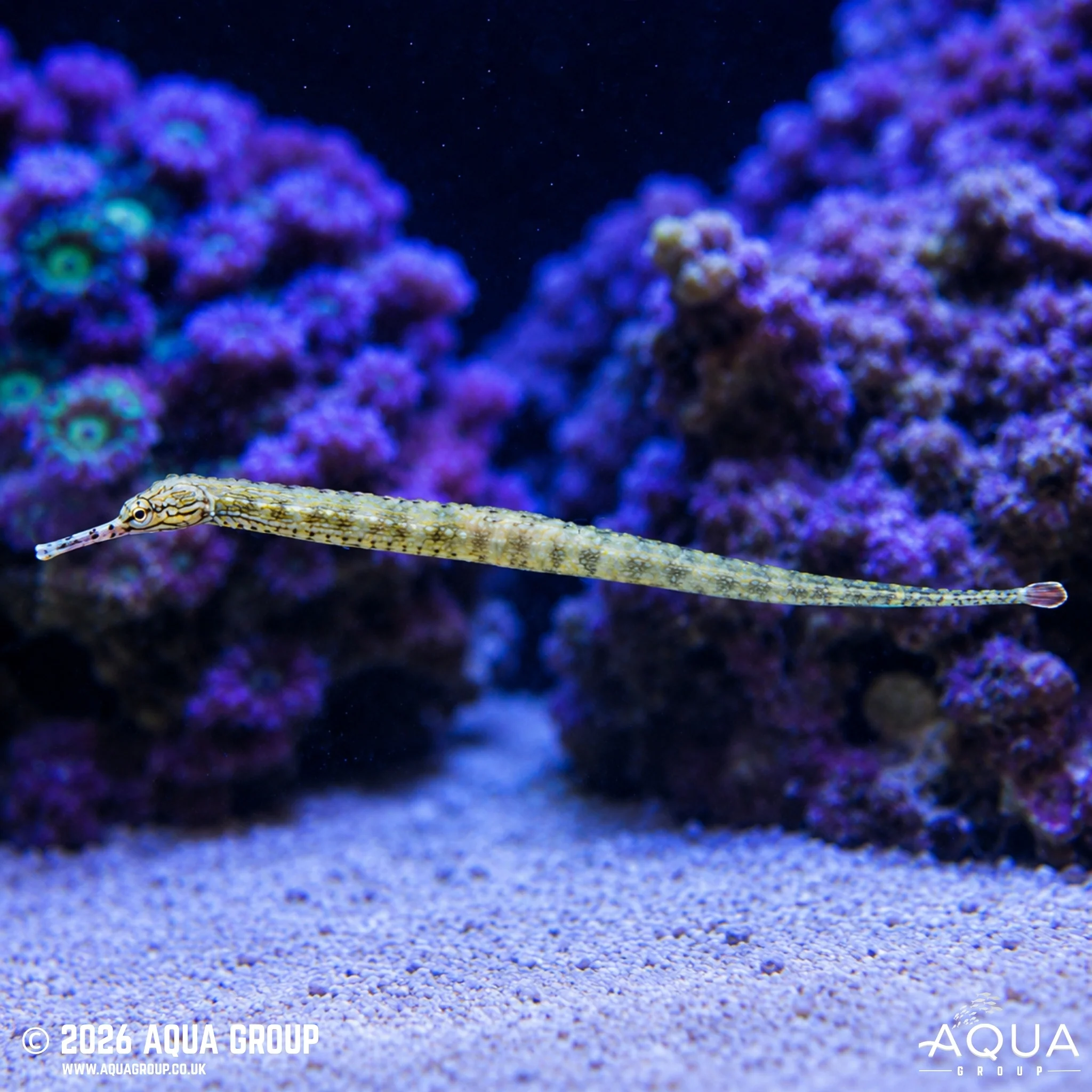
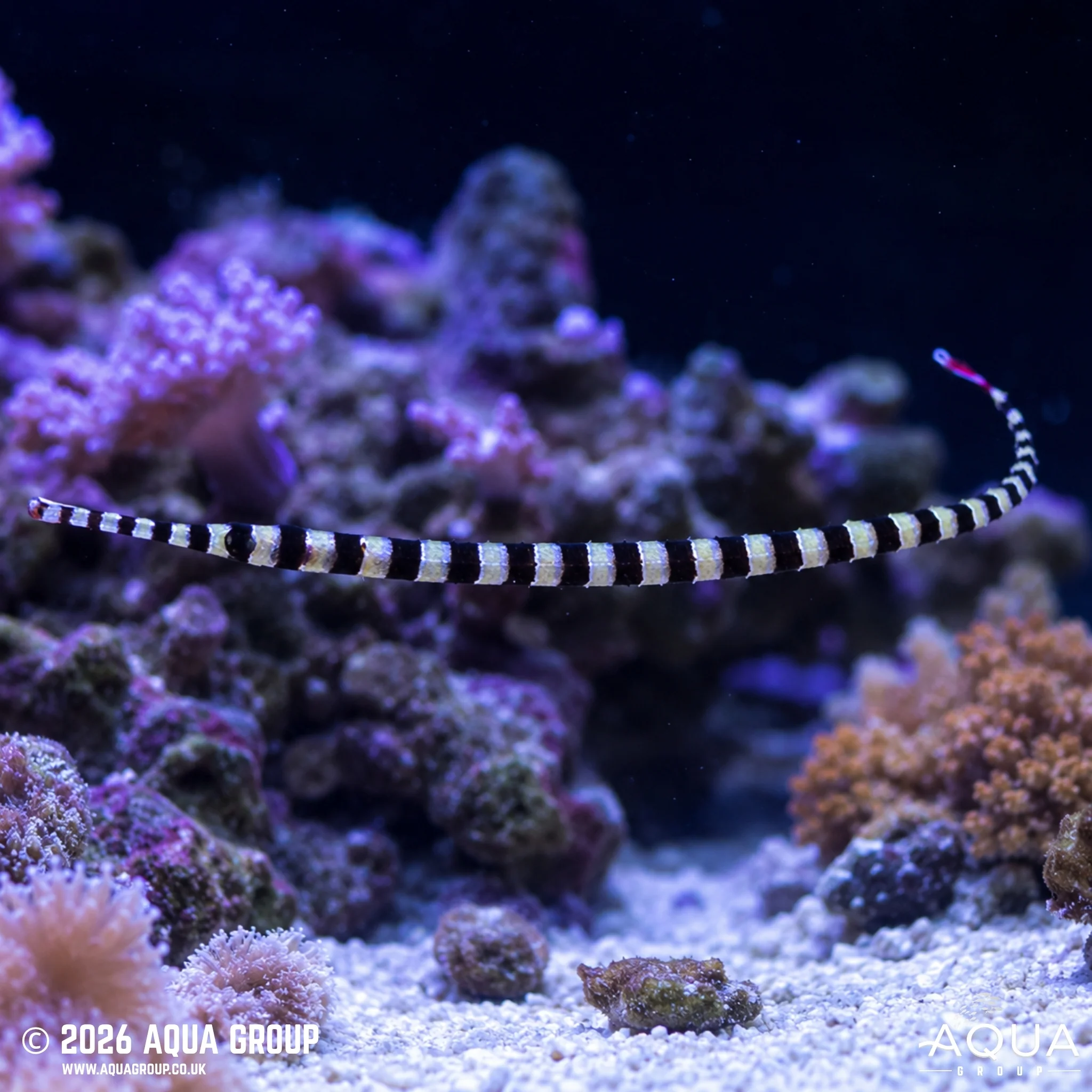
The Banded Pipefish, Dunckerocampus dactyliophorus, is a delicate and beautifully patterned marine syngnathid with a long slender body, bold red to reddish-brown bands and a graceful gliding movement. Also known as the Ringed Pipefish or Banded Pipe Fish, this Indo-Pacific species is a peaceful reef-safe fish best suited to mature, calm aquariums with abundant live rock, gentle tank mates and frequent small foods. It is fascinating to observe, especially in pairs, but it is a specialist feeder and should not be placed in busy community tanks with strong food competition.
Common Name:
Banded Pipefish, Banded Pipe Fish, Ringed Pipefish, Ringed Pipe Fish, Banded Pipe.
Scientific Name (Latin):
Dunckerocampus dactyliophorus
Formerly listed as Doryrhamphus dactyliophorus.
Maximum Size:
Up to around 19 cm.
Water Type:
Marine
Origin / Natural Habitat:
Indo-Pacific, including the Red Sea and tropical reef regions across the Indian and Pacific Oceans. Naturally found in tide pools, lagoons, outer reef slopes, caves, crevices and under ledges, where it may occur singly, in pairs or in small aggregations close to shelter.
Water Parameters:
Temperature: 24–27°C
pH Range: 8.1–8.4
Hardness or Salinity: SG 1.023–1.025
Temperament:
Very peaceful and easily outcompeted. Best kept with calm reef-safe fish such as small gobies, peaceful cardinalfish, seahorses in suitable specialist systems, tiny blennies and other gentle pipefish. Avoid aggressive, fast-feeding or predatory tank mates, including triggers, puffers, hawkfish, large wrasses, dottybacks, boisterous damsels and large predatory shrimps.
Diet:
Specialist micro-predator. In the wild, it feeds on small invertebrates and tiny crustaceans picked from reef surfaces and the water column. In the aquarium, offer live or frozen copepods, cyclops, calanus, enriched brineshrimp, finely chopped mysis and other very small meaty marine foods. Many specimens do best with frequent targeted feeding and may be slow to accept prepared foods, so a mature aquarium with natural pod life is strongly recommended.
Minimum Tank Size:
A minimum of 150 litres is recommended for a pair in a specialist or very peaceful reef setup, with larger mature aquariums preferred for long-term stability and natural microfauna production.
Behaviour & Activity:
A slow, deliberate pipefish that spends much of its time moving close to rockwork, caves, crevices and shaded reef structure while searching for tiny food items. It may also act as a cleaner fish in some situations, picking small parasites or particles from larger reef fish. Like seahorses and other pipefish, males carry eggs in a brood pouch under the tail. Provide quiet feeding zones, gentle to moderate flow and plenty of secure shelter.
Reef Safe:
Reef Safe
Safe with corals and most peaceful reef invertebrates. It does not nip corals or disturb sessile invertebrates, although it will eat tiny copepods and other microcrustaceans as part of its natural diet. The main reef concern is not coral compatibility, but whether the aquarium is peaceful enough and food-rich enough to support it.
Special Requirements or Care Notes:
Best kept in a mature, stable aquarium with abundant copepods, established live rock and very peaceful tank mates. Cover pump intakes, weirs and strong filtration openings, as pipefish are slender and delicate. Feed small foods several times daily if natural microfauna is limited, and monitor body condition closely. Avoid copper-based treatments and sudden salinity changes. This is a specialist syngnathid and should not be treated as a standard community marine fish.
Suitable for:
Experienced fishkeepers
Availability:
Occasional in trade / Captive-bred where relevant
All images are a visual representation of the fish you will receive, made to be as accurate as possible. Please note that Mother Nature is a wonderful thing, and variation in patterns and colours will occur — that is part of the unique beauty of these animals.
Description
Banded Pipefish (Dunckerocampus dactyliophorus)
The Banded Pipefish, Dunckerocampus dactyliophorus, is a delicate and beautifully patterned marine syngnathid with a long slender body, bold red to reddish-brown bands and a graceful gliding movement. Also known as the Ringed Pipefish or Banded Pipe Fish, this Indo-Pacific species is a peaceful reef-safe fish best suited to mature, calm aquariums with abundant live rock, gentle tank mates and frequent small foods. It is fascinating to observe, especially in pairs, but it is a specialist feeder and should not be placed in busy community tanks with strong food competition.
Common Name:
Banded Pipefish, Banded Pipe Fish, Ringed Pipefish, Ringed Pipe Fish, Banded Pipe.
Scientific Name (Latin):
Dunckerocampus dactyliophorus
Formerly listed as Doryrhamphus dactyliophorus.
Maximum Size:
Up to around 19 cm.
Water Type:
Marine
Origin / Natural Habitat:
Indo-Pacific, including the Red Sea and tropical reef regions across the Indian and Pacific Oceans. Naturally found in tide pools, lagoons, outer reef slopes, caves, crevices and under ledges, where it may occur singly, in pairs or in small aggregations close to shelter.
Water Parameters:
Temperature: 24–27°C
pH Range: 8.1–8.4
Hardness or Salinity: SG 1.023–1.025
Temperament:
Very peaceful and easily outcompeted. Best kept with calm reef-safe fish such as small gobies, peaceful cardinalfish, seahorses in suitable specialist systems, tiny blennies and other gentle pipefish. Avoid aggressive, fast-feeding or predatory tank mates, including triggers, puffers, hawkfish, large wrasses, dottybacks, boisterous damsels and large predatory shrimps.
Diet:
Specialist micro-predator. In the wild, it feeds on small invertebrates and tiny crustaceans picked from reef surfaces and the water column. In the aquarium, offer live or frozen copepods, cyclops, calanus, enriched brineshrimp, finely chopped mysis and other very small meaty marine foods. Many specimens do best with frequent targeted feeding and may be slow to accept prepared foods, so a mature aquarium with natural pod life is strongly recommended.
Minimum Tank Size:
A minimum of 150 litres is recommended for a pair in a specialist or very peaceful reef setup, with larger mature aquariums preferred for long-term stability and natural microfauna production.
Behaviour & Activity:
A slow, deliberate pipefish that spends much of its time moving close to rockwork, caves, crevices and shaded reef structure while searching for tiny food items. It may also act as a cleaner fish in some situations, picking small parasites or particles from larger reef fish. Like seahorses and other pipefish, males carry eggs in a brood pouch under the tail. Provide quiet feeding zones, gentle to moderate flow and plenty of secure shelter.
Reef Safe:
Reef Safe
Safe with corals and most peaceful reef invertebrates. It does not nip corals or disturb sessile invertebrates, although it will eat tiny copepods and other microcrustaceans as part of its natural diet. The main reef concern is not coral compatibility, but whether the aquarium is peaceful enough and food-rich enough to support it.
Special Requirements or Care Notes:
Best kept in a mature, stable aquarium with abundant copepods, established live rock and very peaceful tank mates. Cover pump intakes, weirs and strong filtration openings, as pipefish are slender and delicate. Feed small foods several times daily if natural microfauna is limited, and monitor body condition closely. Avoid copper-based treatments and sudden salinity changes. This is a specialist syngnathid and should not be treated as a standard community marine fish.
Suitable for:
Experienced fishkeepers
Availability:
Occasional in trade / Captive-bred where relevant
All images are a visual representation of the fish you will receive, made to be as accurate as possible. Please note that Mother Nature is a wonderful thing, and variation in patterns and colours will occur — that is part of the unique beauty of these animals.