Original: $134.25
-65%$134.25
$46.99The Story
Redface Batfish (Platax pinnatus)
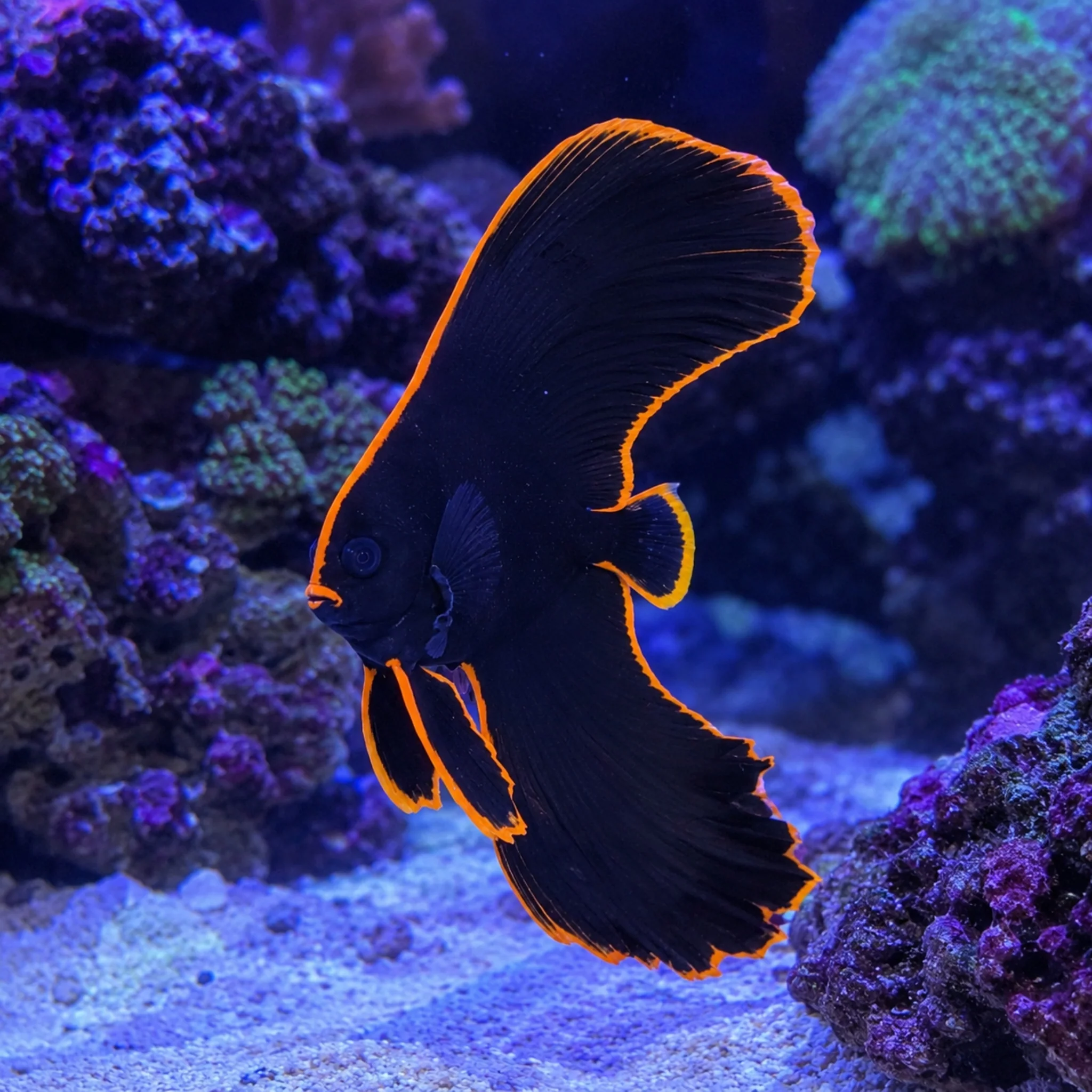
The Redface Batfish, Platax pinnatus, is a dramatic marine batfish best known for its spectacular juvenile colouration, with a dark body, flowing elongated fins and vivid orange-red edging. Also known as the Pinnatus Batfish, Pinnate Batfish or Red-rimmed Batfish, this Indo-West Pacific species becomes a large, tall-bodied adult with more subdued silver-grey to dusky tones. It is a beautiful and unusual display fish, but it is notoriously difficult to maintain long term and should only be considered for very large, mature marine aquariums by experienced keepers.
Common Name:
Redface Batfish, Red Face Batfish, Pinnatus Batfish, Pinnate Batfish, Red-rimmed Batfish, Longfin Batfish, Dusky Batfish.
Scientific Name (Latin):
Platax pinnatus
Maximum Size:
Up to around 45 cm in many aquarium references, with FishBase listing a wild maximum of around 50 cm. Juveniles grow into very large, deep-bodied adults, so adult height and swimming room must be planned from the start.
Water Type:
Marine
Origin / Natural Habitat:
Indo-West Pacific, especially western Pacific reef regions. Adults are generally found on steep outer reef slopes, often under overhangs, while juveniles shelter in mangroves, inner protected reefs, caves and under ledges. Adults may be solitary or form travelling schools over open substrate. FishBase notes algae, jellyfish and other gelatinous zooplankton as natural foods.
Water Parameters:
Temperature: 24–27°C
pH Range: 8.1–8.4
Hardness or Salinity: SG 1.020–1.025
Temperament:
Generally peaceful but delicate and easily stressed. It should not be kept with aggressive, fin-nipping or overly boisterous fish. Suitable tank mates should be peaceful to moderately active and large enough not to intimidate or outcompete it.
Diet:
Omnivorous with specialist feeding needs. Offer a varied diet including marine algae sheets, spirulina-based foods, quality marine pellets, mysis, enriched brineshrimp, krill, chopped prawn, clam, mussel, squid and sponge or algae-based marine preparations. Getting newly imported specimens feeding can be difficult, and long-term nutrition should include both meaty marine foods and vegetable/algae matter.
Minimum Tank Size:
A minimum of 900 litres is recommended for long-term care, with larger aquariums strongly preferred. This species becomes tall, wide-bodied and active, requiring excellent filtration, high oxygenation and generous open swimming space.
Behaviour & Activity:
A graceful, slow to moderate swimmer that uses its tall body and long fins to move elegantly through open water and around reef structure. Juveniles often stay close to caves, ledges or shaded cover, while adults need more swimming space and may become less boldly coloured. Provide a deep aquarium, open swimming lanes, large overhangs and secure hiding areas. Avoid strong turbulent flow that constantly pushes the fish around.
Reef Safe:
Not Reef Safe
Not recommended for reef aquariums. It may pick at corals, sessile invertebrates or reef growths, and its large adult size, feeding demands and waste production make it unsuitable for delicate coral systems. It is best kept in a spacious fish-only or fish-only-with-live-rock aquarium.
Special Requirements or Care Notes:
This is an expert-level marine fish. Choose only alert, feeding specimens with good body condition and undamaged fins. Juveniles are especially attractive but can be difficult to transition onto prepared foods and may decline in unsuitable systems. Avoid fin-nipping tank mates, cramped aquariums and immature setups. Strong filtration, stable water quality and a varied diet are essential. Captive-bred specimens are occasionally available and are preferable where offered, but they still require very large adult accommodation.
Suitable for:
Expert only
Availability:
Rare or occasional in trade / Captive-bred where relevant
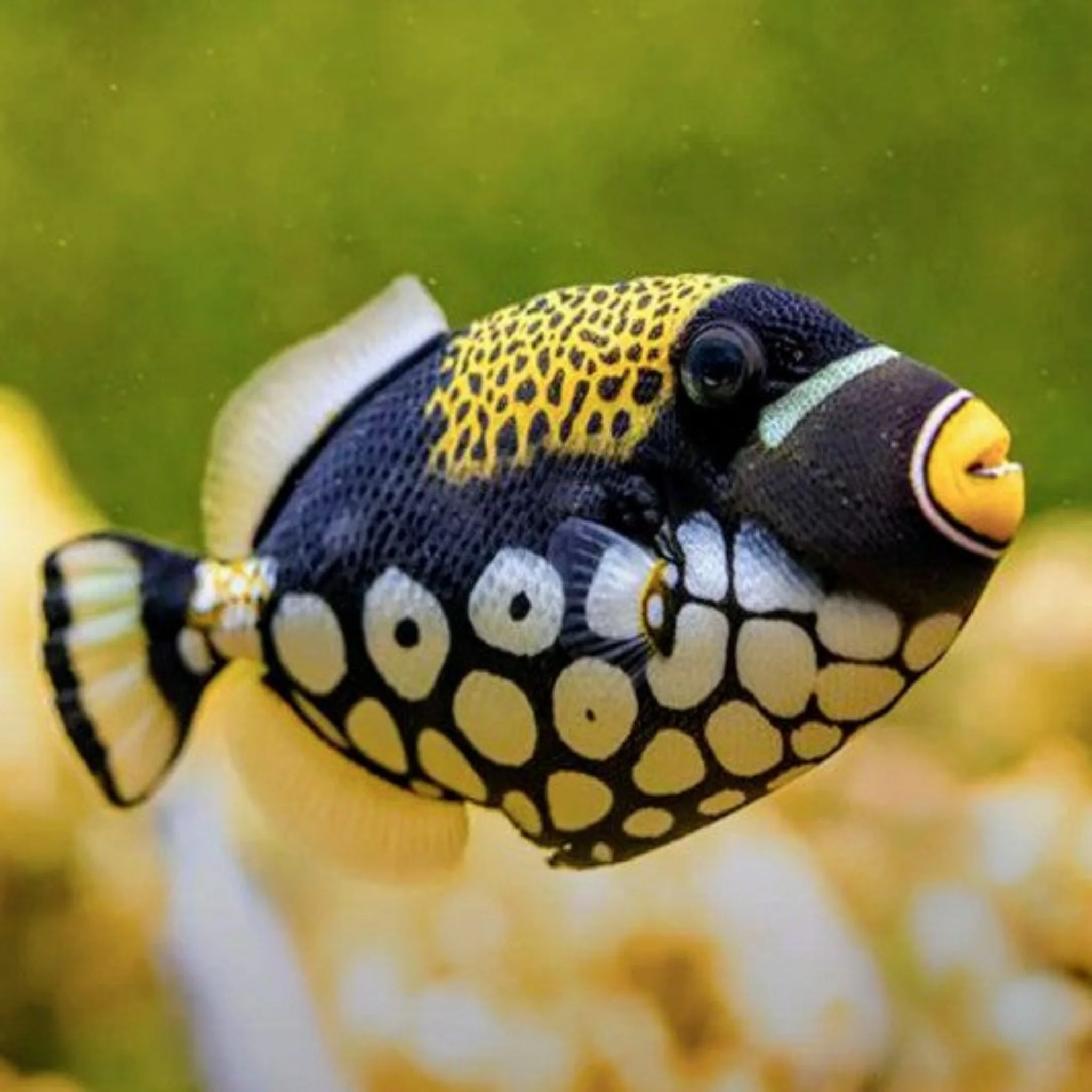
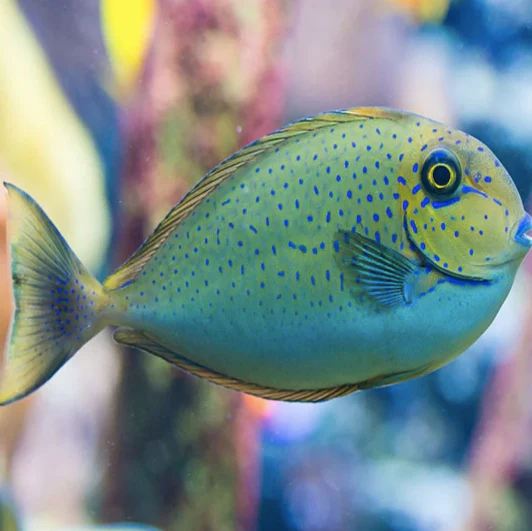
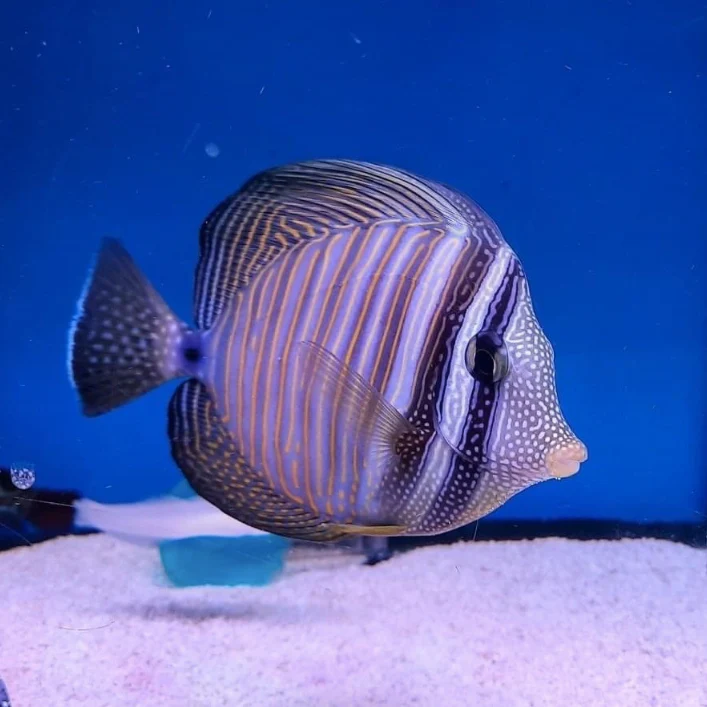
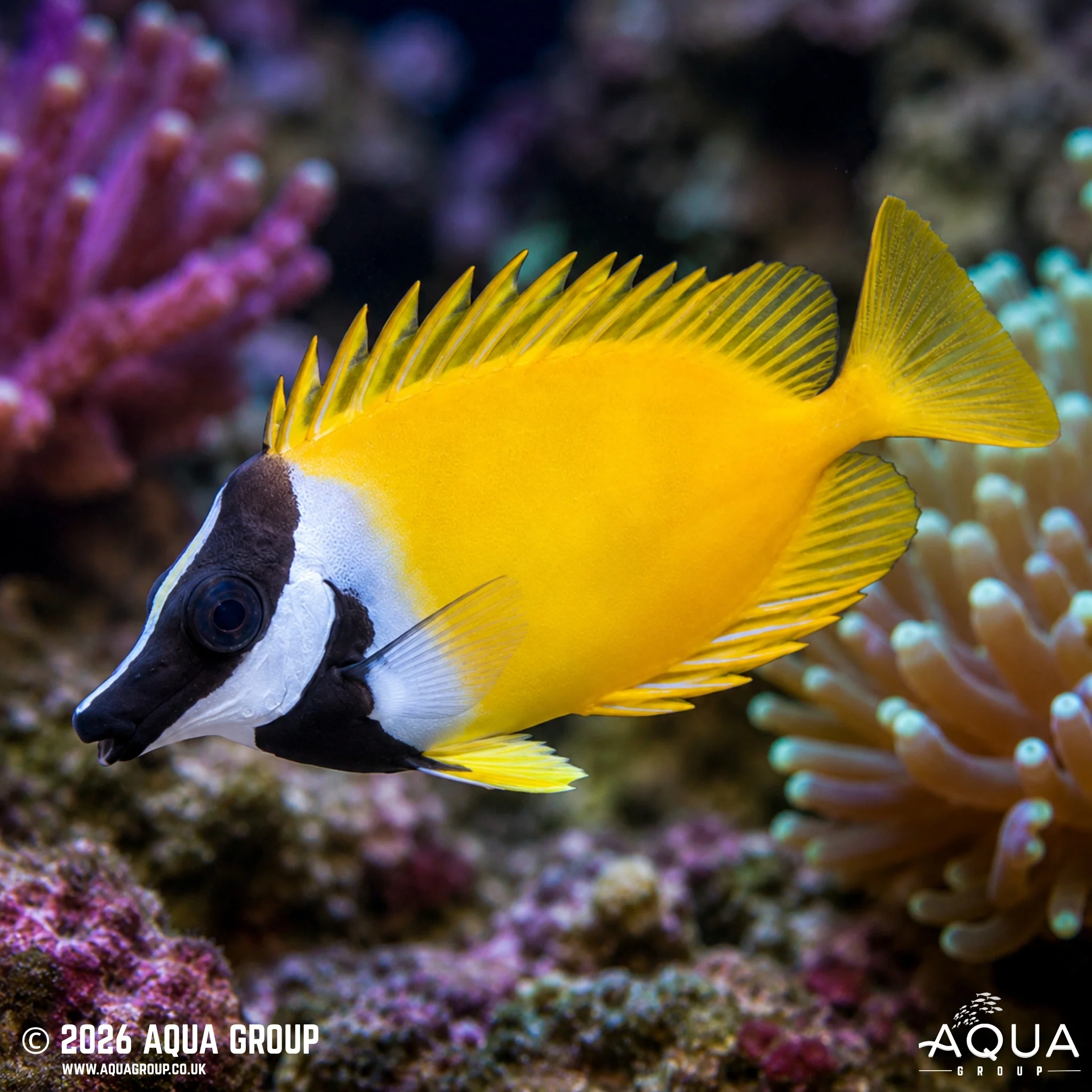
All images are a visual representation of the fish you will receive, made to be as accurate as possible. Please note that Mother Nature is a wonderful thing, and variation in patterns and colours will occur — that is part of the unique beauty of these animals.
Description
Redface Batfish (Platax pinnatus)
The Redface Batfish, Platax pinnatus, is a dramatic marine batfish best known for its spectacular juvenile colouration, with a dark body, flowing elongated fins and vivid orange-red edging. Also known as the Pinnatus Batfish, Pinnate Batfish or Red-rimmed Batfish, this Indo-West Pacific species becomes a large, tall-bodied adult with more subdued silver-grey to dusky tones. It is a beautiful and unusual display fish, but it is notoriously difficult to maintain long term and should only be considered for very large, mature marine aquariums by experienced keepers.
Common Name:
Redface Batfish, Red Face Batfish, Pinnatus Batfish, Pinnate Batfish, Red-rimmed Batfish, Longfin Batfish, Dusky Batfish.
Scientific Name (Latin):
Platax pinnatus
Maximum Size:
Up to around 45 cm in many aquarium references, with FishBase listing a wild maximum of around 50 cm. Juveniles grow into very large, deep-bodied adults, so adult height and swimming room must be planned from the start.
Water Type:
Marine
Origin / Natural Habitat:
Indo-West Pacific, especially western Pacific reef regions. Adults are generally found on steep outer reef slopes, often under overhangs, while juveniles shelter in mangroves, inner protected reefs, caves and under ledges. Adults may be solitary or form travelling schools over open substrate. FishBase notes algae, jellyfish and other gelatinous zooplankton as natural foods.
Water Parameters:
Temperature: 24–27°C
pH Range: 8.1–8.4
Hardness or Salinity: SG 1.020–1.025
Temperament:
Generally peaceful but delicate and easily stressed. It should not be kept with aggressive, fin-nipping or overly boisterous fish. Suitable tank mates should be peaceful to moderately active and large enough not to intimidate or outcompete it.
Diet:
Omnivorous with specialist feeding needs. Offer a varied diet including marine algae sheets, spirulina-based foods, quality marine pellets, mysis, enriched brineshrimp, krill, chopped prawn, clam, mussel, squid and sponge or algae-based marine preparations. Getting newly imported specimens feeding can be difficult, and long-term nutrition should include both meaty marine foods and vegetable/algae matter.
Minimum Tank Size:
A minimum of 900 litres is recommended for long-term care, with larger aquariums strongly preferred. This species becomes tall, wide-bodied and active, requiring excellent filtration, high oxygenation and generous open swimming space.
Behaviour & Activity:
A graceful, slow to moderate swimmer that uses its tall body and long fins to move elegantly through open water and around reef structure. Juveniles often stay close to caves, ledges or shaded cover, while adults need more swimming space and may become less boldly coloured. Provide a deep aquarium, open swimming lanes, large overhangs and secure hiding areas. Avoid strong turbulent flow that constantly pushes the fish around.
Reef Safe:
Not Reef Safe
Not recommended for reef aquariums. It may pick at corals, sessile invertebrates or reef growths, and its large adult size, feeding demands and waste production make it unsuitable for delicate coral systems. It is best kept in a spacious fish-only or fish-only-with-live-rock aquarium.
Special Requirements or Care Notes:
This is an expert-level marine fish. Choose only alert, feeding specimens with good body condition and undamaged fins. Juveniles are especially attractive but can be difficult to transition onto prepared foods and may decline in unsuitable systems. Avoid fin-nipping tank mates, cramped aquariums and immature setups. Strong filtration, stable water quality and a varied diet are essential. Captive-bred specimens are occasionally available and are preferable where offered, but they still require very large adult accommodation.
Suitable for:
Expert only
Availability:
Rare or occasional in trade / Captive-bred where relevant
All images are a visual representation of the fish you will receive, made to be as accurate as possible. Please note that Mother Nature is a wonderful thing, and variation in patterns and colours will occur — that is part of the unique beauty of these animals.