Original: $67.12
-65%$67.12
$23.49The Story
Striped Shrimpfish (Aeoliscus strigatus)
The Striped Shrimpfish, Aeoliscus strigatus, is a highly distinctive marine species with a thin, blade-like body, long snout and dark stripe running from the eye towards the tail. Also known as the Jointed Razorfish, Coral Shrimpfish or Razorfish, it is famous for swimming vertically with the head pointing downwards, often in synchronised groups. This peaceful Indo-Pacific species is reef safe and fascinating to observe, but it is a delicate specialist that needs a calm, mature aquarium, gentle tank mates and frequent small feeds.
Common Name:
Striped Shrimpfish, Shrimpfish, Jointed Razorfish, Razorfish, Coral Shrimpfish, Razor Fish.
Scientific Name (Latin):
Aeoliscus strigatus
Maximum Size:
Up to around 15 cm.
Water Type:
Marine
Origin / Natural Habitat:
Indo-Pacific, including the Red Sea, Indian Ocean and western to central Pacific reef regions. Naturally found in sheltered bays, lagoons, coral reefs, seagrass beds, rubble areas and sandy reef zones, often around branching corals, sea urchin spines or seagrass where groups can hide and move together vertically.
Water Parameters:
Temperature: 24–27°C
pH Range: 8.1–8.4
Hardness or Salinity: SG 1.020–1.025
Temperament:
Very peaceful and easily intimidated. Best kept with other calm, slow-feeding marine fish such as small peaceful gobies, pipefish, seahorses in suitable specialist systems, and gentle cardinalfish. Avoid aggressive, fast-feeding or predatory fish, including triggers, puffers, large wrasses, hawkfish, boisterous damsels and fish that may harass or outcompete them.
Diet:
Planktivorous micro-predator. In nature, it feeds on tiny crustacean zooplankton, copepods, amphipods and other small drifting prey. In the aquarium, offer frequent small feeds of enriched brineshrimp, copepods, cyclops, calanus, finely chopped mysis, rotifer-sized foods and other fine meaty marine foods. Newly imported specimens may be reluctant to take dry foods, so live or frozen small foods are often important.
Minimum Tank Size:
A minimum of 200 litres is recommended for a small group, with larger aquariums preferred for long-term stability. This species should not be kept singly where possible, as it is naturally social and displays best in groups.
Behaviour & Activity:
A specialised shoaling fish that usually swims vertically, head-down, often moving in tight synchronised groups. It spends much of its time hovering near protective structure such as branching coral, overhangs, caves, seagrass-style decor or sea urchin-like shelter. It is not a strong competitor at feeding time and can be stressed by high aggression or turbulent, direct flow. Provide quiet areas, gentle to moderate water movement and plenty of vertical shelter.
Reef Safe:
Reef Safe
Safe with corals and most ornamental invertebrates. It does not nip corals or attack typical reef clean-up crew animals. Very tiny planktonic crustaceans may be eaten as part of its natural diet. The main reef concern is not coral compatibility, but whether tank mates and flow conditions are calm enough for this delicate species.
Special Requirements or Care Notes:
Best kept in groups in a mature, peaceful marine aquarium with stable water quality and a strong supply of small foods. Frequent feeding is important, so good filtration and careful nutrient management are needed. Avoid housing with fast, aggressive feeders or fin-nipping species. Provide caves, ledges, branching coral-style structure or long-spined urchin-style shelter to encourage natural behaviour. This is a specialist species and should not be added to a busy community reef without planning.
Suitable for:
Experienced fishkeepers
Availability:
Rare or occasional in trade
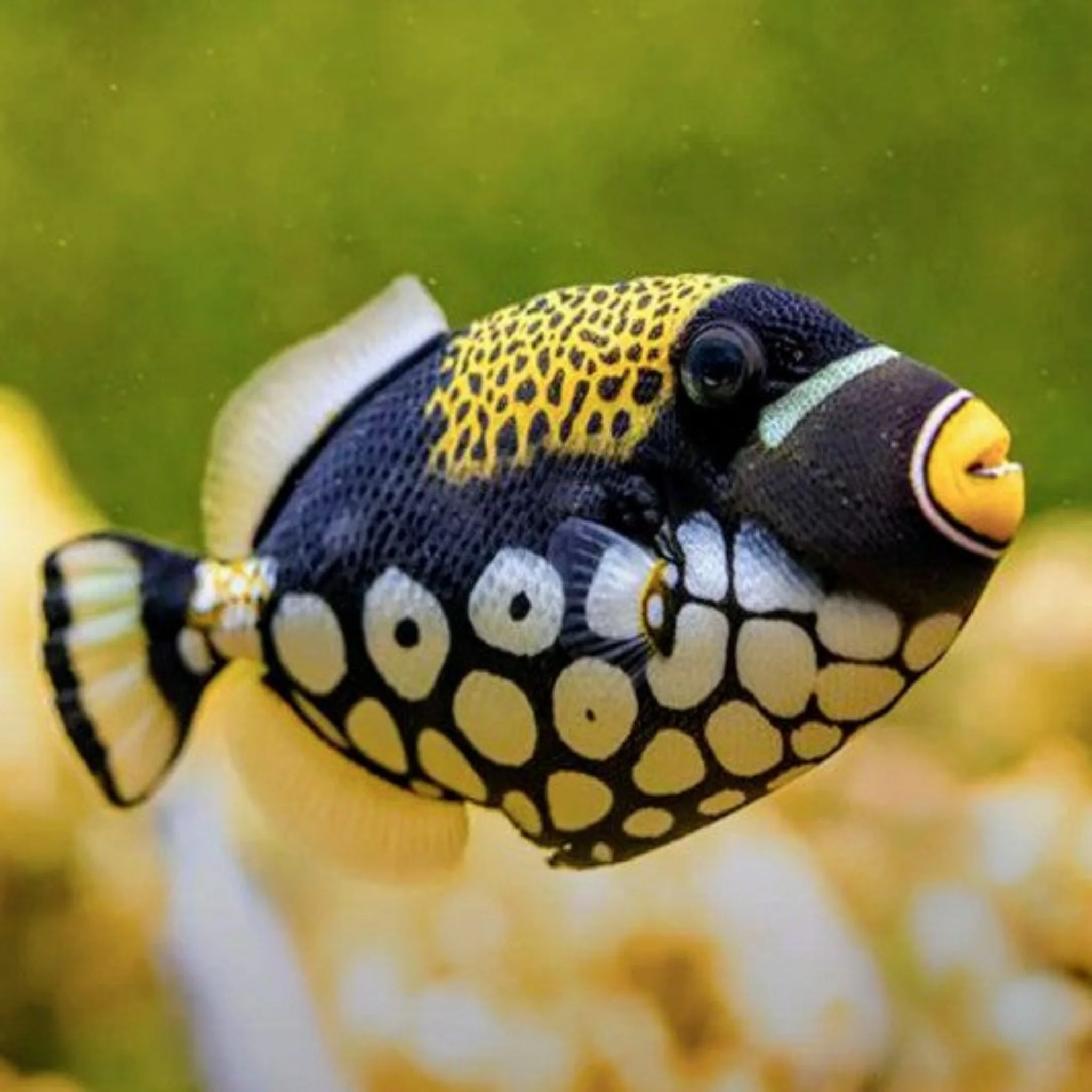
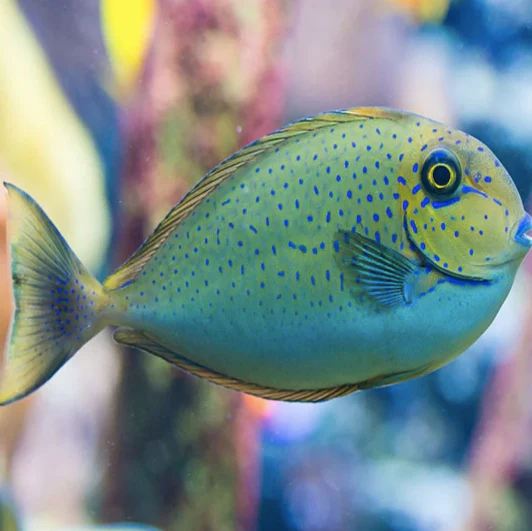
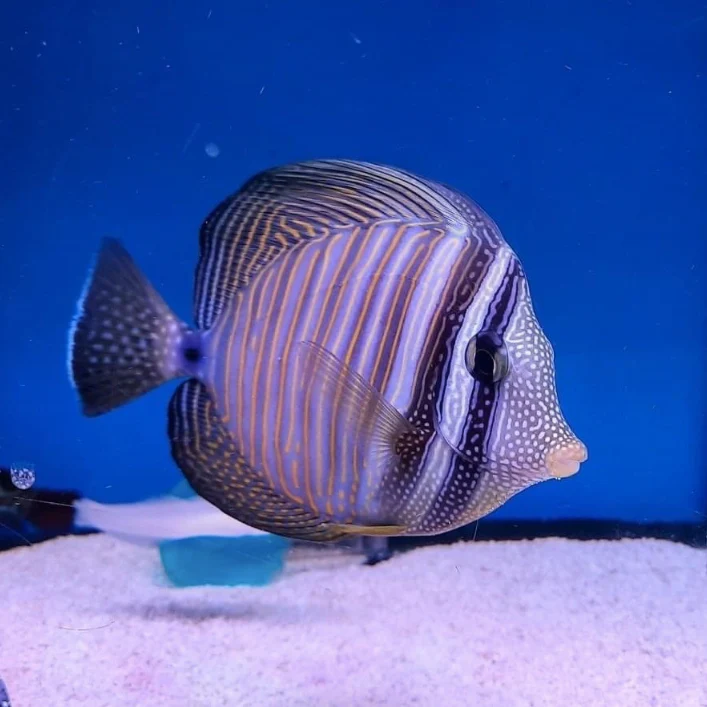
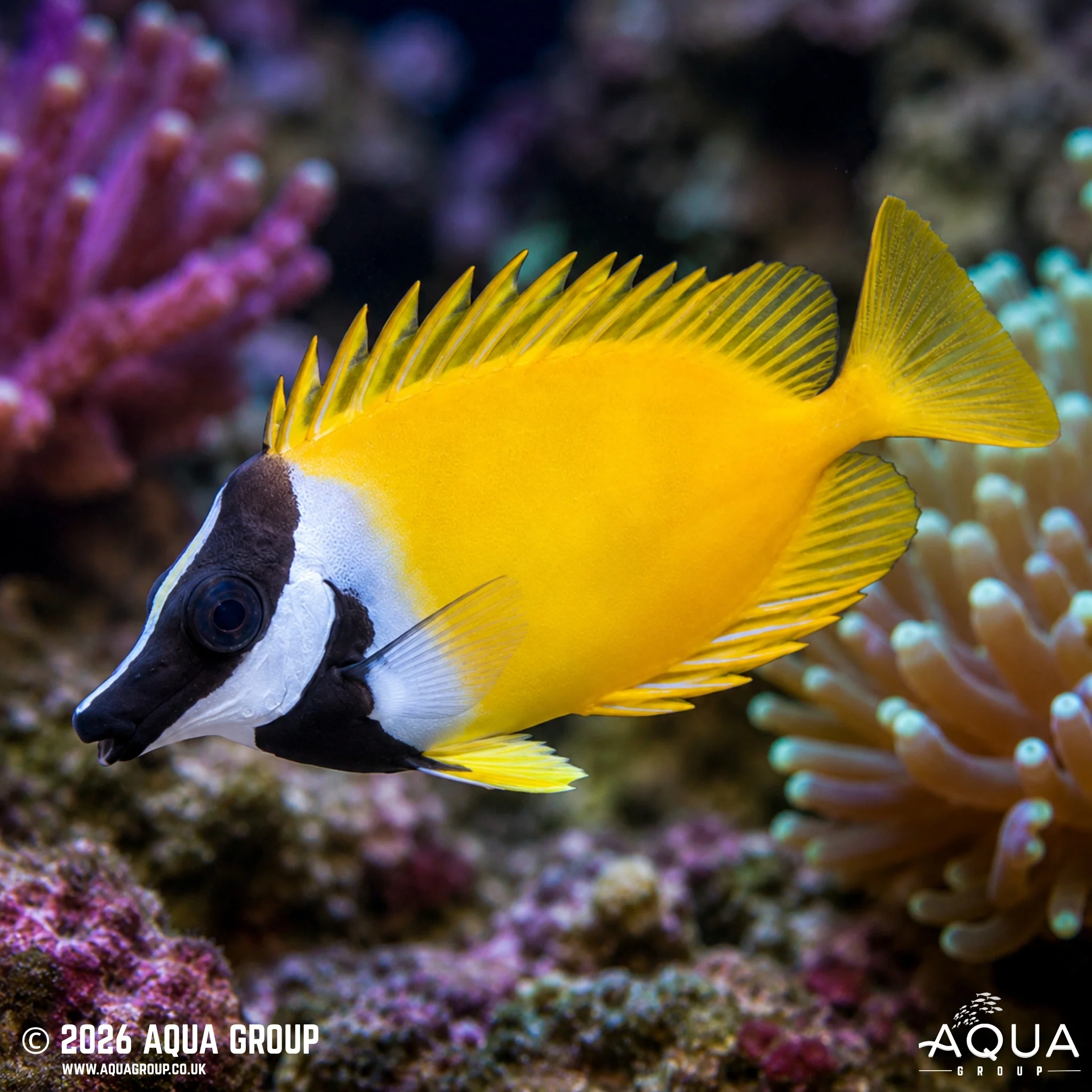
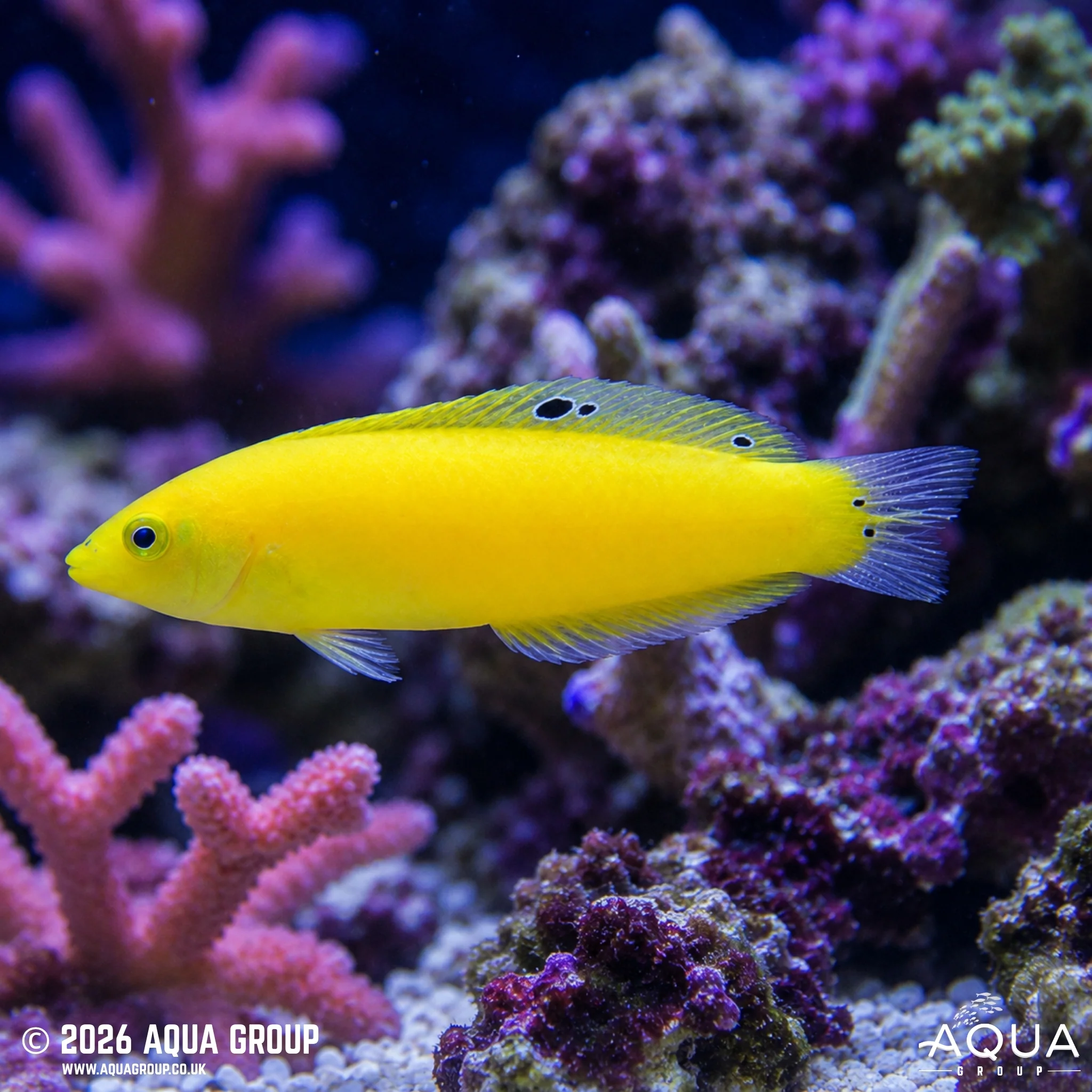
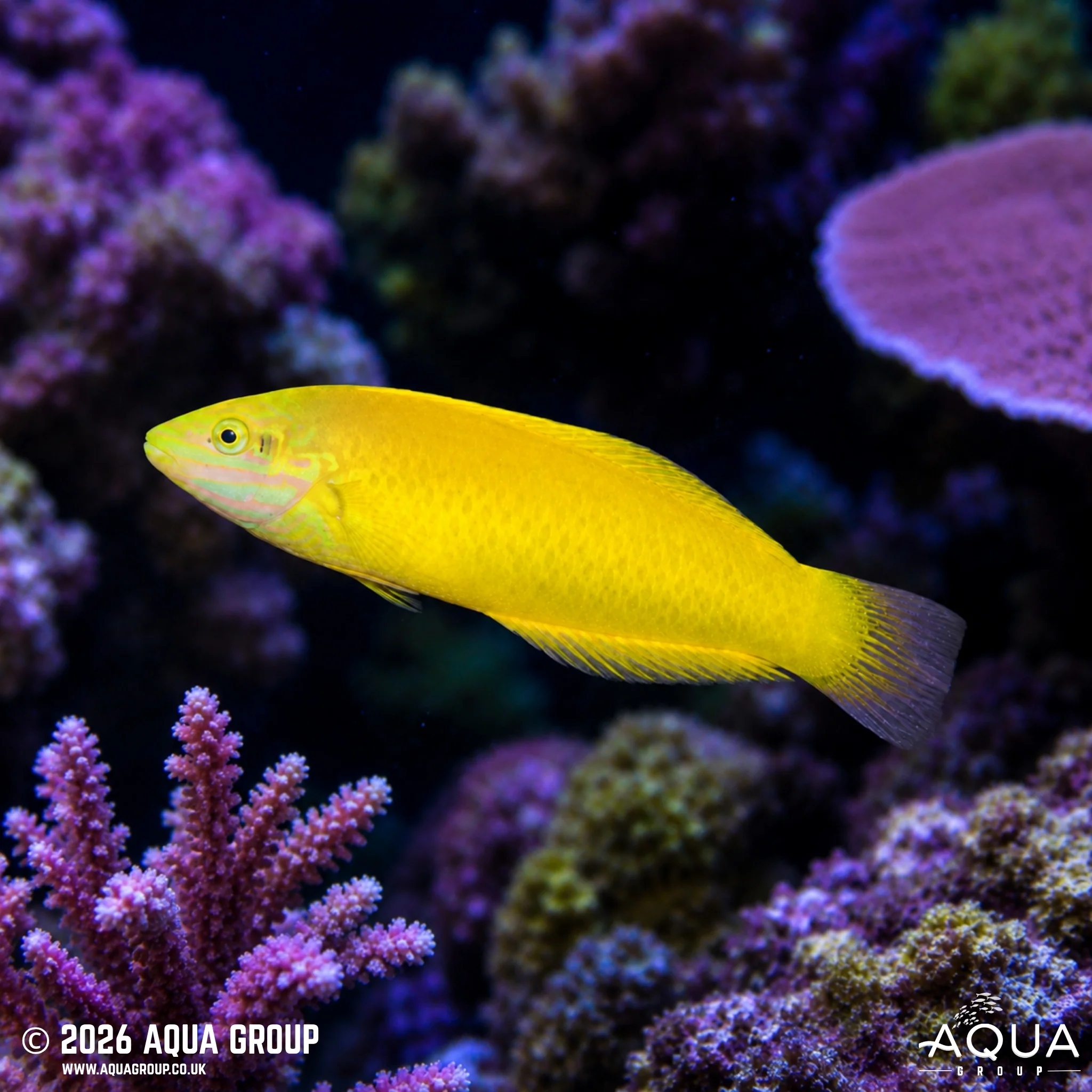
All images are a visual representation of the fish you will receive, made to be as accurate as possible. Please note that Mother Nature is a wonderful thing, and variation in patterns and colours will occur — that is part of the unique beauty of these animals.
Description
Striped Shrimpfish (Aeoliscus strigatus)
The Striped Shrimpfish, Aeoliscus strigatus, is a highly distinctive marine species with a thin, blade-like body, long snout and dark stripe running from the eye towards the tail. Also known as the Jointed Razorfish, Coral Shrimpfish or Razorfish, it is famous for swimming vertically with the head pointing downwards, often in synchronised groups. This peaceful Indo-Pacific species is reef safe and fascinating to observe, but it is a delicate specialist that needs a calm, mature aquarium, gentle tank mates and frequent small feeds.
Common Name:
Striped Shrimpfish, Shrimpfish, Jointed Razorfish, Razorfish, Coral Shrimpfish, Razor Fish.
Scientific Name (Latin):
Aeoliscus strigatus
Maximum Size:
Up to around 15 cm.
Water Type:
Marine
Origin / Natural Habitat:
Indo-Pacific, including the Red Sea, Indian Ocean and western to central Pacific reef regions. Naturally found in sheltered bays, lagoons, coral reefs, seagrass beds, rubble areas and sandy reef zones, often around branching corals, sea urchin spines or seagrass where groups can hide and move together vertically.
Water Parameters:
Temperature: 24–27°C
pH Range: 8.1–8.4
Hardness or Salinity: SG 1.020–1.025
Temperament:
Very peaceful and easily intimidated. Best kept with other calm, slow-feeding marine fish such as small peaceful gobies, pipefish, seahorses in suitable specialist systems, and gentle cardinalfish. Avoid aggressive, fast-feeding or predatory fish, including triggers, puffers, large wrasses, hawkfish, boisterous damsels and fish that may harass or outcompete them.
Diet:
Planktivorous micro-predator. In nature, it feeds on tiny crustacean zooplankton, copepods, amphipods and other small drifting prey. In the aquarium, offer frequent small feeds of enriched brineshrimp, copepods, cyclops, calanus, finely chopped mysis, rotifer-sized foods and other fine meaty marine foods. Newly imported specimens may be reluctant to take dry foods, so live or frozen small foods are often important.
Minimum Tank Size:
A minimum of 200 litres is recommended for a small group, with larger aquariums preferred for long-term stability. This species should not be kept singly where possible, as it is naturally social and displays best in groups.
Behaviour & Activity:
A specialised shoaling fish that usually swims vertically, head-down, often moving in tight synchronised groups. It spends much of its time hovering near protective structure such as branching coral, overhangs, caves, seagrass-style decor or sea urchin-like shelter. It is not a strong competitor at feeding time and can be stressed by high aggression or turbulent, direct flow. Provide quiet areas, gentle to moderate water movement and plenty of vertical shelter.
Reef Safe:
Reef Safe
Safe with corals and most ornamental invertebrates. It does not nip corals or attack typical reef clean-up crew animals. Very tiny planktonic crustaceans may be eaten as part of its natural diet. The main reef concern is not coral compatibility, but whether tank mates and flow conditions are calm enough for this delicate species.
Special Requirements or Care Notes:
Best kept in groups in a mature, peaceful marine aquarium with stable water quality and a strong supply of small foods. Frequent feeding is important, so good filtration and careful nutrient management are needed. Avoid housing with fast, aggressive feeders or fin-nipping species. Provide caves, ledges, branching coral-style structure or long-spined urchin-style shelter to encourage natural behaviour. This is a specialist species and should not be added to a busy community reef without planning.
Suitable for:
Experienced fishkeepers
Availability:
Rare or occasional in trade
All images are a visual representation of the fish you will receive, made to be as accurate as possible. Please note that Mother Nature is a wonderful thing, and variation in patterns and colours will occur — that is part of the unique beauty of these animals.