The Story
Tiger Pistol Shrimp (Alpheus bellulus)
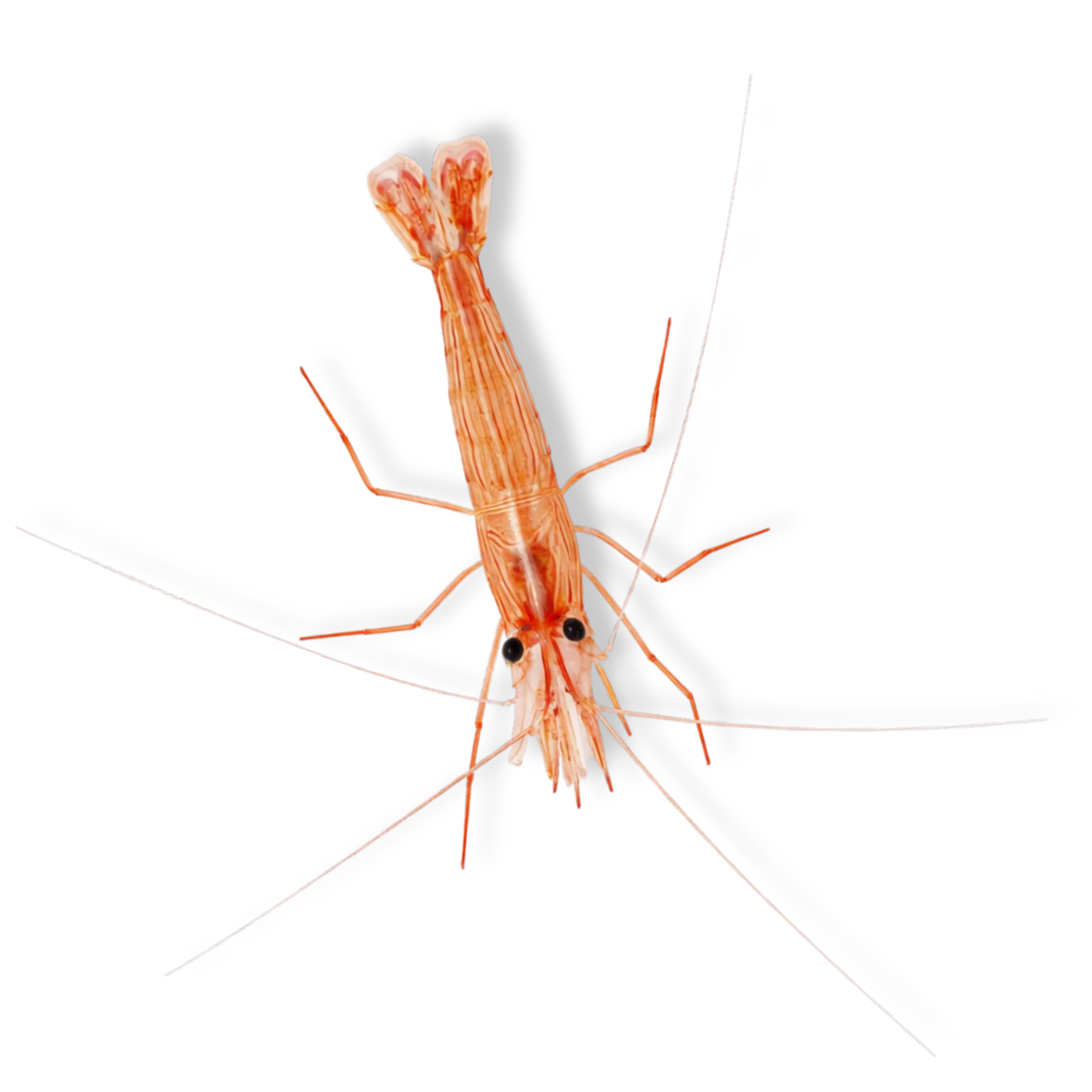
The Tiger Pistol Shrimp, Alpheus bellulus, is a fascinating marine snapping shrimp with a cream to yellow body, bold tiger-like brown or orange patterning and one enlarged snapping claw. Also known as the Tiger Snapping Shrimp or Tiger Alpheus Shrimp, this Indo-West Pacific species is best known for forming a natural partnership with suitable shrimp gobies. It is reef safe with caution, highly entertaining to watch and ideal for mature marine aquariums with a sandy substrate, stable rockwork and peaceful tank mates.
Common Name:
Tiger Pistol Shrimp, Tiger Snapping Shrimp, Tiger Alpheus Shrimp, Tiger Pistol, Snapping Shrimp.
Scientific Name (Latin):
Alpheus bellulus
Maximum Size:
Usually around 4–6 cm, not including antennae.
Water Type:
Marine
Origin / Natural Habitat:
Indo-West Pacific, including shallow tropical reef and coastal areas. Naturally found in sandy, muddy and detrital substrates, often close to reef rubble or coral structure. It lives in burrows and is strongly associated with goby partnerships in the wild, where the shrimp maintains the burrow and the goby acts as a lookout.
Water Parameters:
Temperature: 24–27°C
pH Range: 8.1–8.4
Hardness or Salinity: SG 1.023–1.025
Temperament:
Generally peaceful, but territorial around its burrow. It is not normally aggressive towards fish, but may disturb very small or delicate invertebrates close to its burrow and may rearrange sand and rubble. Best kept with peaceful reef fish and suitable shrimp gobies rather than aggressive predators.
Diet:
Omnivorous scavenger and small invertebrate feeder. In the aquarium, offer sinking marine pellets, frozen mysis, enriched brineshrimp, finely chopped prawn, clam, mussel and other small meaty marine foods. It will also scavenge leftover food near its burrow, but should still be target-fed if food does not reach the substrate.
Minimum Tank Size:
A minimum of 60 litres is suitable for a single Tiger Pistol Shrimp in a stable reef aquarium, with 100 litres or more preferred when pairing with a goby or keeping a mixed reef community. Provide enough sand depth for burrowing.
Behaviour & Activity:
A burrowing shrimp that spends much of its time digging, maintaining tunnels and moving sand or rubble around the burrow entrance. Its enlarged claw can make a sharp clicking or snapping sound, often heard after lights out. When kept with a compatible shrimp goby, the shrimp often keeps antenna contact with the fish while the goby watches for danger. Compatible partners may include suitable Amblyeleotris, Cryptocentrus or Stonogobiops gobies, although pairing is not guaranteed.
Reef Safe:
Reef Safe with Caution
Generally safe with corals and most reef livestock, but caution is needed because it may move sand, undermine loose rockwork, relocate small frags or disturb corals placed on the substrate. Very small snails, tiny shrimps or weakened invertebrates may be at risk, especially near the burrow. It is not suitable with predatory shrimp-eating fish.
Special Requirements or Care Notes:
Provide a soft sand bed with small rubble pieces and make sure rockwork is stable before adding the shrimp, as burrowing can undermine loose structures. Slow acclimation is important, as marine shrimps are sensitive to sudden salinity, pH and temperature changes. Avoid copper-based treatments and high nitrate levels. Protect very small nano livestock and avoid tank mates such as hawkfish, triggers, puffers, large wrasses and predatory crabs. A covered aquarium is sensible if kept with a shrimp goby, as gobies may jump when startled.
Suitable for:
Beginner to intermediate fishkeepers
Availability:
Common in trade
All images are a visual representation of the animal you will receive, made to be as accurate as possible. Please note that Mother Nature is a wonderful thing, and variation in patterns and colours will occur — that is part of the unique beauty of these animals.
Description
Tiger Pistol Shrimp (Alpheus bellulus)
The Tiger Pistol Shrimp, Alpheus bellulus, is a fascinating marine snapping shrimp with a cream to yellow body, bold tiger-like brown or orange patterning and one enlarged snapping claw. Also known as the Tiger Snapping Shrimp or Tiger Alpheus Shrimp, this Indo-West Pacific species is best known for forming a natural partnership with suitable shrimp gobies. It is reef safe with caution, highly entertaining to watch and ideal for mature marine aquariums with a sandy substrate, stable rockwork and peaceful tank mates.
Common Name:
Tiger Pistol Shrimp, Tiger Snapping Shrimp, Tiger Alpheus Shrimp, Tiger Pistol, Snapping Shrimp.
Scientific Name (Latin):
Alpheus bellulus
Maximum Size:
Usually around 4–6 cm, not including antennae.
Water Type:
Marine
Origin / Natural Habitat:
Indo-West Pacific, including shallow tropical reef and coastal areas. Naturally found in sandy, muddy and detrital substrates, often close to reef rubble or coral structure. It lives in burrows and is strongly associated with goby partnerships in the wild, where the shrimp maintains the burrow and the goby acts as a lookout.
Water Parameters:
Temperature: 24–27°C
pH Range: 8.1–8.4
Hardness or Salinity: SG 1.023–1.025
Temperament:
Generally peaceful, but territorial around its burrow. It is not normally aggressive towards fish, but may disturb very small or delicate invertebrates close to its burrow and may rearrange sand and rubble. Best kept with peaceful reef fish and suitable shrimp gobies rather than aggressive predators.
Diet:
Omnivorous scavenger and small invertebrate feeder. In the aquarium, offer sinking marine pellets, frozen mysis, enriched brineshrimp, finely chopped prawn, clam, mussel and other small meaty marine foods. It will also scavenge leftover food near its burrow, but should still be target-fed if food does not reach the substrate.
Minimum Tank Size:
A minimum of 60 litres is suitable for a single Tiger Pistol Shrimp in a stable reef aquarium, with 100 litres or more preferred when pairing with a goby or keeping a mixed reef community. Provide enough sand depth for burrowing.
Behaviour & Activity:
A burrowing shrimp that spends much of its time digging, maintaining tunnels and moving sand or rubble around the burrow entrance. Its enlarged claw can make a sharp clicking or snapping sound, often heard after lights out. When kept with a compatible shrimp goby, the shrimp often keeps antenna contact with the fish while the goby watches for danger. Compatible partners may include suitable Amblyeleotris, Cryptocentrus or Stonogobiops gobies, although pairing is not guaranteed.
Reef Safe:
Reef Safe with Caution
Generally safe with corals and most reef livestock, but caution is needed because it may move sand, undermine loose rockwork, relocate small frags or disturb corals placed on the substrate. Very small snails, tiny shrimps or weakened invertebrates may be at risk, especially near the burrow. It is not suitable with predatory shrimp-eating fish.
Special Requirements or Care Notes:
Provide a soft sand bed with small rubble pieces and make sure rockwork is stable before adding the shrimp, as burrowing can undermine loose structures. Slow acclimation is important, as marine shrimps are sensitive to sudden salinity, pH and temperature changes. Avoid copper-based treatments and high nitrate levels. Protect very small nano livestock and avoid tank mates such as hawkfish, triggers, puffers, large wrasses and predatory crabs. A covered aquarium is sensible if kept with a shrimp goby, as gobies may jump when startled.
Suitable for:
Beginner to intermediate fishkeepers
Availability:
Common in trade
All images are a visual representation of the animal you will receive, made to be as accurate as possible. Please note that Mother Nature is a wonderful thing, and variation in patterns and colours will occur — that is part of the unique beauty of these animals.